Music Education
The Fine Line Between Clever Wordplay and Misheard Lyrics in Modern Music
Examine the fine line between clever wordplay and misheard lyrics in modern music, why our brains mishear songs, and the most commonly confused lines.
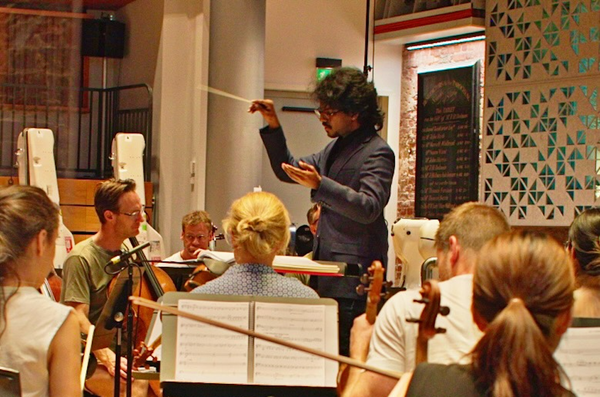
Join the Symphony Orchestra of India
Seeking Symphonic Instrument Players to Apply
Learn more
Music Education
Examine the fine line between clever wordplay and misheard lyrics in modern music, why our brains mishear songs, and the most commonly confused lines.
Music Education
Often associated with angels, fairy tales and shimmering glissandos, the harp is one of classical music's most misunderstood instruments. From Debussy to Stravinsky, its rich expressive palette reveals a voice capable of drama, power, mystery and innovation.
Know Your Composer
More than a century after its explosive premiere, Igor Stravinsky’s 'The Rite of Spring' remains a landmark of musical modernism. This analysis explores its revolutionary rhythms, daring orchestration, folk influences and enduring impact on twentieth-century music.
Interviews
Favoured by Prince Nikolaus Esterházy and championed by Haydn, the baryton nearly vanished from musical life. Matthew Baker discusses reviving the instrument through the Valencia Baryton Project and bringing its remarkable repertoire to modern audiences.
Know Your Composer
Though often viewed as representatives of contrasting musical worlds, Claude Debussy and Igor Stravinsky shared a remarkable artistic bond. Their mutual admiration fostered a creative exchange that influenced modern music and connected two of the twentieth century’s greatest composers.
Music Education
A professional violinist's life involves far more than concerts and applause. Discover how elite musicians structure their days through practice, rehearsals, teaching, physical conditioning, and artistic preparation to maintain the highest standards of performance.
Features
From Monteverdi's early masterpieces to Verdi's global triumphs, Italian opera became Europe's dominant musical language. Discover how Italy's singers, composers, and theatres transformed a local art form into an international cultural phenomenon.
Piano-born yet guitar-haunted, Granados’s 'Danzas españolas' find new life in a complete duo transcription by Eugenio Della Chiara and Pietro Locatto. They discuss tradition, tuning, colour, and the intimacy of playing as one.
On the first death anniversary of tabla maestro Zakir Hussain, the members of Shakti reunite to honour his legacy. Through memories, music and a shared history of innovation, they recount the extraordinary journey that shaped Indo-jazz fusion.
Ukrainian organist Dariia Lytvishko discusses her debut NAXOS album Toccatas and Meditations, the enduring allure of the French organ tradition, and how she bridges history, emotion, and innovation to bring the instrument to new audiences worldwide.
Winner of the Leeds and Montréal competitions, pianist Jaeden Izik-Dzurko discusses his NAXOS debut of Soler’s sonatas, his formative influences, and the artistic journeys that continue to shape his rapidly ascending career.
Sign Up Now to Get Instant Updates on Our Latest Articles and Exclusive Newsletter Launches!
A chance journey through concerts in Bengaluru and Mumbai became an exploration of Beethoven's enduring fascination with C minor, the key that shaped some of his most dramatic, heroic and emotionally compelling music.
A four-decade friendship between conductor Mary Hopper and Delhi-based musician Sharmila Livingston culminates in a rare artistic collaboration in India, rooted in mentorship, collective singing, and the enduring human power of choral music.
Choosing the right mastering engineer can transform your music from good to truly professional. This guide explores what artists should look for in mastering services, from genre expertise and communication to streaming optimization, revisions, and the difference between AI and human mastering.
Explore the brilliance of the Baroque period through the groundbreaking works of Bach, Handel, Vivaldi, Monteverdi, and Purcell. This article examines the era’s dramatic innovations, sacred masterpieces, operatic beginnings, and lasting influence on the evolution of Western classical music.
From Harlem’s Apollo Theater to the world’s greatest concert stages, Ella Fitzgerald transformed jazz singing through unmatched vocal precision, groundbreaking scat improvisation, and interpretations of the Great American Songbook that continue to inspire musicians and listeners alike.
From Mozart’s enchanting fantasy worlds to Verdi’s heartbreaking tragedies and Puccini’s emotional masterpieces, these ten operas offer an unforgettable introduction to the power, beauty, and timeless drama of one of classical music’s greatest art forms.
Teachers do far more than impart technique. They shape how musicians listen, interpret, and situate themselves within tradition, ultimately influencing artistic identity through repertoire, values, and the delicate balance between guidance and independence.
Roger Zahab reflects on ‘Magic & Desire’, collaboration with Gilda Lyons, and a lifetime in music, offering insights into intimacy, authorship, and how sound can shape human connection across time and shared artistic experience.
From Lucknow to Kochi, ABRSM’s 2026 India tour brought together teachers, students and parents through interactive workshops, meaningful conversations and shared musical experiences, strengthening communities and celebrating nearly 1,849 years of combined teaching expertise across the country.
French composer and pianist Louise Farrenc overcame institutional barriers to build a remarkable musical legacy. From her groundbreaking role at the Paris Conservatoire to her masterful symphonies and chamber works, Farrenc emerged as one of the 19th century’s most significant composers.
Maltese composer Euchar Gravina discusses ‘ARIA’, a pandemic-born collaboration with violinist Stefan Calleja and the London Symphony Orchestra, reflecting on listening, identity, and how intimacy and distance shape his evolving compositional voice.
For much of human history, societies have organized themselves around shared sonic experiences. Sacred chants, folk songs, military marches, opera arias, radio broadcasts, and symphonic concerts have all shaped collective memory through sound. Certain musical gestures become inseparable from emotion itself: the ominous opening of Beethoven’s Fifth Symphony, the