The People's Symphony
Few Indian composers have ventured into the symphonic tradition. With 'New Beginnings', Lydian Nadhaswaram enters that lineage. Vishwas Gaitonde examines the work, its origins and the vision behind its creation.
Composing a full-length symphony is a formidable undertaking at any stage of a composer's career. Completing one before the age of twenty is rarer still. With New Beginnings, written at 19 and recorded a year later, Lydian Nadhaswaram joins a small group of composers, including Wolfgang Amadeus Mozart, Felix Mendelssohn, Franz Schubert, Georges Bizet, Camille Saint-Saëns and Dmitri Shostakovich, who attempted the genre while still in their teens. History reminds us that youthful achievement is not always immediately recognised: Bizet's Symphony in C, composed when he was 17, was not performed until more than 80 years after his death.
For a young Indian musician to demonstrate such command of the Western symphonic tradition is noteworthy. Symphony writing demands an understanding of harmony, counterpoint, orchestration and large-scale musical architecture, disciplines that evolved over several centuries in Europe and are far removed from the foundations of India's own classical traditions. It requires not only technical proficiency but also the ability to sustain musical ideas across an extended canvas, balancing thematic development, structural coherence and orchestral colour.
A symphony typically unfolds across three or four movements and often lasts between 30 and 60 minutes, though many composers have expanded or challenged those conventions. Writing one calls for a detailed understanding of every orchestral instrument, how each functions individually and how they interact collectively. Above all, it requires the ability to think on a large scale, shaping musical ideas over an extended span while maintaining dramatic momentum and emotional coherence.
Lydian's achievement also illustrates how artistic traditions evolve beyond their places of origin. The symphony emerged in eighteenth-century Europe, yet today it belongs to a global musical culture. In New Beginnings, a composer from Chennai contributes his own voice to a genre shaped by Haydn, Mozart, Beethoven and Mahler, while allowing subtle traces of his own musical background to inform the work.
Before turning to New Beginnings, it is worth tracing the evolution of the symphony itself and considering the small but significant group of Indian composers who have embraced the form.
Evolution of the Symphony
The word symphony derives from the Greek symphonia, meaning "agreement" or "sounding together". Although the modern symphony did not yet exist during the Baroque period, its foundations were gradually laid through Italian opera sinfonias, orchestral overtures and concertos.
Johann Sebastian Bach never wrote symphonies, devoting himself instead to cantatas, passions, concertos, suites and fugues. Yet his orchestral writing profoundly influenced later generations through its contrapuntal richness and architectural clarity. Antonio Vivaldi's concertos established a clear three-movement pattern of fast, slow and fast, while the sons of Bach, particularly Carl Philipp Emanuel and Johann Christian Bach, wrote orchestral works whose clarity, balance and expressive immediacy pointed towards the emerging Classical style.
It was Joseph Haydn, however, who established the symphony as one of Western music's principal forms. Across 106 symphonies, he refined a four-movement design—typically fast, slow, minuet and trio, and fast finale—that became the model for many composers who followed, including Lydian in New Beginnings.
Wolfgang Amadeus Mozart enriched the genre with greater elegance, dramatic sophistication and orchestral colour, transforming the symphony into a vehicle capable of both public entertainment and profound artistic expression. Ludwig van Beethoven then redefined its expressive possibilities. His Eroica Symphony expanded both scale and emotional ambition; his Pastoral Symphony unfolded across five interconnected movements, using orchestral writing to evoke scenes from nature; and his Ninth Symphony introduced voices into the symphonic tradition, culminating in the choral setting of Schiller's An die Freude (Ode to Joy). Its mysterious opening, emerging almost imperceptibly from silence, remains one of the most remarkable beginnings in orchestral literature.
During the nineteenth century, the symphony became the supreme orchestral form. Franz Schubert brought lyrical breadth, Johannes Brahms reinforced its architectural strength, Pyotr Ilyich Tchaikovsky infused it with emotional intensity, while Gustav Mahler expanded it to unprecedented dimensions, describing the symphony as a form that "must be like the world—it must embrace everything."
Twentieth-century composers proved that the symphony was not a fixed formula but an endlessly adaptable form. Jean Sibelius compressed it into organically evolving structures, Igor Stravinsky transformed its rhythmic language, Dmitri Shostakovich used it to confront political oppression and personal tragedy, Olivier Messiaen created vast spiritual landscapes in works such as the ten-movement Turangalîla-Symphonie, Leonard Bernstein infused it with American energy and theatrical flair, and Philip Glass demonstrated how minimalist repetition could sustain large-scale symphonic architecture.
Across nearly three centuries, the symphony has continually reinvented itself. While its outward form has evolved, its essential purpose has remained unchanged: to provide composers with the broadest possible canvas on which to express musical ideas.
Indian Symphony Composers
The symphony developed within a European musical tradition founded on harmony, counterpoint and orchestral writing. By contrast, Indian classical music is built primarily on melody (raga) and rhythm (tala), with little emphasis on harmonic development in the Western sense. For an Indian composer to write for a symphony orchestra, therefore, is not simply to adopt a different ensemble, but to engage with an entirely different musical language and aesthetic.
Over the past several decades, a number of Indian composers have made important contributions to Western classical music. Among the most notable are Naresh Sohal, Param Vir and John Mayer, each of whom demonstrated that Indian composers could participate meaningfully in the Western concert tradition while retaining an individual artistic voice.
Naresh Sohal (1939–2018) settled in London during the 1960s and devoted his career to contemporary Western classical composition. His orchestral and chamber works, often philosophical in inspiration, were performed by leading ensembles and established him as one of the first Indian-born composers to gain recognition within Britain's modern classical music scene.
Param Vir has built an equally distinguished career through operas, orchestral works, chamber music and vocal compositions. His music frequently brings together Western compositional techniques with philosophical and aesthetic ideas drawn from the Indian subcontinent, creating an individual musical language rather than a straightforward fusion of traditions.
The Indian-British violinist and composer John Mayer similarly explored the meeting point between Indian and Western musical thought. His orchestral works, concertos and chamber music integrated elements of both traditions while remaining firmly rooted in classical compositional practice.
Pandit Ravi Shankar also turned to the symphony late in his career. His Symphony, completed shortly before his death and premiered in 2010, brought together Indian instruments and a Western orchestra. Although conceived on a symphonic scale, many commentators have observed that it functions more as a concertante work than as a symphony in the Classical or Romantic tradition, reflecting Ravi Shankar's lifelong interest in cultural dialogue rather than adherence to established Western models.
These composers significantly expanded India's engagement with Western orchestral music. Yet the number of Indian composers who have written works explicitly conceived as symphonies remains relatively small.
Foremost among them is L. Subramaniam, whose symphonic output stretches back to the 1980s. Works such as Spring Rhapsody, Shantipriya, Global Symphony, Astral Symphony and Freedom Symphony have been performed by major orchestras, including the New York Philharmonic. These compositions embrace the formal scale of the symphony while consciously integrating Carnatic ragas, tala structures and Indian instruments into the Western orchestra. They are symphonies in both title and ambition, but they also occupy a distinctive space in which two musical traditions coexist on equal terms.
Ilaiyaraja has likewise explored the symphonic form over several decades. In 1993, he composed a large-scale orchestral work that was recorded by the Royal Philharmonic Orchestra under John Scott, although it was never commercially released. In interviews, he later reflected that he had hoped the project would open new doors internationally but instead came to regard the experience as encouragement to focus on the audiences who already understood and embraced his music.
More than three decades later, he returned to the form with Symphony No. 1: Valiant, premiered in 2025. The work bears unmistakable traces of its composer's lifelong immersion in Carnatic music and Indian cinema. Its musical language frequently remains modal, drawing upon ragas and sustained pedal points.
Rhythm is equally distinctive. While Western symphonies typically rely on regular metric structures, Valiant incorporates asymmetrical rhythmic patterns reminiscent of Carnatic tala practice. The energetic third movement, Frontier, explores shifting accents within a 9/8 metre, creating a rhythmic vitality rooted in South Indian musical thought.
His instinct for narrative pacing, orchestral colour and dramatic contrast gives Valiant an unmistakably cinematic character. Rich brass writing, lyrical string passages and vivid orchestral textures unfold with the storytelling instinct that has defined his career for more than half a century. Rather than attempting to replicate the Austro-German symphonic tradition, Valiant presents a personal synthesis in which Indian melodic thinking and Western orchestral writing coexist.
Another recent contribution comes from Chennai-based composer Ganesh B. Kumar, whose Rise (Symphony No. 1 in D minor) draws inspiration from both Beethoven and the Confucian maxim, "Rise every time we fall." Conceived as a tribute to Beethoven's resilience in the face of adversity, the work follows a three-movement design modelled on Classical forms while reimagining the famous four-note motif from Beethoven's Fifth Symphony ("da-da-da-dum") as a symbol of perseverance and renewal. It was premiered by the Budapest Symphony Orchestra under Anthony Armore.
This, then, was the musical landscape into which Lydian Nadhaswaram introduced New Beginnings. He was not the first Indian composer to write a symphony, nor the first to explore Western orchestral composition. What distinguishes his work is that it approaches the symphony largely through the conventions of the Western classical tradition, while allowing the composer's own musical identity to emerge in subtler ways through melodic character, rhythmic gesture and expressive temperament.
Lydian Nadhaswaram's New Beginnings
New Beginnings is conceived largely within the framework of the Western classical tradition. Its four-movement structure, orchestration and thematic development place it firmly within the lineage of the European symphony, yet the work occasionally reveals subtle traces of Lydian Nadhaswaram's Indian musical background. Rather than presenting an overt fusion of musical traditions, it allows aspects of the composer's broader musical identity to emerge naturally through melodic contour, rhythmic gesture and expressive character.
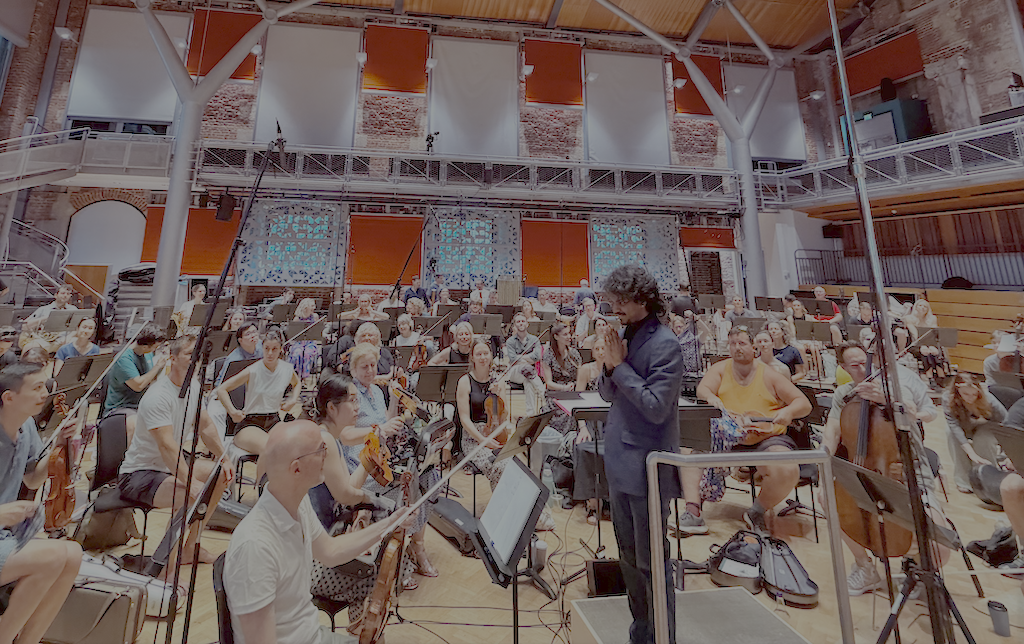
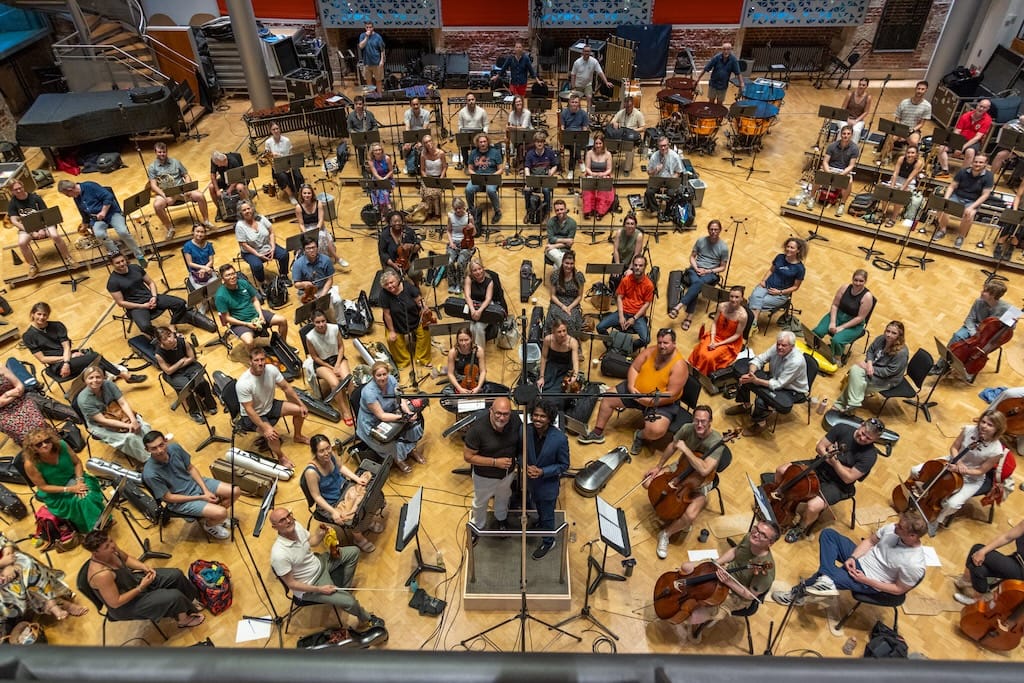
The symphony comprises four movements—Awakening, Reflections, Quest and Ascension—forming a traditional symphonic arc from introduction and reflection to struggle and resolution. Recorded in May 2026 by the London Symphony Orchestra under Matt Dunkley, the work employs a standard Western symphony orchestra of strings, woodwind, brass and percussion. Throughout the score, themes are developed in a manner consistent with Western symphonic practice, while moments of lyrical writing occasionally suggest melodic sensibilities familiar from Indian music.
Although listeners may hear echoes of Carnatic or broader Indian musical influences in certain passages, these are never presented as explicit quotations or stylistic borrowings. There are no Indian instruments, no raga-based improvisations, and no attempt to combine two musical traditions in the manner of a crossover or fusion work. Structurally and orchestrationally, New Beginnings remains a Western symphony. Its individuality lies not in blending musical systems, but in allowing the composer's own artistic instincts to shape a familiar form.
Movement I – Awakening
The opening movement begins with an expansive orchestral statement that establishes the symphony's principal musical ideas. Broad, confidently projected themes recall the sense of purpose often associated with nineteenth-century symphonic writing, while the orchestration demonstrates an assured understanding of instrumental colour and balance. At times, certain melodic contours may remind listeners of the ornamented lyricism associated with Carnatic music, although these gestures remain fully integrated within the work's Western harmonic language.
The movement conveys a feeling of emergence and possibility appropriate to its title. Rather than relying on overt dramatic conflict, it unfolds with an optimism that gradually gathers momentum, introducing many of the thematic ideas that will return later in transformed forms.
Movement II – Reflections
The second movement provides the emotional centre of the symphony. Long-breathed melodies unfold over rich string textures, recalling the expansive lyricism of composers such as Brahms and Tchaikovsky. The harmonic language remains firmly tonal, yet certain melodic turns and sustained tonal centres may evoke, for some listeners, the contemplative atmosphere of a raga alap.
Rather than seeking dramatic contrast, the movement favours introspection. Its musical argument develops patiently, allowing themes to deepen through subtle variation and orchestral colour. The result is music that feels reflective without becoming static, offering a moment of stillness before the symphony moves forward once more.
Movement III – Quest
The third movement introduces an immediate change of character. Rhythmic energy replaces contemplation as the orchestra launches into music of greater vitality and momentum. Its scherzo-like spirit is animated by lively exchanges between orchestral sections, rhythmic displacement and occasional asymmetries that may suggest South Indian rhythmic sensibilities, although they remain comfortably within a Western orchestral framework.
Throughout the movement, the orchestration becomes increasingly playful. Woodwind, brass and percussion engage in animated dialogue, creating a sense of movement and anticipation that drives the symphony towards its conclusion.
Movement IV – Ascension
The finale draws together many of the work's earlier ideas, bringing the symphony to a broad and affirmative conclusion. Themes introduced in previous movements return in altered forms, contributing to a sense of unity across the entire work. The orchestral writing grows steadily in scale, culminating in a series of climactic passages before arriving at a confident and satisfying resolution.
Although the movement follows the conventions of Western symphonic closure, its expressive character retains the warmth and melodic directness that distinguish the work as a whole. If the earlier movements explore aspiration, reflection and perseverance, Ascension offers a sense of fulfilment and hope.
New Beginnings, then, occupies an interesting place within the growing body of symphonic music by Indian composers. It neither attempts to imitate the great European symphonists nor consciously blends Indian and Western musical traditions into a hybrid language. Instead, it embraces the established grammar of the Western symphony while allowing Lydian Nadhaswaram's own musical personality to emerge with quiet confidence. Whether future performances reveal further dimensions of the score remains to be seen, but as a first symphony it represents an ambitious and remarkably assured achievement.
The Making of New Beginnings
Lydian Nadhaswaram's musical journey began almost by accident. At the age of two, he surprised his family by tapping out a steady rhythm on a cardboard box with two sticks. It was not random childhood play, but a recognisable rhythmic pattern. Drums became his first instrument, and rhythm his first musical language.
His introduction to the piano came several years later. When his sister, Amirthavarshini, began taking piano lessons, the eight-year-old Lydian would quietly observe from the sidelines. After each lesson ended, he would sit at the keyboard and play back what he had just heard. That remarkable instinct eventually developed into the extraordinary pianism for which he is now internationally known.
Yet even as a child, Lydian was less interested in reproducing existing music than in creating his own. Performance was only one part of his musical imagination; composition was always the larger ambition.
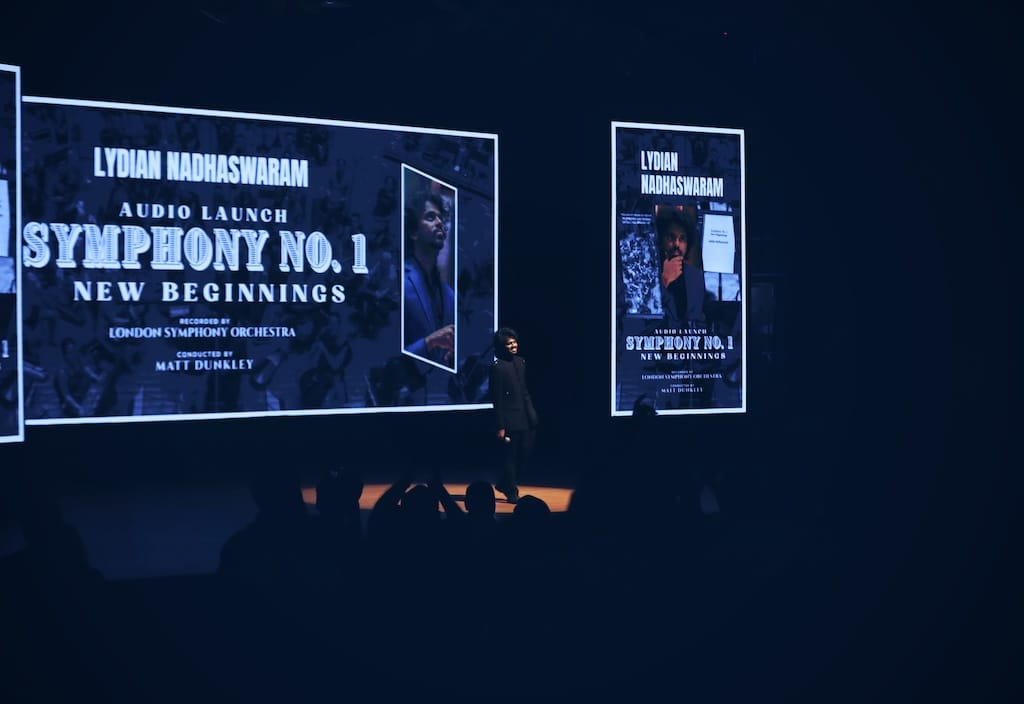
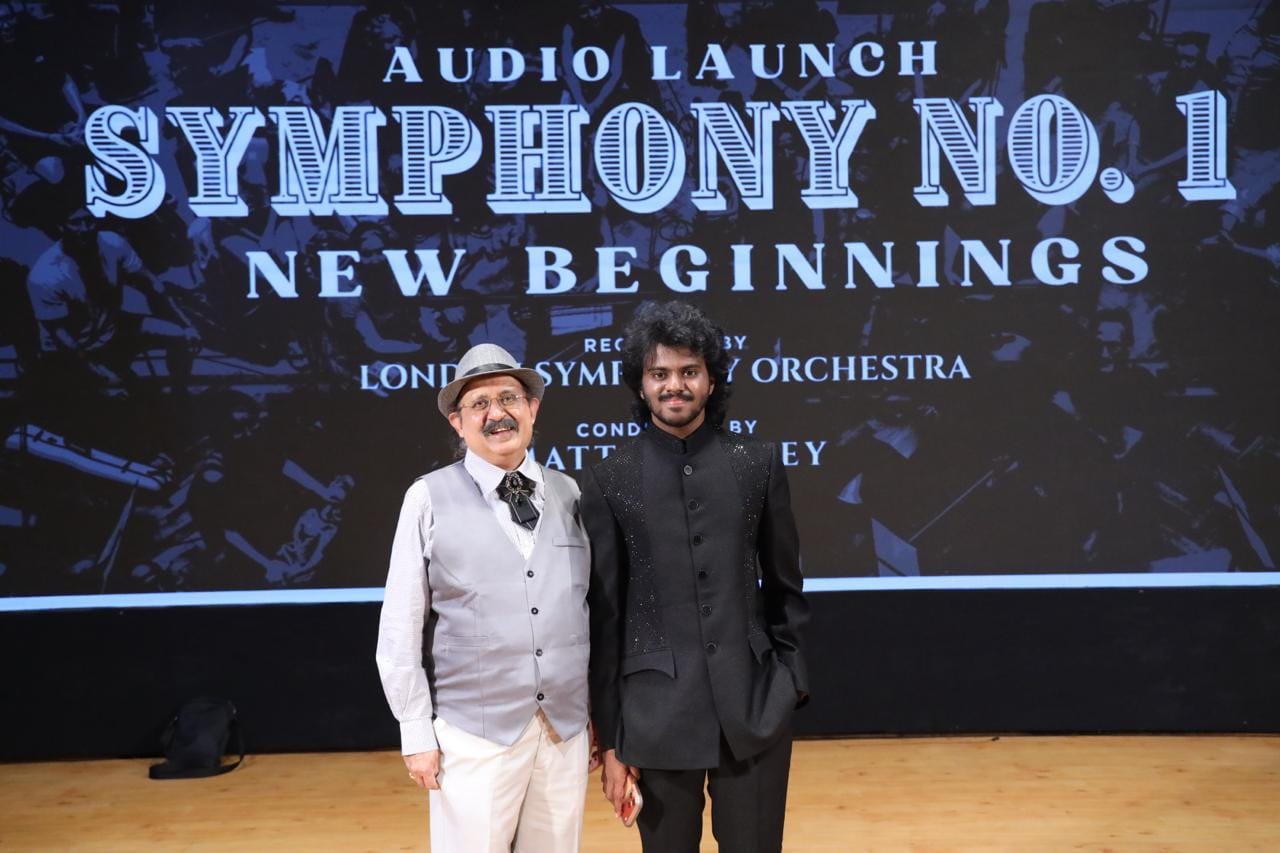
"I always wanted to be a composer," he told me two days after the audiovisual launch of New Beginnings at Chennai's Music Academy on World Music Day. "From a very young age, I wanted to write my own music."
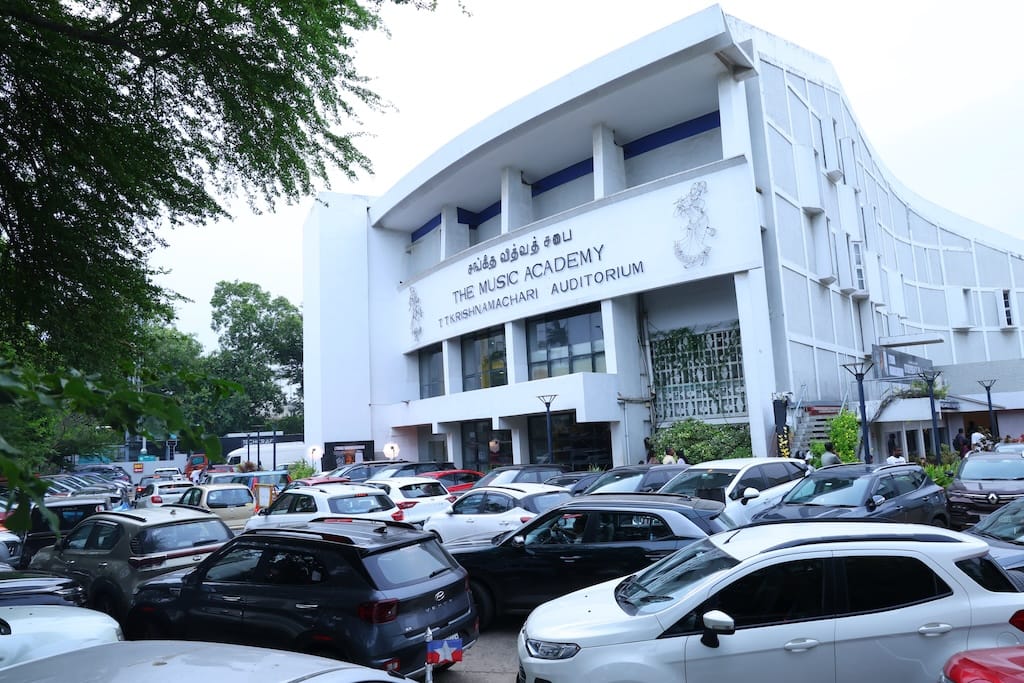
The choice of venue was significant. Chennai is widely regarded as the heartland of Carnatic music, and the Music Academy its most revered institution. To see a packed auditorium gathered there for the premiere of a Western symphony by an Indian composer was, in itself, a striking moment.
Lydian never wanted to limit himself to a single musical discipline. His curiosity led him towards as many instruments and musical traditions as he could absorb.
"I wanted to learn as many instruments as possible," he explained. "If one of the musicians in a band was absent, I wanted to be able to play their part and show them what I wanted."
That curiosity gradually developed into an understanding of orchestration. Rather than viewing instruments in isolation, he became fascinated by how they function together, how timbres combine, and how individual voices contribute to the colour and balance of an orchestra.
"Drums gave me rhythm and tempo. Piano also gave me rhythm, but in a different way, with a melodic sense. Exploring different genres opened my eyes. I made albums in different styles and discovered different musical worlds."
His musical interests have never been confined to Western classical music. Alongside his pianistic career, he has composed the jazz album Chromatic Grammatic and the fusion project Celestials. He sings Melakarta ragas, performs konnakol, plays guitar and piano, and moves comfortably between Carnatic music, jazz, film music and contemporary popular styles. His victory in the CBS television competition The World's Best introduced that versatility to an international audience.
One project, however, proved especially formative.
In 2023, Lydian and his sister embarked on Thirukkural 1330 (குறள் இசைக் காவியம்), an ambitious musical setting of all 1,330 couplets from the Thirukkural, the celebrated Tamil literary classic attributed to the philosopher Thiruvalluvar. More than a thousand singers participated. Amirthavarshini composed the melodies and directed the vocal recordings, while Lydian undertook the orchestration, instrumental performances, programming, mixing and mastering before the completed recordings returned to his sister for final editing.
At the same time, another musical idea was quietly taking shape.
Away from the Thirukkural project, Lydian immersed himself in the symphonic repertoire. He listened to Mozart, Haydn, Beethoven, Rachmaninoff and Mahler. Yet once work on New Beginnings began in earnest, he deliberately restricted his listening.
"I only listened to Mahler," he said. "Not because I wanted to borrow anything, but because I wanted to stay in 'symphony mode'."
On 9 March 2025, he announced on social media that he had begun writing a symphony. The timing coincided with the premiere of Ilaiyaraja's Valiant, and the announcement attracted its share of sceptical responses online. Rather than dwell on the criticism, his father, composer Satish Varshan, encouraged him to focus simply on beginning.
"He told me, 'Just write eight bars. Even one note if that's all you can manage.'"
What followed surprised even Lydian.
With a recorder running, he sat at the piano and played the music that had been forming in his imagination. Nine and a half minutes later, the entire fourth movement existed in outline—almost exactly matching its eventual duration. Encouraged by the experience, he composed the second movement the following day, the third that night, and the opening movement the day after.
"In three days," he recalled, "I had the skeleton of the symphony."
What remained was to develop those ideas into a fully orchestrated score.
The demands of the Thirukkural project meant the symphony had to wait for several months before he could return to it in earnest. When he finally resumed work in May 2026, the composition entered its most intensive phase.
"I have to thank Thiruvalluvar," he laughed. "For the Thirukkural project we explored nearly two hundred musical genres. The main ones were Hindustani, Carnatic, Indian film music, pop and Western classical. You can't write a symphony with a kural, but the orchestral thinking was already there."
The experience became an unexpected education in orchestration.
"I started thinking differently about voicing—which instruments should play which lines. I studied the range of every instrument and what each player could realistically do. How long could a trumpet sustain a note? How would a particular phrase sit under a violin bow?"
Playing many of the instrumental parts himself also deepened his understanding of the orchestra.
"I don't play all ninety-two instruments used in the symphony," he said with a smile. "But once you understand a few instruments from each family, you begin to understand the rest.
"It's like learning to drive. Once you know how to move forwards, backwards, turn left and right, you can drive different kinds of vehicles. A bicycle, a car and a boat all work differently, but the basic principles are there. Instruments are much the same. Once I understood how each one should be handled, I knew how to write for it."
By the time New Beginnings was complete, Lydian had brought together the many strands of his musical life: the rhythmic instincts of a drummer, the harmonic understanding of a pianist, the curiosity of a multi-instrumentalist and the imagination of a composer determined to find his own voice. Rather than arriving suddenly, the symphony emerged as the natural culmination of years spent exploring music from many different perspectives.
"The World Is His Oyster"
Bringing a large-scale orchestral work to life requires far more than imagination. It also demands resources, collaborators and considerable financial support.
When New Beginnings risked remaining on paper because of funding constraints, businessman Caldwell Velnambi of Dallas stepped forward as the project's principal patron. Other supporters, including Srinivas Mukkamala, Jyotsna Paturi, Bala Swaminathan, Jawahar Muniyandi and R.J. Bhuvanesh, also contributed, enabling the project to move from Chennai to London for recording.
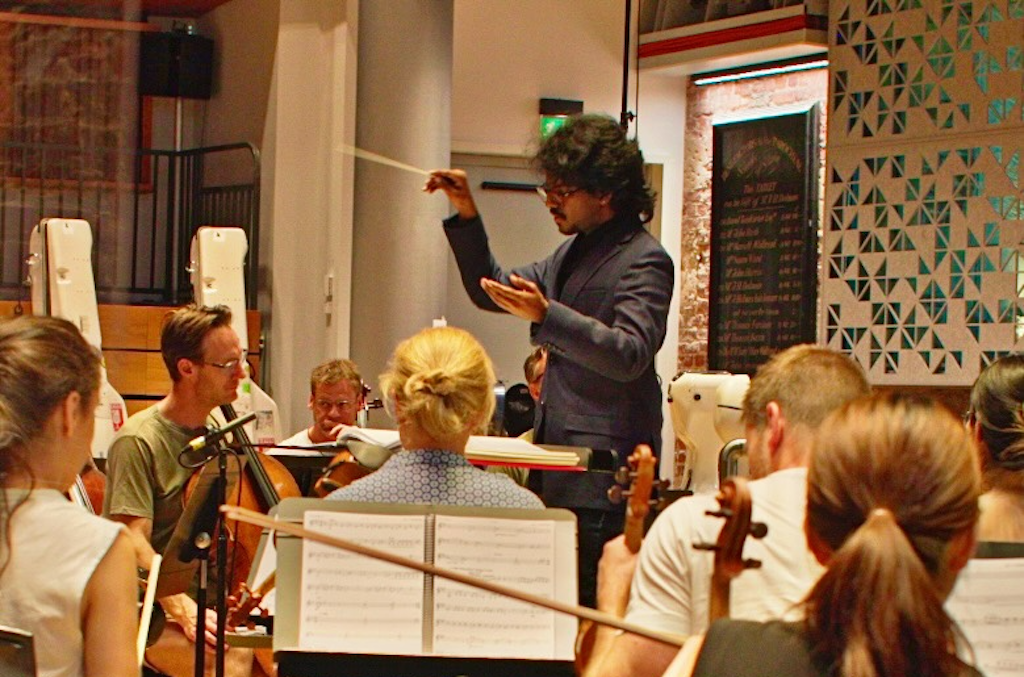
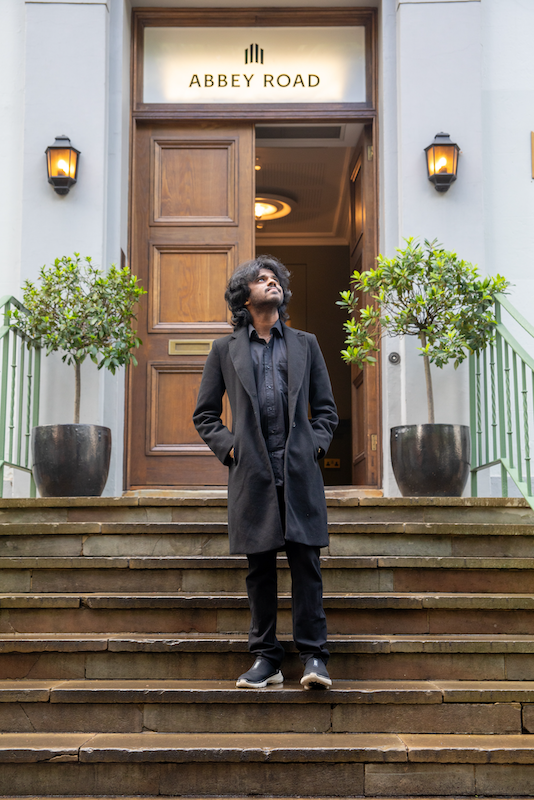
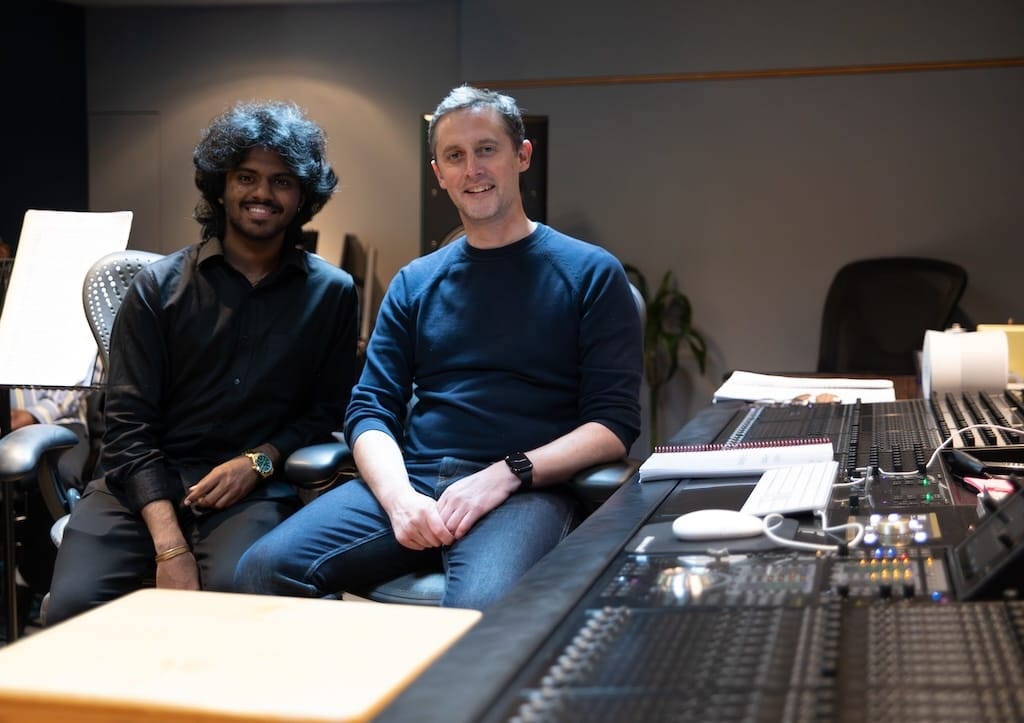
The sessions took place at St Luke's, the London Symphony Orchestra's home, an eighteenth-century church transformed into one of London's most respected rehearsal and recording venues. Following the recording sessions, post-production was completed at the legendary Abbey Road Studios.
"The LSO was extraordinarily amazing," Lydian said, still sounding awed by the experience. "Every musician had prepared their part beforehand. When they arrived, they were able to sight-read everything. The recording took place over two days."
Rather than recording complete movements from beginning to end, the orchestra worked in carefully planned sections.
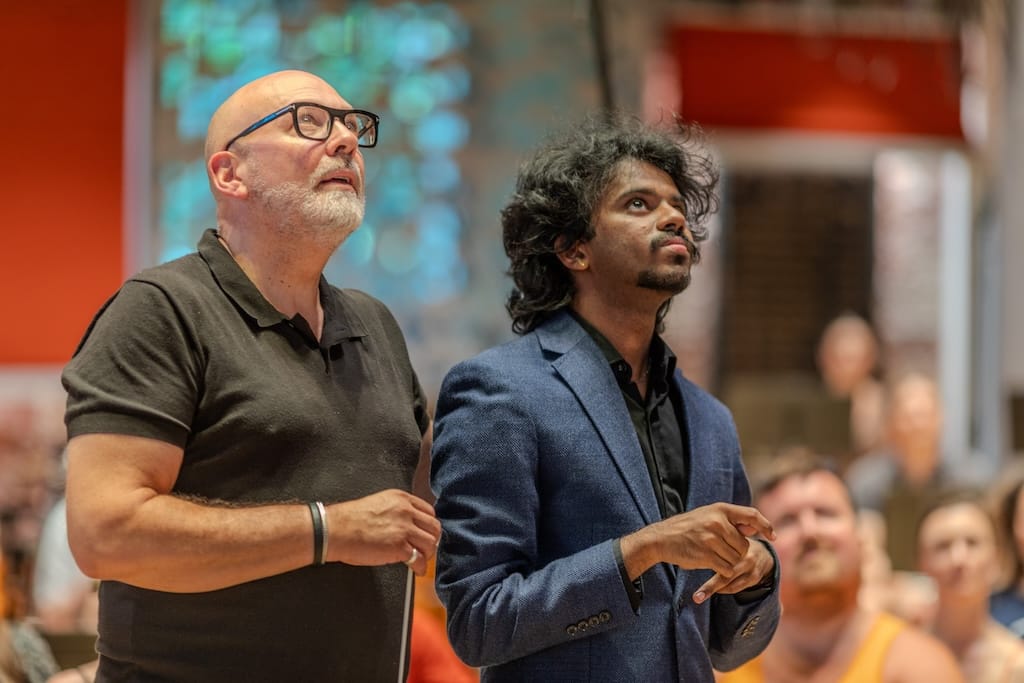
"We recorded seventy bars, then fifty, then twelve, then eighty," he explained. "During the first movement there was one passage that everyone played beautifully, but I still wasn't completely satisfied. We recorded six takes."
Unable to explain precisely what he wanted in words, Lydian chose a different approach.
"I sang the entire passage to them from the control room. Every individual part. When I'd finished, the musicians applauded. Then we recorded it again. The seventh take was the one."
With the 133rd and final take—a passage from the fourth movement—the recording was complete. Satish Varshan captured the moment on his phone. The video lasted exactly one minute and 33.33 seconds, a coincidence that delighted Lydian. The Thirukkural, the project that had indirectly shaped his orchestral thinking, is itself divided into 133 chapters.
An hour of studio time still remained.
Seeing Lydian's enthusiasm, conductor Matt Dunkley handed him the baton and invited him onto the podium.
Lydian had conducted an orchestra once before in North Macedonia, but under very different circumstances. The musicians had been performing with headphones and a metronome, allowing them to remain synchronised regardless of the conductor's gestures.
"This was completely different," he recalled. "The moment I moved my hands forward, there was instant silence. Then I made one small tempo change and the whole orchestra followed me. I suddenly realised just how much responsibility a conductor has."
His first attempt did not go entirely according to plan.
"I had to stop everyone and say, 'Let's try that again!' But after a while I started to understand what was happening. It was difficult, completely new to me, and absolutely amazing."
Reflecting on the collaboration, Matt Dunkley expressed confidence in the young composer's future.
"I'm so excited about Lydian's future. The world is his oyster, and it's great to have been part of his journey right from the beginning."
According to the London Symphony Orchestra, Lydian is the youngest Asian composer whose symphony the orchestra has recorded.
Members of the orchestra and production team also spoke warmly about the project.
Harpist Anneke Hodnett appreciated the prominence given to her instrument.
"Some really nice heart music which has been a pleasure to play."
Leader Simon Blendis was equally enthusiastic.
"A real pleasure to play your music. There's so much colour and life and excitement in it."
Michael Hyman, who co-orchestrated the score, praised both the ambition and scale of the work.
"It's such an epic, all-encompassing piece of music from a composer who is so young. It was a wonderful experience. A grand, long-form work in this day and age. There was really nothing missing from it. It had everything a symphony should have."
Daniel D'Mello Goodwin, the second co-orchestrator, remarked simply:
"Some really complex music—not easy to play!"
Project manager Andrew McKay reflected on the emotional impact of the experience.
"The music spoke so much to me. It's been a blessing to be part of this."
Among those attending the Chennai launch was musician and educator Augustine Paul, one of Lydian's earliest teachers. When I interviewed him nine years ago, he recalled that although the young Lydian was initially interested almost exclusively in the piano, his curiosity soon expanded to the orchestra itself. He became fascinated by instrumental colour, learning to distinguish woodwind from brass, studying concertos and discovering the intricate interplay of voices within the symphony.
Reminding Paul of that earlier conversation—and of how, within less than a decade, that curious child had gone on to compose his own symphony—brought a broad smile to his face.
He described New Beginnings as a work of considerable complexity, adding that its full character would only emerge over time.
"As more conductors study the score, and different orchestras perform it, new shades of the music will continue to reveal themselves."
Lydian himself sees the symphony less as a technical accomplishment than as a deeply personal statement.
"This symphony completely represents me—who I am and the kind of music that goes around in my head. It's a collection of all my experiences. But I also hope people find their own journeys in it."
One aspect of the score that particularly interested me was its contrapuntal writing. At several points, three distinct melodic lines unfold simultaneously across the upper, middle and lower registers, creating textures that remain transparent despite their complexity. The harp, long one of Lydian's favourite orchestral instruments, also assumes an unusually prominent role. In the absence of a piano, it frequently provides both colour and momentum within the orchestral texture.
Percussion is equally central to the work. Perhaps unsurprisingly for someone whose first instrument was the drums, the score makes extensive use of timpani, marimba, xylophone and glockenspiel. During the recording sessions, one percussionist was often required to move rapidly between instruments, a choreography that became almost as impressive as the music itself.
Yet for all its orchestral richness, melody remains at the heart of New Beginnings.
"Melody is so important in Indian music," Lydian observed. "Wherever you go, you hear people singing melodies. With my first symphony, I wanted to connect with an Indian audience. From the first bar to the last, I wanted people to be able to sing the whole symphony."
One particularly striking moment occurs in the second movement, where listeners unfamiliar with Indian music might hear what sounds like an unmistakably Middle Eastern melody.
Lydian laughed when I mentioned it.
"That's actually the Carnatic raga Mayamalavagowla."
The resemblance is understandable. The raga shares its intervallic structure with the Double Harmonic Major scale, closely related to the Arabic maqam Hijaz Kar. Played on the English horn—one of Lydian's favourite orchestral colours—the melody momentarily introduces a distinctive flavour before resolving naturally within the symphony's tonal framework.
"It's an unusual melody for a symphony," he said, "but I wanted to show a little of my Indian roots. The LSO musicians really enjoyed that passage."
Beyond New Beginnings
Lydian Nadhaswaram has built a devoted following, many of whom know him primarily through his performances rather than through Western classical music. New Beginnings is likely to introduce many of those listeners to the symphony for the first time. What advice would he offer them?
"Don't try to understand the music," he replied. "Just feel it. It's like something Christopher Nolan once said about his films—don't struggle to understand everything, just experience it. Listen to the melody. Let it carry you through the ups and downs."
Making the symphony accessible to new audiences is very much part of his plan. Following its launch at Chennai's Music Academy, further audio-visual presentations are planned at other venues across Chennai before the production travels to other Indian cities. International presentations are also under consideration. A live orchestral performance is in the pipeline, after which the work will become available on streaming platforms.
Beyond the symphony, Lydian's ambitions remain remarkably wide-ranging.
For many Indian composers, cinema provides opportunities unavailable elsewhere, and Lydian has already experienced both the possibilities and the realities of that world. His acting role in Atkan Chatkan was motivated less by a desire to become an actor than by curiosity about filmmaking itself.
"I wanted to understand how films are made," he explained. "I thought that if I experienced the process from inside, I would become a better film composer."
Preparing for the role required him to work with a voice coach to master the Hindi dialect spoken in Jhansi, where the story is set.
His association with Mohanlal's directorial project Barroz also proved instructive. Originally engaged to compose the score, he ultimately contributed three songs, while the background score was entrusted to Mark Kilian. Although disappointing at the time, the experience reinforced his belief that meaningful musical collaboration depends upon artistic trust.
Lydian remains enthusiastic about writing for cinema but believes that composers need sufficient creative freedom to do their best work.
"The director is the captain of the ship," he acknowledged. "Of course I have to respect that. But at the same time, a music director also needs enough freedom to create something that truly serves the film."
For the moment, however, film music is not his primary focus. He is increasingly drawn towards orchestral composition, jazz, Carnatic music and contemporary popular music. He also speaks enthusiastically about experimental forms, particularly drone music and improvisation, where musical structure can evolve in unexpected ways.
There will almost certainly be more symphonies.
Before embarking on another, however, Lydian wants to explore a variety of shorter orchestral forms. Having spent years composing brief settings of the Thirukkural, he is intrigued by the expressive possibilities of concise orchestral works.
Among the projects he hopes to undertake are a piano concerto, piano sonatas, string quartets and music for the harpsichord—genres that would allow him to explore different aspects of instrumental writing while continuing to develop as a composer.
And outside of music? As a child, Lydian loved to collect toy cars such as those made by manufacturers like Hot Wheels. Now he is into Formula One. And cooking is rapidly becoming a big interest.
“I want to start with South Indian cooking, be able to make everything my mother cooks,” Lydian said. Then the jazz musician in him surfaced. “I also want to improvise and innovate, and make original dishes. My signature dishes.”
I asked Lydian for his final thought.
“This is the people’s symphony. It’s a symphony for all who love music. Those who wish to write a symphony but cannot get to it may consider this as their own.”
Following its premiere, New Beginnings will receive its second audiovisual presentation on 9 August 2026 at The Music Academy, Chennai. Watch the promotional video for highlights from the first presentation and a preview of the upcoming event.