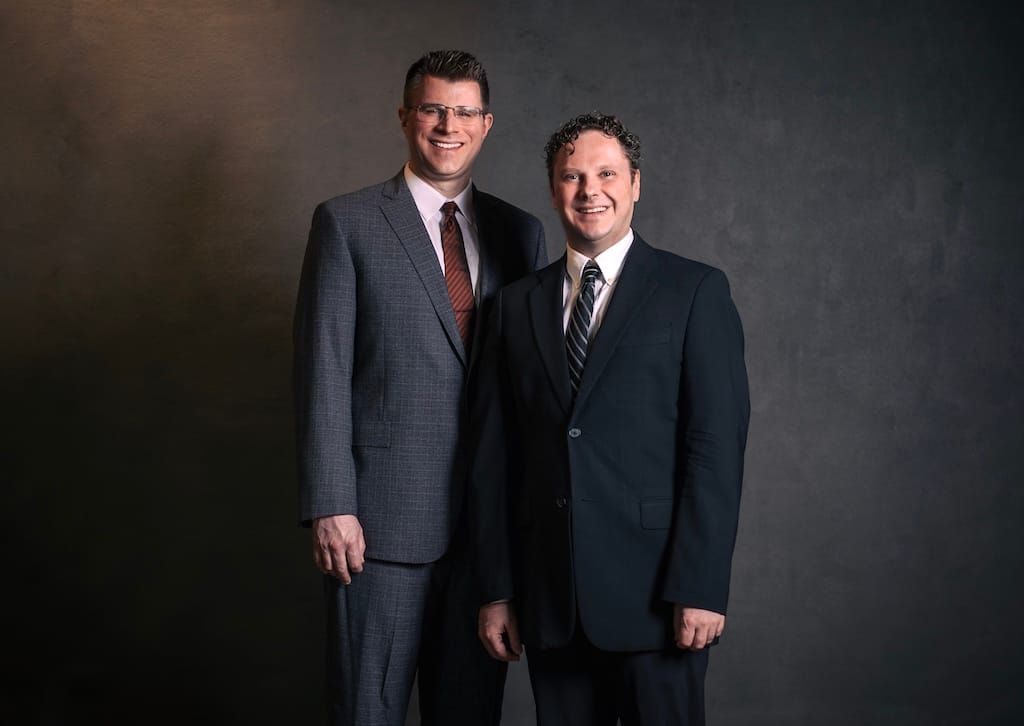
Finding Belonging Through Music: Karl Blench and Patrick Moore on ‘Open Source’
Composer Karl Blench and cellist Patrick Moore discuss ‘Open Source’, a powerful collaboration exploring belonging, sanctuary, and inclusion through contemporary chamber music, and how storytelling, community, and artistic partnership shaped one of their most meaningful projects.
Contemporary classical music often finds its greatest power in telling deeply human stories. With Open Source, composer Karl Blench, librettist Jacqui Sutton, the American Prize-winning Axiom Quartet, and baritone Timothy Jones have created a work that explores one of our most fundamental needs: the search for belonging.
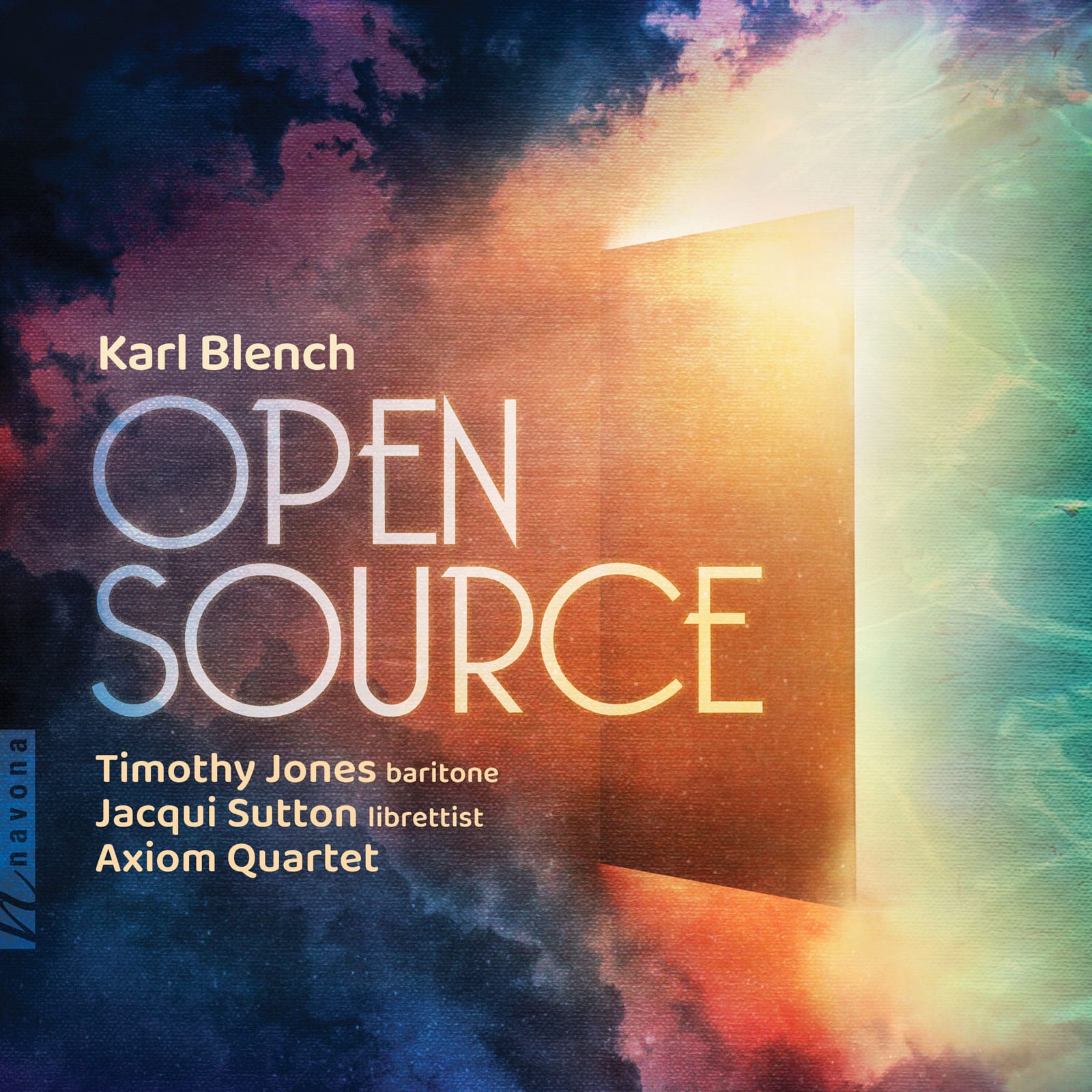
Released on Navona Records, Open Source draws inspiration from the history of the First Congregational Church of Houston and its enduring commitment to openness, inclusion, and community. Drawing on archival documentary material about the church's founders, Sutton conceived the libretto as two parallel journeys. "I wanted to write Open Source from two perspectives: in the first half, a wandering soul searching for safe haven; in the second half, a church seeking to build it. The two meet at the end of the piece," she explains.
Blench's score takes one of the hymns from the church's Hymns of Truth and Light as its musical "north star", gradually transforming familiar material into a contemporary meditation on hope, acceptance, and renewal. The work grew out of an ongoing dialogue between composer and librettist, with an early musical sketch based on the hymn Wherever I May Wander becoming the creative spark for the larger work.
The project also reflects the artistic philosophy of Axiom Quartet, whose innovative programming has earned a reputation for bringing together audiences through adventurous performances that span classical masterworks, contemporary music, and cross-disciplinary collaborations. For executive director and founding member Patrick Moore, accessibility is not about simplifying the music, but about creating spaces where listeners from all walks of life can encounter it. That vision finds a natural home in Open Source, a work that seeks to build community as much as it seeks to tell a story.
In this interview, Karl Blench and Patrick Moore discuss the origins of Open Source, the collaborative process behind the work, the unique partnership between composer and ensemble, and why its themes of sanctuary, inclusion, and human connection continue to resonate in an increasingly divided world.
Nikhil Sardana: Open Source explores themes of belonging, sanctuary, and inclusion through the story of an individual seeking community. What initially attracted each of you to this project, and why do you think these themes resonate so strongly today?
Patrick Moore: For me, the project became meaningful once I understood that this was not simply a piece about a church, but about a community that chose belonging as an active response to division. At first, telling the story of a single congregation felt like a narrow frame. But when I learned more about the First Congregational Church of Houston and its history of choosing desegregation, and that this decision was understood as a peaceful act of building community in response to the racial violence and unrest taking place in America, the project immediately opened up into something much larger.
The musical origins of the work are also deeply connected to that history. The church's hymnal, Hymns of Truth and Light, was compiled by Margaret Tucker. Proceeds from its sale were placed into a fund, which the First Congregational Church of Houston ultimately used to commission a work that would tell its own story. That origin matters. The piece grows out of a real tradition, a real community, and a genuine act of stewardship.
Karl Blench: When the librettist, Jacqui Sutton, and I began planning Open Source, we agreed on a basic premise: a person searching for a place where they truly belong. We felt there needed to be a reason for that search, so we imagined a dark catalyst that would set the journey in motion. That idea shaped the dramatic arc of the work. The piece begins in a very dark emotional space and gradually moves towards the light. As a composer, I was drawn to the opportunity to explore that transformation and the emotional drama that accompanies it.
I think these themes resonate so strongly because of many of the same issues Jacqui and I discussed during our early conversations. At the time, there were many events unfolding around the world that were having a profound negative impact on people's lives. Unfortunately, that remains true today. In times of uncertainty, division, or hardship, people naturally seek connection, belonging, and a sense of community. Open Source explores that deeply human need and the desire to find a place where we are welcomed, valued, and understood.
NS: The score takes one of the hymns from the First Congregational Church of Houston's hymnal as its musical "north star". How did you approach transforming that source material into a contemporary work while preserving its emotional and spiritual essence?
KB: The hymnal of the First Congregational Church of Houston, Hymns of Truth and Light, was central to the commission of this work. Margaret "Maggie" Tucker was responsible for compiling the hymnal, and she saved the proceeds from its sale to other Congregational churches around the country. Those funds ultimately helped make this commission possible, which gave the source material a particularly meaningful place in the project from the outset.
I knew early on that I wanted to incorporate one of the hymns from the collection. I looked through several possibilities, but nothing immediately felt right. Then I came across Wherever I May Wander. When I played through the melody, it immediately reminded me of the hymn tunes I had grown up with in New England. At that moment, I knew I had found the hymn I was looking for.
In the work itself, the hymn serves as a kind of musical "north star". It does not appear until about halfway through the piece, as the music begins to move towards greater light and clarity. Early on, it is fragmented and emerges only at key structural moments. It is only near the end of the work that the hymn is finally heard in its entirety, paired with Jacqui Sutton's text as the journey reaches its conclusion.
NS: Axiom Quartet has built a reputation for bringing together audiences from different backgrounds through adventurous programming. What made Open Source a particularly meaningful project for the ensemble?
PM: Axiom's name means "truth", and from the beginning I have understood that as a charge to pursue the truth of our highest artistic ambitions. For us, that has never meant excellence in isolation. It has meant asking how music performed at the highest level can create a space where people from many different backgrounds feel invited into the experience.
Classical music has often struggled with elitism, and Axiom has always wanted to push against that without lowering its artistic standards. For a time, our mission statement included the phrase "sharing music as diverse as Houston's community", and that still feels central to who we are. Houston is a city of extraordinary cultural breadth, and we have always wanted our programming, collaborations, and performance spaces to reflect that.
That made Open Source especially meaningful for the quartet. The piece is not only about belonging as an abstract ideal. It tells the story of a community that made belonging a conscious choice. That aligns closely with what Axiom has always tried to do: create serious musical experiences that are also spaces of belonging.
NS: The libretto by Jacqui Sutton draws on archival material related to the church's founders. How did the collaboration between text and music evolve, and were there moments where the historical material led you in unexpected artistic directions?
PM: From my perspective as a performer, what stands out most is that Jacqui drew directly from documentary and archival material, incorporating phrases that ultimately found their way into the libretto. The title of the hymnal, Hymns of Truth and Light, also becomes significant within the work itself. That phrase, "truth and light", carries both historical weight and symbolic meaning throughout the piece.
The way that history was transformed into a compelling human narrative is very much Jacqui's story to tell. She would be able to speak far more specifically about how the interviews, documentary material, and the church's history shaped the final libretto.
NS: You have worked closely with Axiom Quartet for many years, including arranging and contributing to previous projects. How has that long-standing artistic relationship shaped the way you composed Open Source, and were there specific qualities of the ensemble you had in mind while writing the score?
KB: Working with Axiom over the years has been a real luxury. When you collaborate with an ensemble multiple times, you begin to understand them not just as a group, but as individual players. You come to know their strengths and what is possible in their hands. By the time I came to write Open Source, I felt I could write almost anything for them, and they would find a way to bring it to life.
At the same time, I wanted the piece to showcase both the quartet as a unified ensemble and the individuality of each performer. As a result, there are moments throughout the work that allow each player to emerge as a soloist within the larger musical narrative.
NS: Throughout your career you have championed contemporary composers and premiered numerous new works. What distinguishes Karl's musical language, and what unique challenges or rewards did this score present for the performers?
PM: What distinguishes Karl's musical language, first and foremost, is his command of form. He has the rare ability to make a thirty-minute work feel as though it has passed in no time. The listener is carried into a space that feels almost timeless, and no matter how many times I have performed Open Source, I still experience that same sense of suspension.
His harmonic language is also unmistakably his own. I cannot easily point to another composer and say, "Karl sounds like this." He has created a sound world that is contemporary yet always serves the narrative and remains emotionally direct. The musical language never feels imposed upon the story; rather, it grows organically from it.
There is also a wonderful sense of humanity in the piece. Karl has a delightful sense of humour, and he introduces moments of levity at exactly the right points within an otherwise serious work. That balance matters. It allows the audience to breathe, making the emotional journey all the more powerful.
As performers, we feel the momentum of the work moving from darkness towards light. By the end, there is a profound sense of peace. The emotional weight of Open Source is rarely matched by other works I have performed. It is deeply satisfying to play because the score asks everything of its performers: clarity, restraint, intensity, tenderness, and a willingness to remain committed to the work's long dramatic arc. By the end, it feels less as though we have performed a piece and more as though we have accompanied someone on a deeply personal journey.
NS: Open Source is scored for string quartet and baritone, a combination that creates an intimate yet powerful sound world. What possibilities did this instrumentation offer in telling the story of a person searching for acceptance and community?
PM: The instrumentation gives Open Source a very particular kind of intimacy. A string quartet can suggest, remember, mourn, and illuminate, but it cannot speak in words. Bringing Timothy Jones's baritone voice into that sound world gave the piece a profoundly human centre.
Tim's role seems to encompass several identities at once: narrator, an individual searching for belonging, witness, and, at moments, even a preacher-like presence. That multiplicity is part of what gives the work its dramatic power. I often think of Open Source as a song cycle that wants to be an opera. It possesses the intimacy of chamber music while embracing the emotional and theatrical arc of something much larger.
Tim also brings remarkable dramatic instincts to the performance. He does not simply sing the text beautifully; he inhabits the narrative. The quartet surrounds him, responds to him, comments upon the action, and creates the emotional atmosphere, while the voice allows the story to speak directly to the listener. Together, they create a sound world that feels both deeply personal and profoundly communal.
KB: We were very fortunate to work with Timothy Jones, who is an extraordinary artist. His voice was the perfect fit for this piece, and he brings exactly the right amount of drama and theatrical presence to the performance, drawing the audience ever more deeply into the narrative. I would like to think the music itself also supported and encouraged that level of engagement.
One of the great advantages of writing for strings is the remarkable range of expressive and textural possibilities they offer within a single ensemble. While I tend to be cautious about overusing extended techniques, there were moments in Open Source where they felt entirely appropriate. In the fourth movement, "Source Material", for example, I ask the players to create sounds that resemble building and assembling materials, helping to evoke the impression of a place gradually taking shape. Those colours become another way of supporting the storytelling beyond the words themselves.
NS: Both of you have deep roots in Houston's cultural life. To what extent does Open Source reflect the city's remarkable diversity and its ability to bring together different cultures, traditions, and perspectives?
PM: Houston's purposeful embrace of diverse communities feels central to the city's identity. There are so many international and immigrant communities here, and the cultural life that grows from that is extraordinary. In that sense, Open Source feels very much like a Houston work. It tells the story of a church that intentionally created a space where all are welcome, and that impulse seems deeply connected to the city around it.
I also think Open Source reflects Houston through the conditions that made it possible: a diverse city, a courageous congregation, a composer, librettist, singer, and quartet with long-standing artistic relationships, and an arts community generous enough to support a project like this. Houston is a thrilling place to create music, and this work could only have grown from that kind of environment.
KB: Houston is a true melting pot, and the First Congregational Church itself is rooted in that same idea of openness, of being a place for everyone. From the beginning, Jacqui and I wanted to create a work that could speak across a wide range of experiences and perspectives. Even though Open Source is inspired by the church's history and archival materials, we wanted it to extend beyond that specific context.
Jacqui was very intentional about this in her libretto, and I was equally mindful of it in the music. We both wanted to shape a work that could reach across differences rather than reinforce them, allowing listeners to find their own point of entry into the story.
In that sense, the piece reflects something we both associate with Houston itself: a place where diverse voices and histories coexist, and where the possibility of connection is always present, even when it is not immediate.
NS: Axiom Quartet frequently performs in unconventional venues and community settings, while Karl's work often reaches audiences beyond traditional concert halls. How important is accessibility in your artistic philosophy, and has that influenced the way you think about projects such as Open Source?
PM: One of the great strengths of a string quartet is that it can perform almost anywhere. Axiom has always embraced unusual venues and unexpected contexts, and I think that has fundamentally shaped who we are. Cave Without a Name influenced us from the very beginning. Performing chamber music underground in a natural cave changes the relationship between performer, listener, and space. It reminds us that classical music does not belong exclusively in formal concert halls.
Harmony in the Air has been another important example. Performing in an airport is certainly unusual, but it is also incredibly rewarding. People are often stressed, delayed, tired, or simply in transition, and music can meet them exactly where they are. We have often had travellers tell us they felt better after hearing us perform. More than once, someone has even said, "I'm so glad my flight was delayed." That is an extraordinary thing to hear. How often can a musician say they helped transform that kind of experience?
That has reinforced something central to Axiom's philosophy: accessibility is not about simplifying the art. It is about bringing serious, beautiful, thoughtfully prepared music into places where people can encounter it directly. Open Sourceembodies that philosophy because it is a work about building community, while also asking how music itself can become a space of inclusion.
NS: Finally, when listeners encounter this recording for the first time, what do you hope stays with them after the final notes have faded away?
PM: Karl and Jacqui decided from the beginning that Open Source would meet listeners in a place of darkness and gradually carry them towards the light. That journey is what I hope remains with people after the final notes have faded.
By the end of the work, I feel both light and lightness. There is a sense of peace, but it is not passive; it feels earned. The piece has travelled through struggle, memory, longing, humour, and human connection before arriving there. I hope listeners experience that same movement from darkness to light in a deeply personal way, and that they leave with a renewed sense of what it means to create belonging for someone else.
Open Source has been a true labour of love for me. I lead a very full professional life and am pulled in many directions, so it is unusual for me to devote this level of sustained energy to a single project. But I believe deeply in this work. It is a powerful, beautiful, and meaningful piece, and I hope as many people as possible have the opportunity to experience the journey it offers.
KB: I hope listeners remember both the text and the overall arc of the story, particularly its movement from darkness towards light. Many people have told me how deeply the final two movements affected them, and that trajectory seems to resonate strongly.
More than anything, I hope that sense of transformation stays with them: the feeling of having moved through something difficult and arriving, however briefly, at a place of clarity, openness, or resolution.