Symphony Orchestra of India Marks 20 Years with Ambitious Autumn 2026 Season
The Symphony Orchestra of India marks its 20th anniversary with an ambitious Autumn 2026 Season, featuring four symphonic concerts, two chamber recitals, international debuts and works by Beethoven, Mozart, Elgar, Wagner and Tchaikovsky.

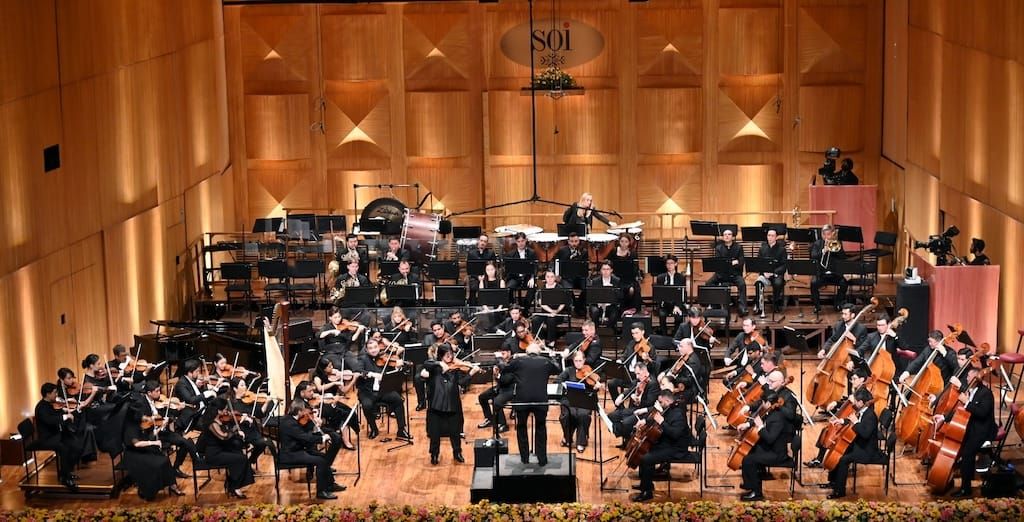
The Symphony Orchestra of India (SOI) will mark its 20th anniversary with an ambitious Autumn 2026 Season at the National Centre for the Performing Arts (NCPA), Mumbai, bringing together four symphonic programmes and two chamber recitals between 16 and 30 August.
Founded in 2006 by NCPA Chairman Khushroo N. Suntook and violinist Marat Bisengaliev, the SOI has played a significant role in the development of professional orchestral music in India. Its anniversary season looks both to the orchestra's history and to its continuing international ambitions, with appearances by acclaimed conductors and soloists alongside major works by Beethoven, Mozart, Rossini, Elgar, Wagner, Tchaikovsky and others.
The season will feature two appearances by Martyn Brabbins, the SOI's recently appointed Chief Conductor. Brabbins, who was formerly Music Director of English National Opera, will lead programmes that include Beethoven's Symphony No. 2 and Elgar's Enigma Variations, as well as Beethoven's Symphony No. 8 and works by Rossini and Tchaikovsky.
Alessandro Bonato, Principal Conductor of the Haydn Orchestra of Bolzano and Trento, will make his India debut with the SOI, conducting two programmes. His appearances will introduce Indian audiences to a conductor who has established a growing reputation on the international opera and symphonic circuit.
The season also marks SOI debuts for three prominent performers. Belgian clarinettist Annelien Van Wauwe will appear as soloist in Mozart's Clarinet Concerto, while Italian violinist Francesca Dego will perform Beethoven's Violin Concerto. Bonato completes the trio of artists making their first appearances with the orchestra.
Cellist Bryan Cheng, meanwhile, returns to the SOI following his appearance during the orchestra's Spring 2024 Season. Cheng will perform with the orchestra as well as appearing alongside his sister, pianist Silvie Cheng, as part of the Cheng²Duo's chamber recital.
The programming reflects the SOI's broad repertoire, moving from the Classical period into the Romantic and early Modern eras. A central strand of the season is Beethoven's symphonic legacy. The orchestra will continue its Beethoven Symphony Cycle, launched earlier in 2026 ahead of the 200th anniversary of the composer's death in 2027, with Symphonies Nos. 2 and 8 alongside the Violin Concerto.
Other orchestral highlights include Richard Strauss' Also sprach Zarathustra, Wagner's Prelude to Parsifal, Mendelssohn's Symphony No. 4, known as the Italian Symphony, Respighi's La Boutique fantasque and Tchaikovsky's 1812 Overture. Rossini's overtures will also feature in the season, adding a lighter and more theatrical dimension to the programmes.
The chamber music programme extends the season's international scope. The Cheng²Duo, formed by Bryan Cheng and Silvie Cheng, will perform works by Janáček, Lili Boulanger and Poulenc, alongside a special arrangement of Mussorgsky's Pictures at an Exhibition.
Later in the season, Francesca Dego will join pianist Francesca Leonardi for a recital featuring music by Tartini, Berio, Debussy, Respighi and Ravel. The programme spans several centuries of violin repertoire, bringing together works from the Baroque period with 20th-century and modern compositions.
For the SOI, the anniversary represents two decades of sustained investment in professional orchestral music in India. Since its foundation, the orchestra has worked with internationally recognised conductors and soloists including Zubin Mehta, Charles Dutoit, Carlo Rizzi, Maria João Pires, Stephen Hough and Zakir Hussain. It has also taken its performances beyond India, appearing at venues including the Tonhalle Zurich, Victoria Hall in Geneva and the Royal Opera House Muscat, as well as venues across the United Kingdom.
The orchestra's activities have extended beyond regular symphonic seasons. The SOI has participated in large-scale opera productions, including collaborations with the Hungarian State Opera, and in 2024 accompanied the finalists of the Operalia competition under Plácido Domingo during the competition's South Asia debut at the NCPA.
Music education has become another important part of the orchestra's work. Through the SOI Music Academy, trainee programmes, masterclasses and outreach initiatives, the organisation has sought to develop a new generation of Indian orchestral musicians. This remains a key part of its future ambitions.
Speaking about the orchestra's 20th anniversary, Khushroo N. Suntook, Chairman of the NCPA and co-founder of the SOI, reflected on the circumstances that led to its creation and its development over the past two decades.
Suntook recalled that, towards the beginning of the new millennium, the NCPA began considering the possibility of developing its own group of performing musicians alongside a school of music. A meeting with Bisengaliev, following a performance by the violinist and an ensemble of Kazakh musicians in London, eventually led to invitations for the musicians to perform in India and, ultimately, to the establishment of the SOI.
Two decades later, the orchestra is looking towards further expansion. With Brabbins now serving as Chief Conductor and Bisengaliev continuing as Artistic Director, Suntook said the SOI aims to strengthen its position both in India and internationally, while increasing the number of Indian musicians within its ranks.
The Autumn 2026 Season therefore arrives at an important point in the orchestra's development. Its anniversary is being celebrated through a programme rooted in the established orchestral canon, but the season also reflects the SOI's broader ambitions: bringing international artists to Indian audiences, developing Indian musicians and building an orchestra capable of engaging with audiences beyond the country.
As the SOI enters its third decade, the combination of Beethoven's continuing symphonic cycle, major Romantic repertoire, contemporary chamber programming and international collaborations offers a programme that reflects both where the orchestra has come from and where it hopes to go next.