Analysing the Music of Aaron Copland
Aaron Copland transformed American musical identity through spacious harmonies, open intervals, jazz-inflected rhythms and transparent orchestration. From 'Appalachian Spring' to 'Rodeo' and 'Fanfare for the Common Man', his music made simplicity remarkably powerful.

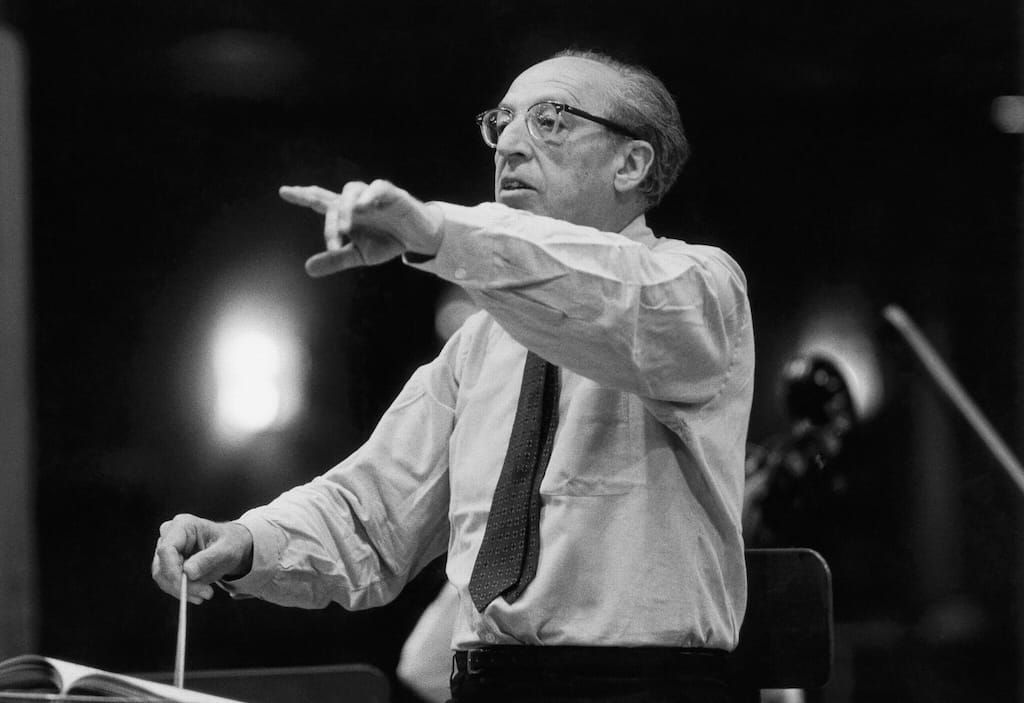
Aaron Copland occupies a distinctive place in 20th-century music. Few composers managed to create a sound so immediately associated with a particular country, landscape and cultural imagination. When we hear the spacious harmonies of Appalachian Spring, the swaggering rhythms of Rodeo, the quiet dignity of Fanfare for the Common Manor the cinematic sweep of Billy the Kid, we often recognise the music as American almost instinctively.
Yet Copland's music is more sophisticated than the idea of an easily identifiable "American sound" might suggest. Behind its apparent simplicity lies an intricate combination of modernist harmony, folk influence, jazz, rhythmic experimentation, careful orchestration and an extraordinary sensitivity to musical space.
Understanding Copland's music therefore means looking beyond its melodies. His distinctive voice emerges from the way he constructs harmony, rhythm, texture and silence, and from his ability to transform relatively simple musical materials into something expansive and emotionally powerful.
Creating an American Sound
Copland was born in Brooklyn in 1900 and came of age at a time when American composers were still searching for an identity distinct from European musical traditions. Much of the country's concert repertoire remained dominated by composers such as Beethoven, Brahms, Wagner and Tchaikovsky, while younger American composers were confronted with the question of what an authentically American musical language might sound like.
Copland's answer was not to reject European modernism. Instead, he absorbed it and combined it with distinctly American influences.
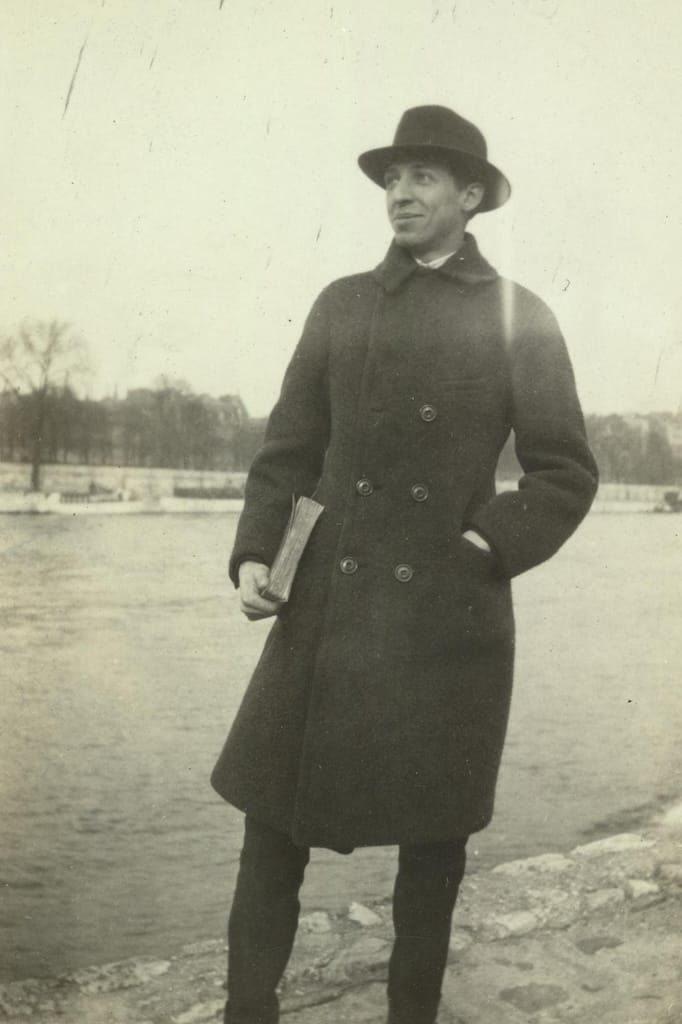
During his studies in Paris, he encountered the teaching of Nadia Boulanger, whose influence was particularly important. He also encountered the music of Stravinsky, Debussy, Ravel and other European composers. At the same time, Copland was listening closely to jazz, popular music and the musical traditions surrounding him in the United States.
The result was not a single formula. Copland's style changed considerably throughout his career. His early works could be abrasive and intellectually demanding, while his later compositions often adopted a more spacious and accessible language.
What connects these periods is his remarkable ability to make music sound open, clear and physically expansive.
The Power of Open Intervals
One of the most recognisable characteristics of Copland's music is his use of open intervals, particularly fourths and fifths.
In traditional tonal harmony, chords are frequently constructed around thirds. A major or minor triad, for example, depends heavily on the relationship between its root and third. Copland often reduces this sense of harmonic density by emphasising intervals such as fourths and fifths.
The effect can be striking. Instead of sounding lush and romantically saturated, his music can feel spacious, almost as though individual notes have been placed across a vast landscape.
This is particularly important in Appalachian Spring. The opening does not immediately establish a dense harmonic world. Instead, isolated instrumental colours and widely spaced sonorities gradually create an atmosphere of openness.
These intervals also contribute to the impression that Copland's music is somehow rooted in the American landscape. His harmonies seem to leave room for air and distance.
This is one reason his music can sound monumental without necessarily being loud.
Harmony Without Traditional Direction
Copland's harmonic language is neither conventionally tonal nor completely atonal. Instead, he often creates a sense of tonal ambiguity.
Traditional tonal music frequently gives listeners a strong feeling of movement towards a destination. Chords create tension, dominant harmonies seek resolution, and melodies reinforce a clear tonal centre.
Copland often weakens these expectations.
He might establish a tonal centre while simultaneously introducing notes that complicate it. He can place different harmonic areas against one another or allow a chord to remain suspended rather than resolving in an expected way.
This gives his music a curious combination of familiarity and uncertainty. The listener can often sense where the music is centred, yet the route towards that centre may be unconventional.
Copland's use of dissonance is similarly distinctive. Dissonance does not necessarily function as something that must be urgently resolved. Sometimes it simply becomes part of the landscape of the music.
That quality is particularly important to understanding why Copland's music can sound modern while remaining accessible.
Rhythm, Jazz and the American Pulse
Harmony is only part of Copland's American sound. Rhythm plays an equally important role.
During the 1920s, Copland became increasingly interested in jazz. The influence can be heard in works such as Music for the Theatre and Piano Concerto, where syncopation, rhythmic accents and jazz-inflected gestures become central to the musical language.
Copland did not simply reproduce jazz. Instead, he absorbed some of its rhythmic characteristics and transformed them within a concert-music context.
His rhythms can be unexpectedly asymmetrical, with accents falling in places that disturb the listener's expectations. At other moments, he uses simple rhythmic patterns with enormous effectiveness.
Consider the famous "Hoedown" from Rodeo. Its energy comes partly from the directness of its rhythm. The repeated patterns, accented beats and sharply articulated gestures create the impression of movement and physical activity.
Yet beneath that apparent simplicity is careful compositional control.
Copland understood that a rhythm becomes more powerful when the listener can feel its underlying structure. His most successful rhythmic writing often combines repetition with subtle shifts in accent and orchestration.
Orchestration and the Art of Space
Perhaps one of Copland's greatest achievements was his approach to orchestration.
Where many late-Romantic composers sought rich, continuously blended orchestral textures, Copland frequently allowed individual instruments and sections to remain clearly audible.
His orchestration can therefore feel transparent.
A flute may appear against a quiet string texture. A trumpet call may emerge from silence. Percussion may be used sparingly but with enormous impact. Woodwind instruments can suddenly provide a small detail that changes the colour of an entire passage.
This clarity is essential to the character of his music.
Copland understood that silence can be as expressive as sound. Rather than filling every moment with musical information, he frequently creates pauses and open spaces.
The result is an orchestral language that feels spacious and almost visual.
It is easy to understand why his music became so effective in ballet and film. He could create a sense of place without requiring constant musical activity.
Appalachian Spring
Appalachian Spring is perhaps the clearest demonstration of Copland's mature style.
Originally composed as a ballet for Martha Graham, the work depicts a young couple beginning their life together in rural Pennsylvania. Its music combines pastoral atmosphere with rhythmic vitality and a remarkable sense of emotional restraint.
The famous opening is one of the clearest examples of Copland's ability to create an expansive sound world from remarkably economical material.
The music gradually expands rather than announcing itself dramatically. Instrumental lines enter one by one, creating a feeling of space and anticipation.
Later, Copland introduces the Shaker tune "Simple Gifts". Its melody is straightforward, but his treatment of it demonstrates his compositional sophistication. Rather than simply presenting the tune, he places it within a changing harmonic and orchestral environment.
The effect is both familiar and transformed.
This balance between simplicity and complexity is central to Copland's music. The surface may appear uncomplicated, but the structure underneath is carefully calculated.
Billy the Kid
In Billy the Kid, Copland demonstrates another side of his musical personality.
The ballet draws on the mythology of the American West, and Copland creates a musical world filled with wide spaces, violence, tenderness and movement.
The famous opening evokes the landscape through broad orchestral textures. Rather than describing the West through literal musical imitation, Copland creates a psychological landscape.
He also demonstrates an extraordinary ability to move between contrasting musical worlds.
Dance rhythms can suddenly give way to quiet lyricism. A violent episode may be followed by a passage of extraordinary stillness.
This dramatic flexibility anticipates the development of Copland's film music. His orchestral writing often behaves almost like cinematic editing, moving rapidly between different perspectives and emotional states.
Rodeo and the Energy of Movement
If Appalachian Spring represents Copland's pastoral side, Rodeo reveals his fascination with physical movement and popular culture.
The ballet explores life around a ranch and the figure of the young cowgirl. Its music incorporates folk-like melodies, syncopated rhythms and energetic orchestration.
The "Hoedown" has become one of the most recognisable pieces of American orchestral music.
Its popularity can sometimes obscure how skilfully it is constructed. Copland takes relatively direct musical material and uses orchestration, rhythmic repetition and harmonic shifts to create extraordinary momentum.
The music feels spontaneous, but it is not. Its apparent naturalness is one of Copland's great compositional achievements.
Fanfare for the Common Man
Few works demonstrate Copland's ability to say more with less than Fanfare for the Common Man.
Composed in 1942 during the Second World War, the piece uses a remarkably small amount of musical material. Brass and percussion establish a solemn, spacious atmosphere, while the central fanfare unfolds with enormous dignity.
There is no complicated melody. There is no elaborate development. Instead, Copland relies on rhythm, register, repetition and silence.
The opening percussion establishes a sense of gravity. The brass then enters with broad, open intervals, creating a feeling of ceremonial grandeur.
The piece demonstrates that monumentality does not necessarily require complexity.
Copland's restraint is precisely what gives the music its power.
From Folk Music to Musical Myth
It is tempting to describe Copland simply as a composer who incorporated American folk music into classical compositions. That description, however, misses something important.
Copland was not merely collecting American melodies. He was helping construct an idea of America through music.
The rural landscapes of Appalachian Spring, the cowboys of Rodeo, the frontier world of Billy the Kid and the democratic dignity of Fanfare for the Common Man all contribute to a broader cultural mythology.
His music often presents America as spacious, optimistic, democratic and physically expansive.
That image is selective, of course. The United States contains many musical and cultural traditions that fall outside Copland's best-known aesthetic. Nevertheless, his music became so influential partly because it gave audiences an immediately recognisable musical vocabulary for imagining the country.