Verbier Festival 2026
The 33rd edition of Verbier Festival recently concluded in Switzerland. Simon Broughton was there for the last four days and sends this report.
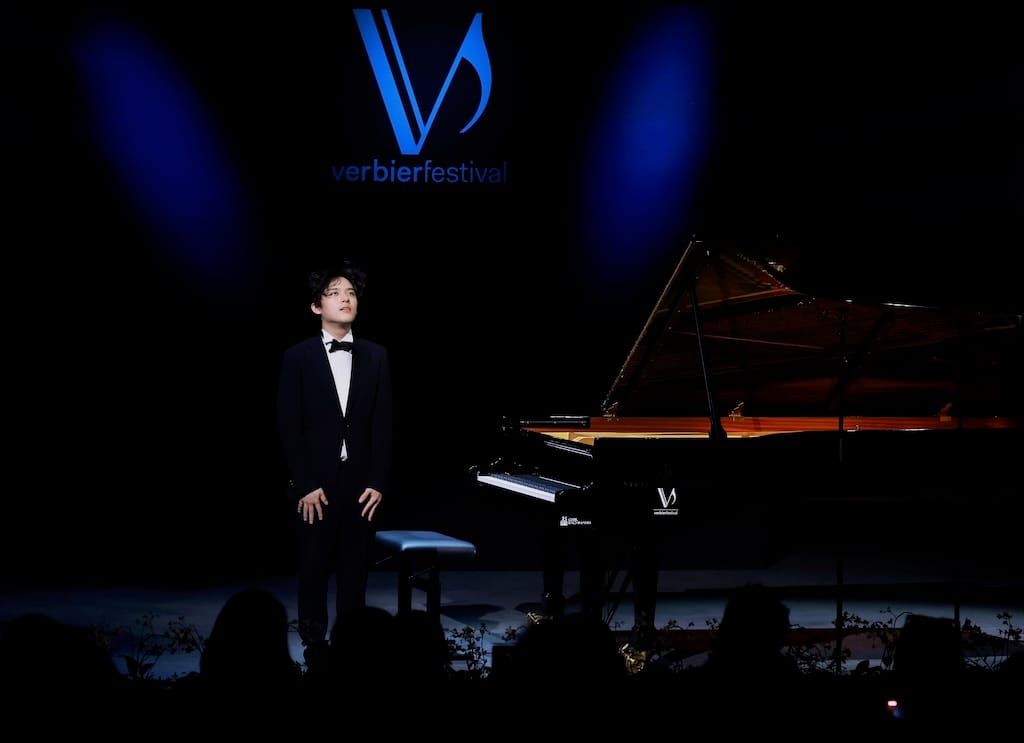
A small young figure walks onto the stage. He does a swift bow, barely a smile, sits down and within a few seconds starts playing to a packed hall of 1400 people. He’s pale, with a flop of black hair and despite his slight appearance, he has the audience in his astonishingly able hands from the outset. This is the Verbier Festival and South Korean pianist Yunchan Lim, 22, is currently one of its main draws. But Verbier has been focusing on young talent, particularly pianists for years. Yunchan Lim, who rose to fame after winning the 2022 Van Cliburn competition in Texas, is perhaps the most recent celebrity. The video of him playing his winning performance of Rachmaninov’s 3rd concerto has been viewed over 19 million times. And certainly, many South Koreans are here in the Alpine resort of Verbier to see him as it’s easier to secure a ticket here than in South Korea.
In the first half, Yunchan Lim’s solo recital (July 30) is Schubert sonata no 17 ‘Gasteiner’, named after the Austrian spa town where it was written just over 200 years ago, and Scriabin’s piano sonatas 2, 3 and 4 played without a break in the second half. Yunchan’s gift is playing the music with what seems like a clarity of understanding. The Schubert sonata is big, but with a clear architecture that Yunchan seems to have conceived from the first note and leads us through. In the first movement particularly notable were the strong rising phrases in the left hand answered by feathery light descending cascades in the right. Sheer poetry.
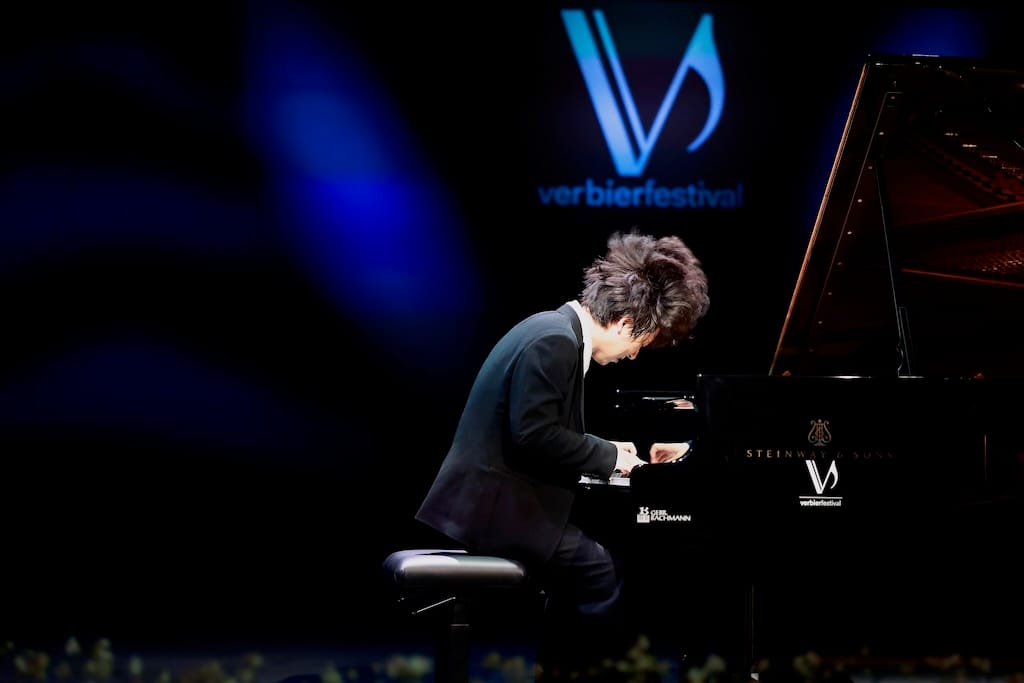
While the Schubert is more about musical architecture, the Scriabin takes us on an emotional narrative. The music is much more complex but Yunchan seems like a vehicle for the composer’s thoughts. He makes Scriabin speak directly to us. There are clouds of notes in the first movement of the Second Sonata, for instance, but he clearly brings out all the melodies buried in there. Similarly, in the much longer Third Sonata. When Yunchan opened I wrote ‘dramatic’ and actually the score says ‘Drammatico’ and he was more than living up to the instructions. Also, in the short enigmatic Fourth Sonata. There are screens showing the coverage for streaming company Medici.tv which broadcasts many of the performances. There are close ups of face, fingers and wide shots, but they’re often annoying to watch as the display is nearly a second late. Actually, the further back you are sitting the less disturbing the delay. What was very visible on screen was the sweat constantly dripping from Yunchan’s face. At the end it must have been a pretty salty Steinway. The response was overwhelming and Yunchan returned three times before playing Rachmaninov’s lyrical Vocalise as an encore to calm things down.
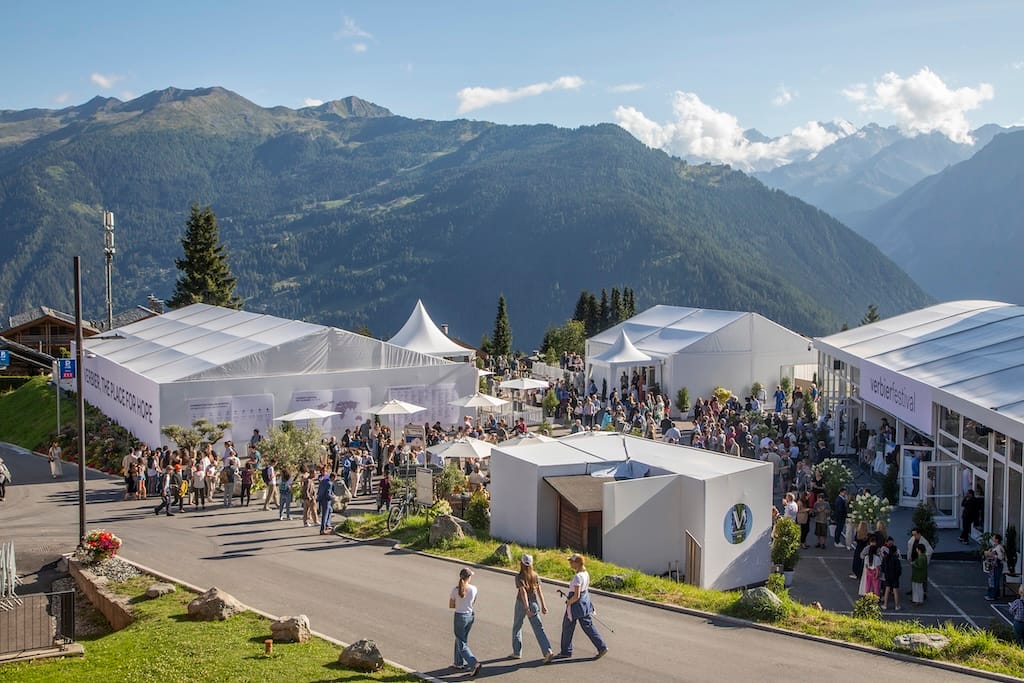
The Verbier Festival started in 1994 and has made a specialty of featuring young performers, many of whom have become, like Yunchan, international superstars. Frequently returning artists include pianists Marta Argerich (already a star before the festival started), Evgeny Kissin, Bruce Liu, Alexandre Kantorow, Julien Quentin, violinist Daniel Lozakovich, who all appeared this year, as well as many others.
What distinguishes Verbier from other classical music festivals in the region, like Gstaad (founded by Yehudi Menuhin and celebrating its 70th anniversary this year) is that artists usually stay for several days. The founder and director Martin Engstroem says it’s more like a community where alongside solo concerts, the musicians are encouraged to play chamber music programmes that they’ve never played anywhere else. Verbier performances are frequently unique.
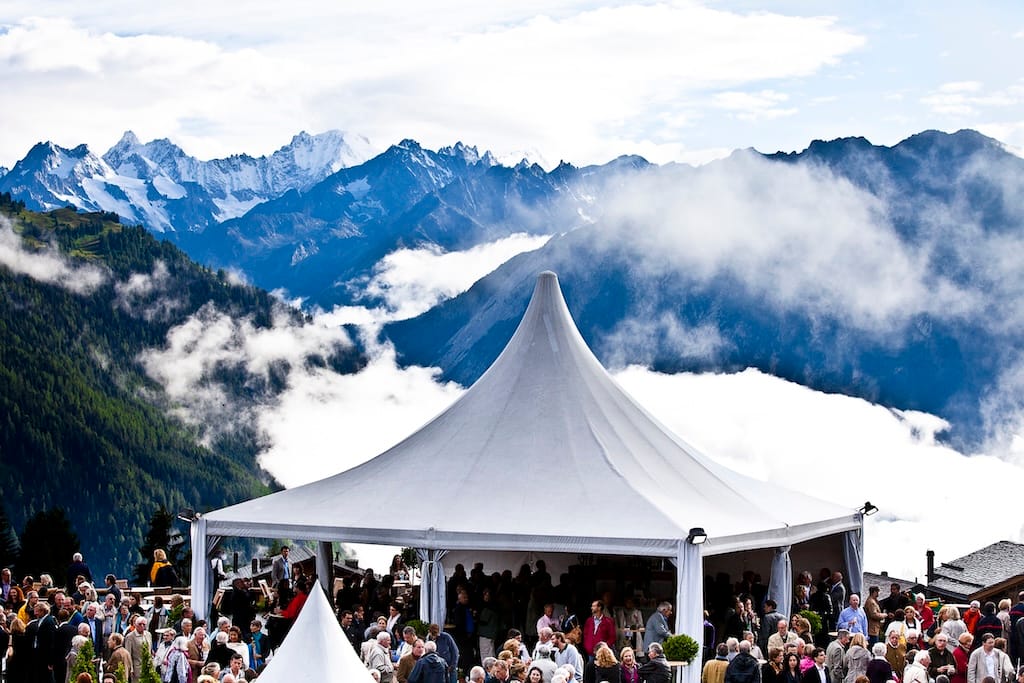
So Yunchan Lim, alongside his solo concert of Schubert and Scriabin which he has played in many concert halls around the world, also played Mozart’s Concerto in E minor for Two Pianos and Orchestra with his former teacher Minsoo Sohn (July 26), which was before I arrived and, in a chamber concert, joined four string players in the Piano Quintet by the Russian composer Nikolai Medtner (July 30). It’s a piece that Medtner worked on for over 45 years completing it in 1949, shortly before his death. The middle movement is audibly based on Russian Orthodox chant and the flamboyant finale ends in what sounds like a glorious peel of bells. The way in which Yunchan on piano was attentively following every move of violinist Daniel Lozakovich was impressive to see. It did sound more like a collection of soloists than a piano quintet, but what a way to hear a substantial and rarely-performed piece in the repertoire. Once again, the applause was ecstatic and they eventually just repeated the spectacular closing section as an encore.
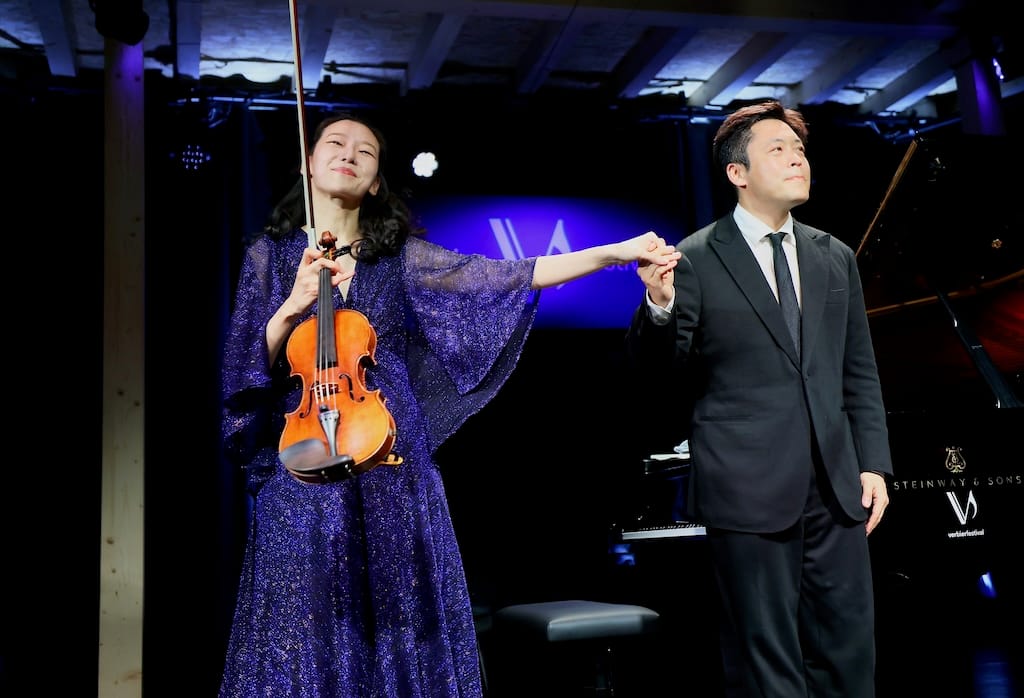
Husband and wife team of Clara-Jumi Kang (violin) and Sunwook Kim (piano) were also involved in several concerts this year, including a violin and piano recital also featuring rarely-heard repertoire (August 1). They played two of the hardest violin sonatas in the repertoire, by Ottorino Respighi and Richard Strauss. These are tough works that require a great deal of stamina, both on the violin and piano in which they were super-well matched. In the middle was the idiosyncratic Violin Sonata No. 4 by Mieczyslaw Weinberg, whose music has been enjoying a serious revival in recent years. The central fast movement is very memorable, a virtuoso ‘perpetuum mobile’, reminiscent of Shostakovich - each composer admired the other - before a closing Adagio. To hear unusual repertoire in performances as fine as these is a hallmark of Verbier. These chamber music performances take place in the town’s rather airless church. There are plans to build a new Centre Culturelle for the festival and for year-round use, but these are still some way off. But still the thrill of coming out of the church and gazing over snow-capped mountains is some recompense.
While the festival is overwhelmingly of (Western) classical music, I was pleased to be able to catch two concerts extending those boundaries. The first was of the Rolando Luna Trio. Cuban pianist Rolando Luna performed with the widely touring Buena Vista Social Club for ten years, this involved many veteran musicians like singers Compay Segundo, Ibrahim Ferrer and Omara Portuondo and pianist Ruben Gonzalez with younger players until they passed away or were no longer able to tour. Their music was nostalgic, sure, but full of passion and sublime musicianship.
Luna, made a grand entrance, blowing kisses to the audience and then sat down at the piano to play what I assume was an improvised solo, strongly classical rather than Cuban, in nature, probably to take us gently from one world into another. At one point there were references to Debussy’s ‘Clair de Lune’. Next, he introduced his double bass player Yasser Morejón Pino and for the third piece the fabulous Cuban percussionist Yaroldy Abreu Robles, something of a star. The trio played a jazz version of one of Buena Vista Social Club’s most famous songs, ‘Veinte Años’, sung originally by Omara Portuondo. Luna mentioned that there were two members of Buena Vista Social Club whom he found particularly inspirational: firstly, the pianist Ruben Gonzalez and the double bassist Cachaíto López. I wish Luna had picked up some of the humility of Ruben Gonzalez who was such a self-effacing musician, while playing like an angel. I’m afraid Luna was always attention-seeking, contorting his face into cheesy grins and blowing more kisses. There was another piano solo, quite Mozartian this time, and he does have a mischievous touch in his playing which is preferable to his showing off. But frankly a disappointment.
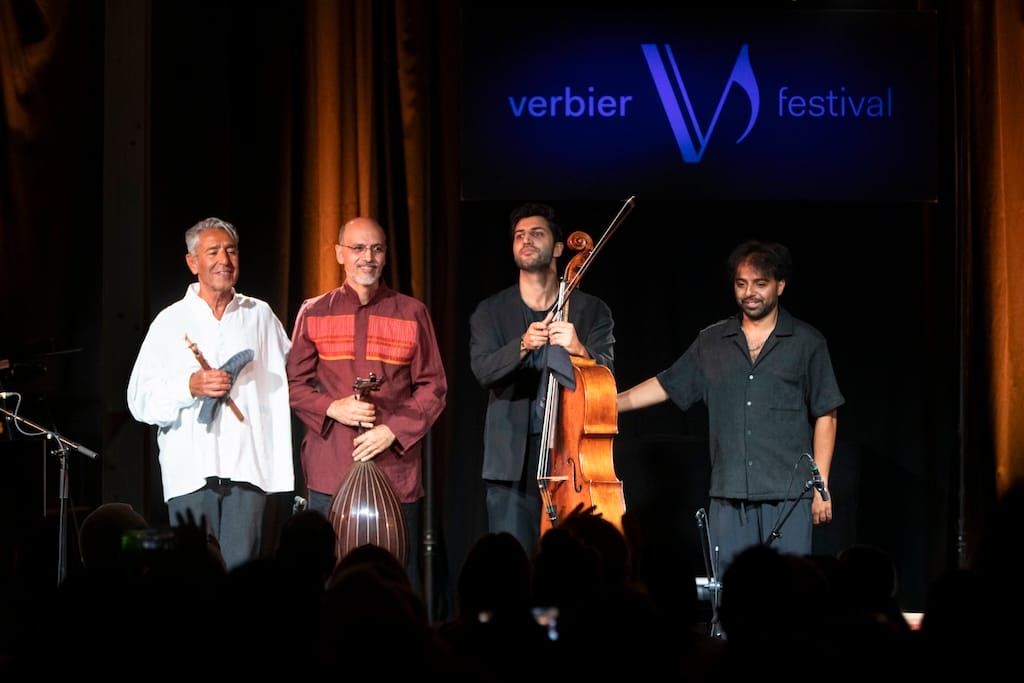
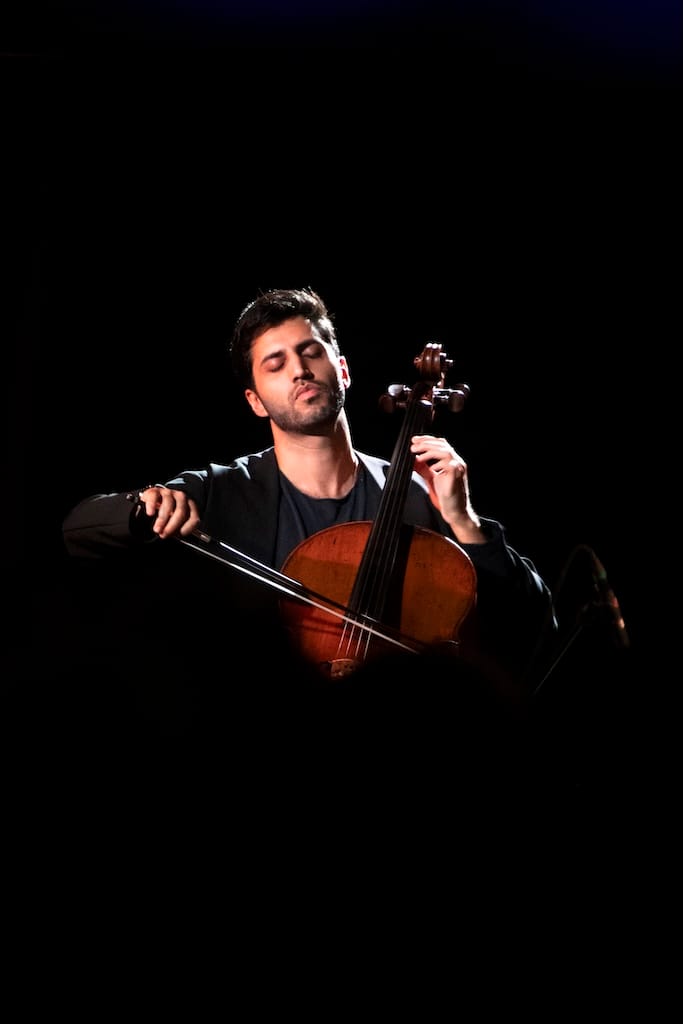
Cellist Kian Soltani performs with the Shiraz Ensemble at the Verbier Festival © Nicolas Brodard / Verbier Festival
The other musician that led us very successfully into a different musical territory was cellist Kian Soltani, Austrian-born but of Persian heritage. He’d been playing cello in the Medtner Piano Quintet and the following morning (July 31) played a gorgeous concert of Persian music with the Shiraz Ensemble, featuring ney (reed flute) and duduk (traditional Armenian oboe), oud (lute) and intricate percussion. The percussionist Naghib Shanbehzadeh performed a couple of stunning improvised percussion solos on frame and goblet drums, but the other pieces were arrangements of pieces by the Iranian-born composer Reza Vali, oud player Hossein Behroozinia and Kian Soltani’s father, ney and duduk player Khosro Soltani. Kian told me afterwards that his father was professionally a bassoonist, but at home was always playing and practicing these more traditional instruments. Kian gave splendid introductions to the pieces from the stage. It was a fresh and thrilling performance with all the virtuosity and sincerity you can expect at Verbier Festival.
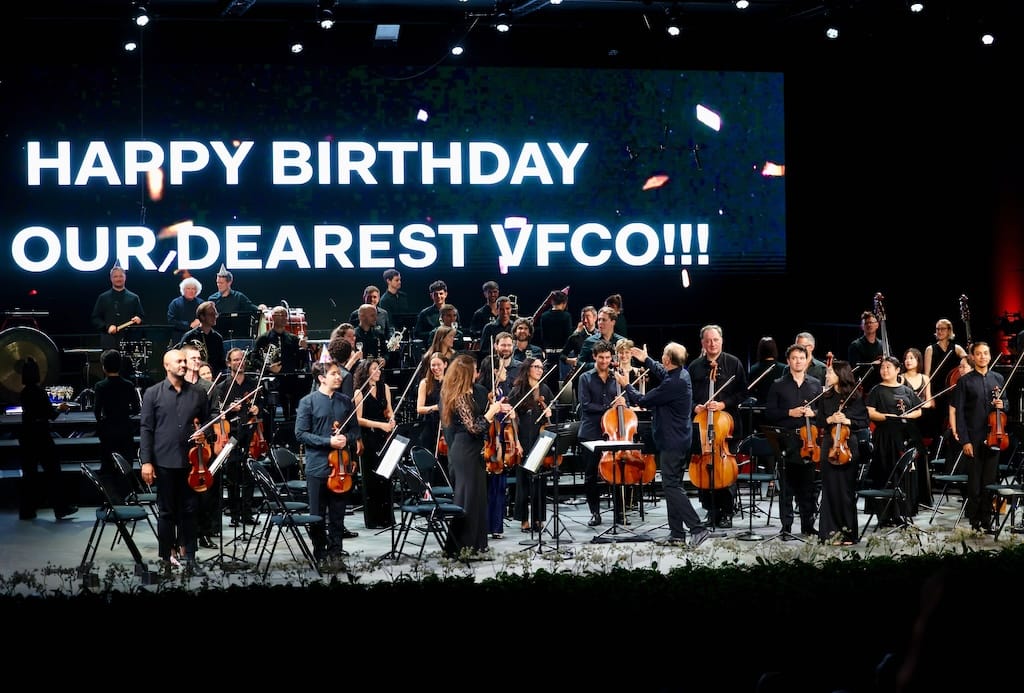
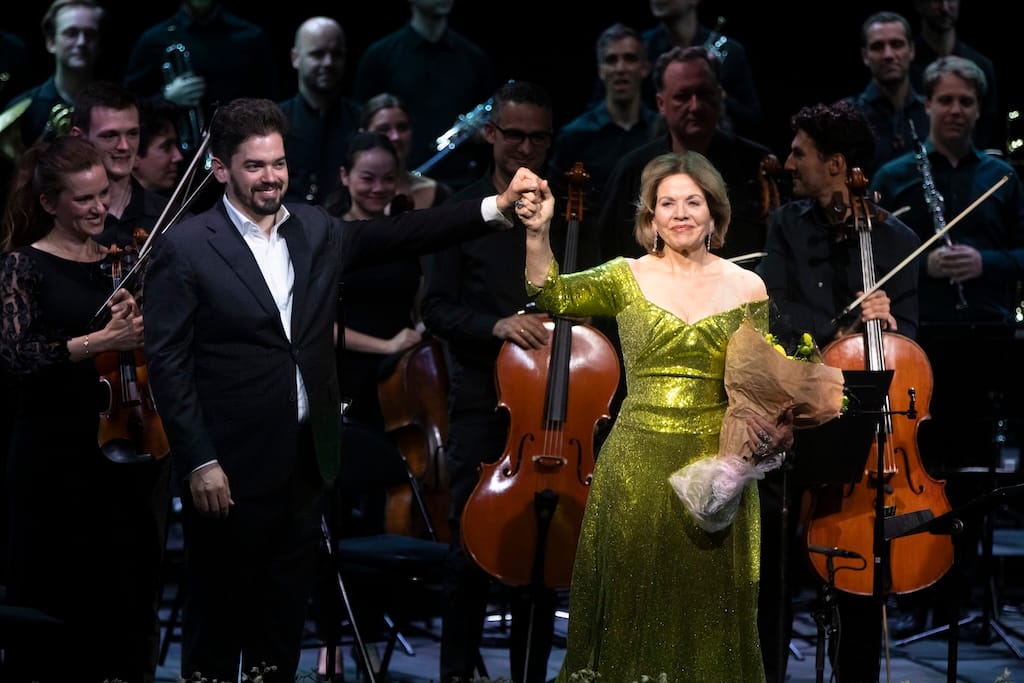
Aside from the solo and chamber concerts, over the 18 days there are several orchestral concerts given by the Verbier Festival Orchestra (with major international conductors like Esa-Pekka Salonen and Simon Rattle), the Verbier Festival Chamber Orchestra (celebrating its 20th anniversary this year), usually with their conductor Gábor Takács-Nagy and the Verbier Festival Junior Orchestra. And every day there are free masterclasses in which young instrumentalists are tutored by leading masters like pianists Richard Goode and Andras Schiff, cellist Stephen Isserlis and soprano René Fleming. There are also open rehearsals for the orchestral concerts. So, if you wish, there are events virtually all day long at Verbier. Although there are other distractions and up here at 1500 metres you are surrounded by them. I think it’s hard to beat a great day’s hiking, or mountain-biking which is increasingly popular, and then enjoying absolutely first-class music in the evening.
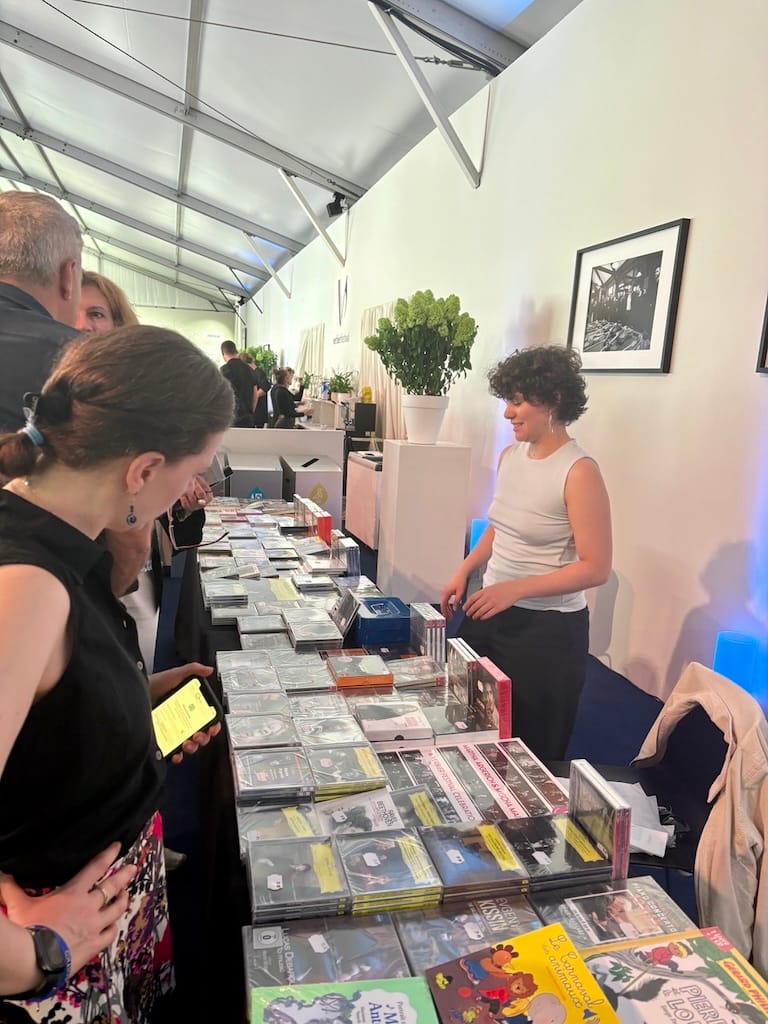
This year there were 236 concerts and 50,000 tickets issued and apparently a record box office revenue. Verbier is a town with around 2,800 permanent residents and 45,000 overnight visitors during the festival period. Of course, not all of those will necessarily be attending the festival - they may be mountain-biking. But it’s some indication of the impact the festival has on the town as a summer destination. I was also struck by the impressive CD sales counters and many people buying. There’s a wonderfully old-school public here. Verbier have released their own CDs and the festival seems to be a healthy market for those albums and all the artists performing. Many of the concerts are streamed on French-based Medici.tv, the largest classical music streaming service, and so reaching hundreds of thousands more who haven’t yet made it to Verbier.
This year’s closing concert featured the youthful, but super-talented, Verbier Festival Orchestra featuring musicians aged from 18 to 28 years old from all over the world. They were conducted by Vassily Petrenko in Tchaikovsky’s too rarely played Second Piano Concerto with one of Verbier’s most-loved pianists, Alexandre Kantorow. His wild mane of hair was all over the place, but his performance was powerful, incisive and precise. The piece also includes some lovely violin and cello solos giving concertmaster Dexter Mott and lead-cellist Clara Schlotz beautiful moments to shine.
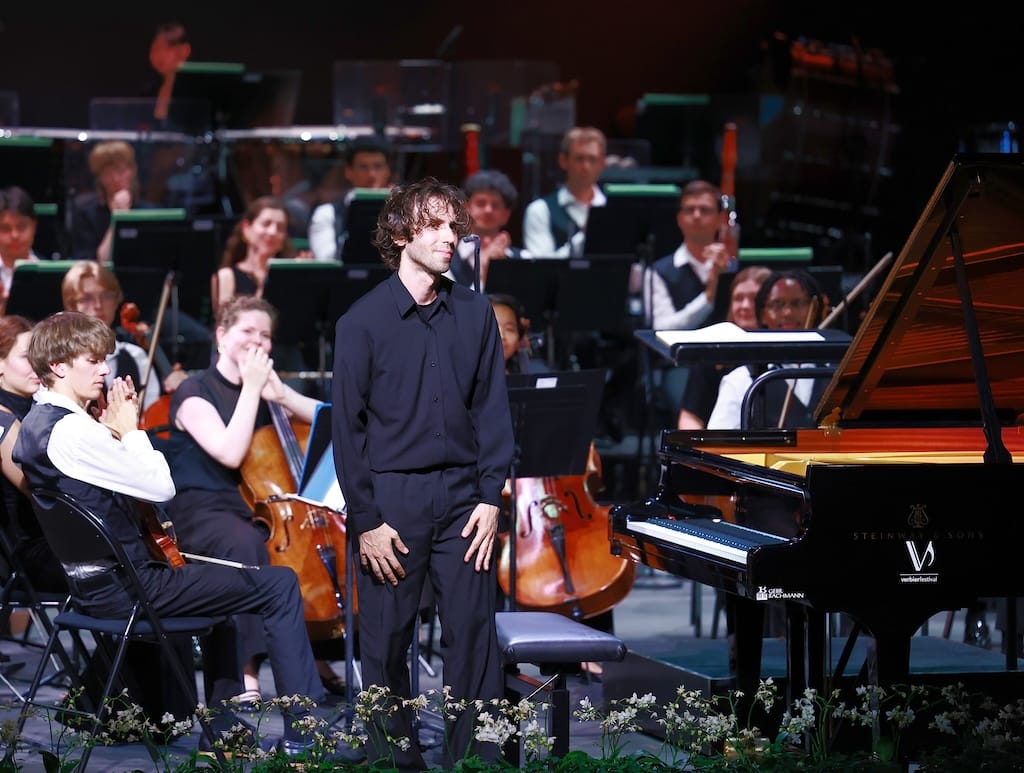
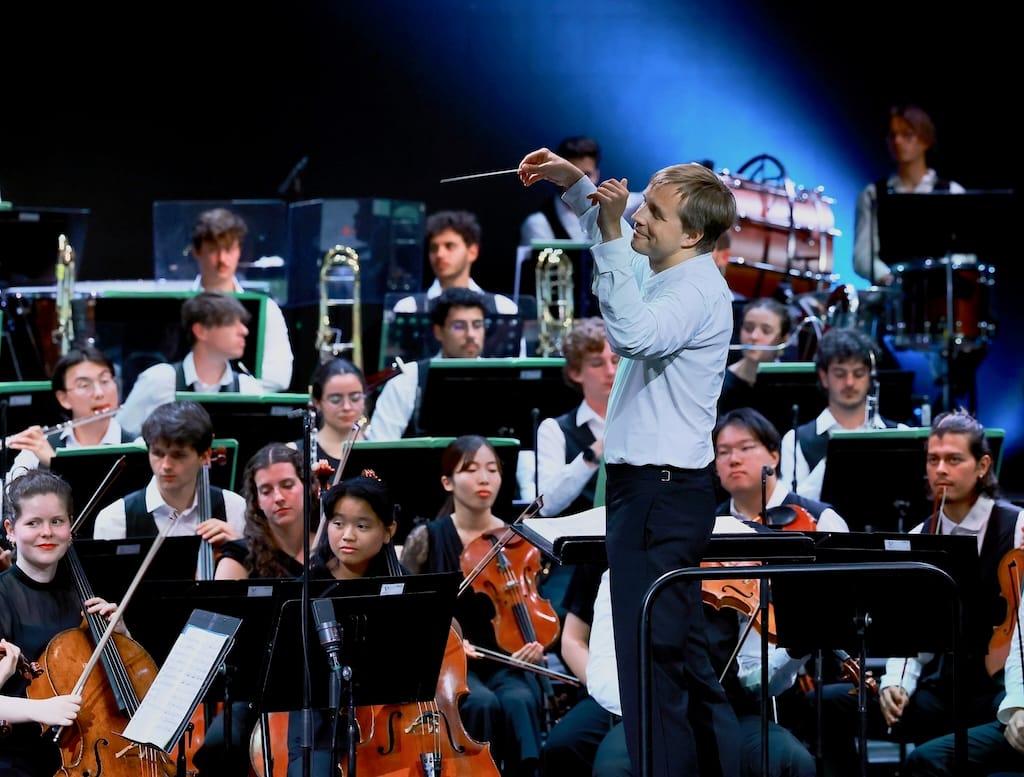
Conductor Vassily Petrenko and pianist Alexandre Kantorow at the Verbier Festival © Anne du Chastel / Verbier Festival
Everything concluded with pieces from Prokofiev’s ballet Romeo & Juliet. The most famous movement from this is Montagues & Capulets with its very recognisable dotted-rhythm tune. But before that there’s a slow introduction which from Petrenko and the orchestra was simply electrifying. Grinding discords are followed by soft string chords that your ears take time to adjust to. And this was just a foretaste of the orchestral glories that were to come. There are few performances I’ve heard of this music as youthful and vivid as this. Congratulations to the amazing musicians of the Verbier Festival Orchestra.