The Genius Of Louise Farrenc
French composer and pianist Louise Farrenc overcame institutional barriers to build a remarkable musical legacy. From her groundbreaking role at the Paris Conservatoire to her masterful symphonies and chamber works, Farrenc emerged as one of the 19th century’s most significant composers.

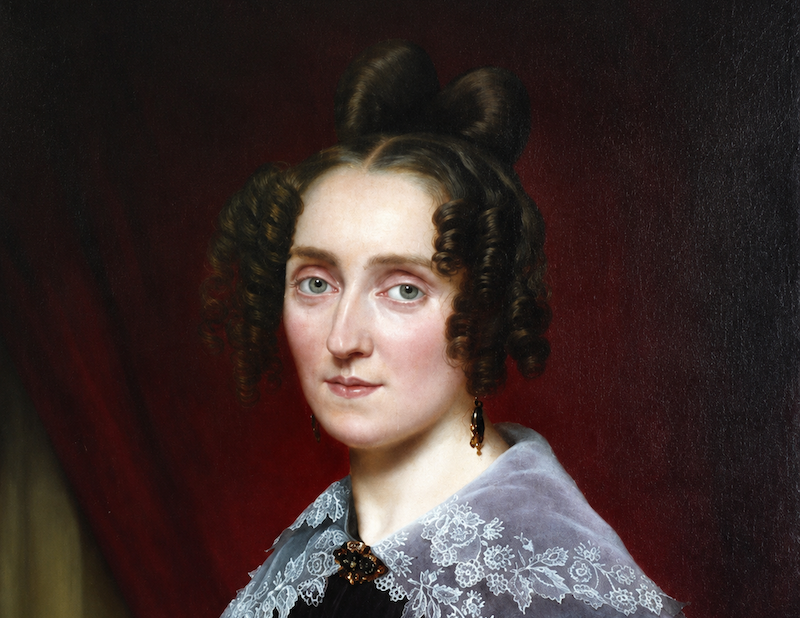
In the world of Western classical music, women composers are often overlooked. There have been many wonderful women composers, as talented as their male counterparts, whose contributions have been ignored and trivialised just because of their gender. Some of the women masters include Hildegard von Bingen, Barbara Strozzi, Francesca Caccini, Fanny Mendelssohn, Clara Schumann, and Louise Farrenc. In this piece, we take a look at the life and works of Louise Farrenc.
Born Into Art
Jeanne Louise Dumont was born into a family of artists on 31st May, 1804. Her mother was an artist and came from the prestigious Coypel family of painters. Her father Jacques-Edme Dumont was a prominent court sculptor in Paris. She was tutored in fine arts and excelled in drawing and painting. She even thought about doing it professionally. Then she discovered her love for the piano under her childhood piano teacher Anne-Élisabeth Cécile Soria, her godmother, who was a former student of Muzio Clementi, an Italian composer, pianist and conductor. At 10 years of age Louise showed an incredible talent and passion for music. Her family supported her in harbouring and pursuing her talent further. At a time where most families supported music for women as simply acquiring a ‘social grace’, the Dumont family’s support of Louise’s talent was a rare instance which contributed to her later success as a composer.
Learning The Craft
She continued her study of piano through rigorous lessons with two very influential performers of her time - Ignaz Moscheles and later with Johann Nepomuk Hummel. Moscheles was a key figure in transitioning piano technique from the delicate fortepiano to the more powerful modern grand. Pianist and author Susan Tomes notes that learning Farrenc’s piano parts is strikingly similar to learning Moscheles - a style where the piano provides a play of brilliant decoration over a base of firm harmony. Hummel was a protégé of Wolfgang Amadeus Mozart. From him, Farrenc inherited the jeu perlé style - a technique emphasising light and perfectly even fingerwork.
In the first half of the 19th century, women were not allowed to take counterpoint and composition classes at the Paris Conservatoire. At the age of 15, she continued learning piano, composition and counterpoint formally with private lessons from Anton Reicha, a professor at the Conservatoire. Reicha was a progressive teacher who did not dilute the material for his female students. He treated Louise like any other professional composer-in-training. He imparted to her the same rigorous tools he gave his other famous students like Franz Liszt and Hector Berlioz.
Building A Career In Paris
Louise started playing piano frequently at community events and gatherings. This is where she met flute player Aristide Farrenc, a composer who in the future would establish his own music publishing business with the help of Louise - Éditions Farrenc. They were wed in 1821. Aristide supported and encouraged Louise’s career and dreams from the start. Through her husband’s publishing house, Louise’s first publications were released in 1824. She was prolific, composing all kinds of music including chamber music, symphonies, overtures, works for orchestra and piano.
Breaking Barriers At The Paris Conservatoire
In 1842 Farrenc became the professor of Piano at the Paris Conservatoire where she was originally denied lessons. She was the first woman to hold a full-time teaching role at the Conservatoire. Her published work of ‘30 Études for Pianists’ became mandatory for all piano students to learn at the Conservatoire. It is assumed that she was denied equal pay as her male counterparts with similar experience for years. Once she found out this discrepancy she decided to actively pursue her cause for equal pay. Her first letter to the Director of the Conservatoire was dismissed citing lack of funds. She was told she would receive equal pay once funds were in place. She found success with her Nonet in E-flat Major, a musical composition for nine performers. She used a mixed ensemble bridging the gap between chamber music and the dramatics and scales of a symphony orchestra. She put her newfound success to good use by writing to the Conservatoire director for a second time demanding equal pay. She was then granted equal pay with her male counterparts. This achievement is all the more significant considering that women’s suffrage was not even thought about at the time.
Recognition And Resistance
While she was keen to write an opera, the two opera houses in Paris would not release any libretto as she was a woman composer. She then abandoned the idea of composing an opera. This vacuum of having an opera to her name could have contributed to her being side-lined in spite of her many masterful pieces.
Tragedy struck when her daughter passed away in 1859. She gave up almost all composing. Between then and 1873 when she retired, she continued her husband’s endeavour of issuing a biannual multi-volume anthology of piano music to subscribers. This effort was an attempt to help preserve older styles of music. She passed away in 1875 at the age of 71.
A Legacy Rediscovered
Louise Farrenc composed music to satisfy her creative urges, and not to be seen merely as a ‘woman composer’ in a man’s world. She was not just a pioneer advocating for gender equality in the classical music world. Through her many significant works she has built a timeless legacy which resounds every time one of her symphonies is played in the concert halls around the world. One can listen to a few of her significant works like the Nonet, Symphony No. 3, Violin Sonata No. 2 in A major, 30 Studies in Major and Minor to comprehend and enjoy her mastery over her craft.