Beethoven's Most Dramatic Key
A chance journey through concerts in Bengaluru and Mumbai became an exploration of Beethoven's enduring fascination with C minor, the key that shaped some of his most dramatic, heroic and emotionally compelling music.

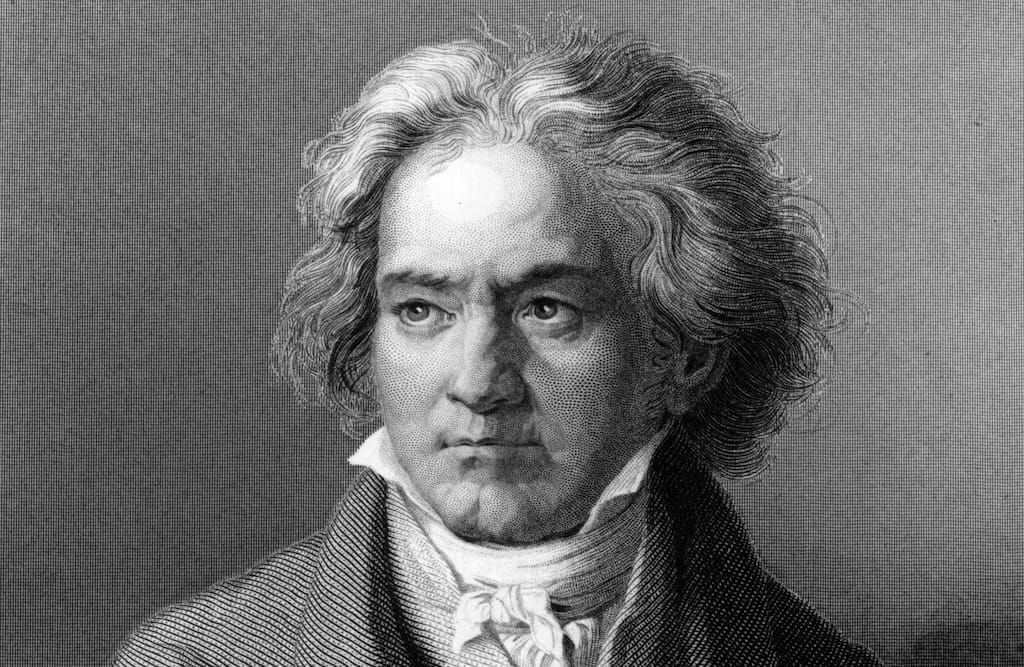
A happy happenstance allowed me to hear three Beethoven works (two orchestral and one chamber) in the ‘tragic’ key of C minor in two cities, Bengaluru and Mumbai, in as many days.
The National Centre for the Performing Arts (NCPA) Mumbai, in anticipation of Ludwig van Beethoven’s 200th death anniversary next year, has embarked on an ambitious project in its beloved Arties festival: to perform the entire cycle of the great composer’s sixteen string quartets spread across a period of four months, spanning both 2026 and 2027. It began earlier this month, and I had booked much in advance the concert on Sunday 24 May, featuring Beethoven’s string quartet number 4 in C minor, Opus 18.
But then our son successfully auditioned (cello) for the week-long SASO (South Asian Symphony Orchestra) workshop in Bengaluru, with the end-of-workshop concert featuring SASO faculty and workshop participants under the baton of Indian-origin conductor Alvin Arumugam on Saturday 23 May. As luck would have it, the programme featured Beethoven’s ‘Coriolan’ overture and his Third Piano Concerto, both in C minor.
C minor is a key “that Beethoven associated with pathos, struggle, and expressive urgency, reserved for his most dramatic music," in the words of Paul Schiavo, a prominent writer on classical music.
Many authorities have written of Beethoven’s “C minor mood.” Professor of Music Henry Wyatt notes that while for Mozart this key had “aspects of sublimity: melancholy, terror, otherworldliness,” that Beethoven “however, used C minor as a stormy, heroic tonality.”
American pianist and music critic Charles Rosen concurred:
“Beethoven in C minor has come to symbolize his artistic character. In every case, it reveals Beethoven as a Hero. C minor does not show Beethoven at his most subtle, but it does give him to us in his most extrovert form, where he seems to be most impatient of any compromise.”
Of the three works I listened to, two were composed around the same period: the string quartet between 1798 and 1800, and the Piano Concerto in 1800; while the Coriolan overture was written in 1807.
I played second violin when the London-based Corinthian Chamber Orchestra performed the Coriolan overture in the early 2000s, so having my son play it in Bengaluru in the cello section a quarter-century later was quite an emotional, proud moment for me.
Beethoven wrote the overture to Heinrich Joseph von Collin’s eponymous tragic play. Although Wyatt had primarily Beethoven’s groundbreaking Fifth Symphony in mind when he wrote of the “stormy heroic tonality” of C minor in Beethoven’s music, it applies just as perfectly to the play’s tragic hero Coriolan, better known to most of us as ‘Coriolanus’ from Shakespeare’s play of that name. Shakespeare’s ‘Coriolanus’ re-entered public consciousness in 2011 through the film adaptation with a stellar cast including Ralph Fiennes, Gerard Butler and Vanessa Redgrave.
Beethoven’s overture is an eight-minute stroke of genius, encapsulating the whole tragic story in this short span. He dispenses with any perfunctory introduction and launches headlong into the drama of it all: three energetic Cs build up and erupt with great malevolence into thunderclap chords. The main C minor theme with its strategic pauses, the inexorable crescendos beginning from virtually nothing to full-blown fortes in sometimes just two measures, only to drop off the precipice in subito pianos brilliantly portray a man wronged and about to unleash vengeance on a titanic scale; this is offset by a sublime theme in E flat major representing his mother intervening on behalf of Rome, of peace, and of sanity. The lurching forward propulsion in the lower strings borders on the methodically manic, almost sweeping aside the ‘mother’ theme until it ‘runs out of steam’, depicting Coriolanus’ anger dissipating as he listens to reason, but simultaneously sealing his own fate.
The piano score to Beethoven’s Third Piano Concerto was incomplete at its first performance according to his friend Ignaz von Seyfried, who was his page-turner that day:
“ I saw almost nothing but empty pages; at the most, on one page or another a few Egyptian hieroglyphs wholly unintelligible to me were scribbled down to serve as clues for him; for he played nearly all the solo part from memory since, as was so often the case, he had not had time to set it all down on paper.”
British musicologist Sir Donal Tovey said this concerto “is one of the works in which we most clearly see the style of [Beethoven’s] first period preparing to develop into that of his second." The second introspective movement (Largo) in the ‘remote’ key of E major particularly points to the future.
Goan-origin pianist Gavin Martin played this concerto in 1984 during the India tour of the New York Philharmonic under Zubin Mehta.
Beethoven’s Opus 18 number 4 string quartet is the only one among his sixteen in C minor. One of his ‘early period’ works, it looks back to Haydn, but the dramatic tension in the first and third movements, the wit in the second, already have his stamp. The last movement sounds (to my ears) as if it could have been ‘inspired’ (but in a minor key) by the last movement (Rondo all'Ongarese: Presto) of Haydn’s Piano Trio No. 39 in G major, Hob. XV/25, written five years earlier, in 1795.
An edited version of this article was published in the Herald Goa on 30 May 2026