Rediscovering Haydn's Forgotten Instrument: A Conversation with Matthew Baker
Favoured by Prince Nikolaus Esterházy and championed by Haydn, the baryton nearly vanished from musical life. Matthew Baker discusses reviving the instrument through the Valencia Baryton Project and bringing its remarkable repertoire to modern audiences.
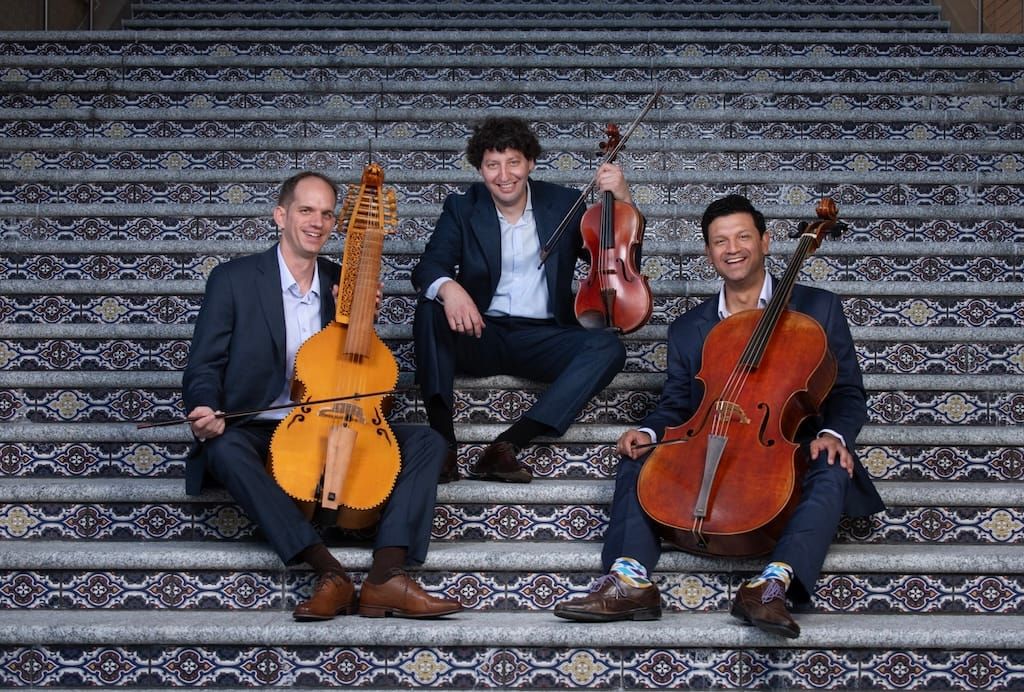
Few instruments occupy such a curious place in music history as the baryton. Favoured by Prince Nikolaus Esterházy in the eighteenth century and championed by Franz Joseph Haydn in more than 125 trios, the instrument all but disappeared after the Classical era, surviving today as one of the rarest members of the viol family. Combining bowed strings with a set of sympathetic and plucked strings hidden behind the neck, the baryton produces an ethereal sound world unlike any other.
Among the small number of musicians dedicated to bringing this forgotten instrument back to life is Matthew Baker. Originally from the United States and now based in Valencia, Spain, Baker has built an unusually diverse career spanning classical music, jazz, Celtic traditions, tango and contemporary performance. As founder and artistic director of the Valencia Baryton Project, he has become one of the instrument’s foremost advocates, introducing audiences across Europe and the Americas to a repertoire that has remained largely hidden for over two centuries.
The release of Haydn: Baryton Trios – Treasures from the Eszterháza Palace, Vol. 3 continues the project’s ambitious exploration of Haydn’s extraordinary baryton trios. In this interview, Baker reflects on the evolution of the ensemble, the unique qualities of the baryton, and the remarkable vitality of Haydn’s music.
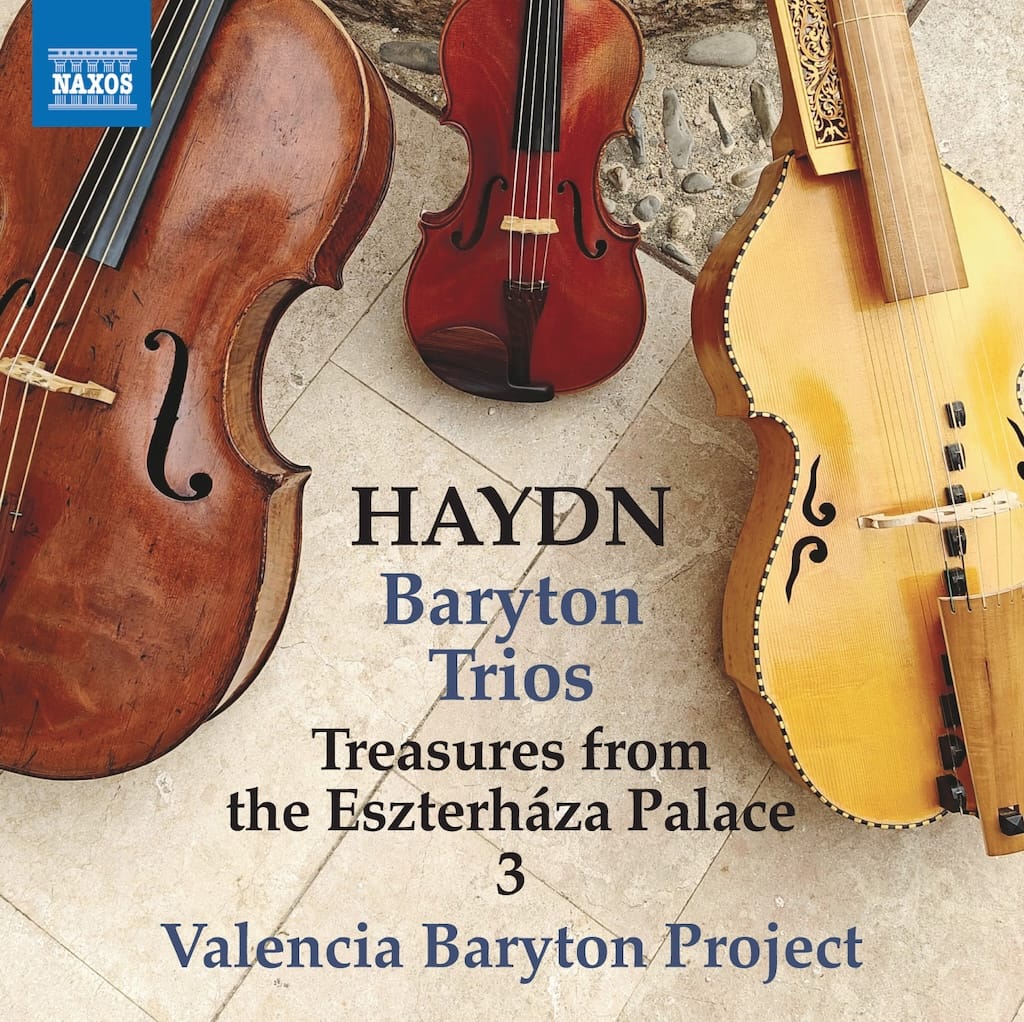
Nikhil Sardana: This is your third volume of Haydn’s baryton trios. How has your relationship with this repertoire evolved over the course of the project?
Matthew Baker: I think we are very fortunate to have been able to record three albums of Haydn’s baryton trios for Naxos. The first album was very much a journey of discovery. We spent countless hours not only trying to define our sound world, but also refining our balance and overall approach to the music.
I was very pleased with the result of Volume 1, but it was our debut recording and we left less room for spontaneity than we might have otherwise. We wanted to ensure that every detail was carefully considered and that all our bases were covered. The cadenza in Trio No. 69 was one of the few moments where I could step outside those boundaries a little, but otherwise we presented the trios in what I would describe as the most musical, yet conservative, way possible.
By the time we arrived at Volume 2, extensive touring had allowed us to develop a freer approach. We began incorporating light ornamentation and discovering new sound worlds within the trio repertoire. The contemporary works we had commissioned also opened our eyes to new possibilities. Volume 2 featured a cadenza in Trio No. 113 that emerged from an unexpected discovery. During the U.S. launch tour for Volume 1, I broke my wrist and could only use my left hand for around six weeks. During that time, I experimented with chordal playing on the baryton’s sympathetic strings. That technique found its way into the cadenza and has since become part of my modern improvisational work as well.
Volume 3 was recorded with the American component of the Valencia Baryton Project. The project is, by nature, a collective, and having a U.S.-based team allows us to undertake much of our North American activity more effectively. Every musician involved brings exceptional artistry, but also unique ideas and backgrounds. It was a wonderful experience to continue the work established in the previous volumes while introducing a slightly different perspective. The ornamentation is more spontaneous, and many interpretive details emerge from a fresh set of viewpoints. The result is recognisably the same ensemble, but with a subtly different approach to Haydn.
As the baryton player, I feel incredibly fortunate to be surrounded by such outstanding musicians. Each collaborator has helped shape my own evolving interpretation of Haydn’s music.
NS: The baryton remains a relatively unfamiliar instrument today. What do you think modern audiences hear in it that makes it worth rediscovering?
MB: Although the baryton is unfamiliar to most modern audiences, it is not so unusual that listeners cannot immediately connect with its sound. In fact, I think that very quality is what makes it so captivating.
Our sound world is almost early music, almost Classical, and yet it carries subtle echoes of instruments such as the nyckelharpa. In the nineteenth century, the baryton was described as “ethereal”, and I think that remains a beautiful description of its character.
I’ve worked with several composers involved in the film and commercial music industries, and they have all been fascinated by the instrument. I’ve recorded baryton for some of their projects, and while I am often not told exactly where the recordings are used, I understand that the instrument has appeared in video games and other commercial productions.
Haydn was a genius in understanding the baryton’s possibilities. Within these trios, we hear a fascinating blend of old and new: the fretted viola da gamba heritage of the baryton and its underhand bowing alongside the more modern viola and cello with overhand bows. He also found ingenious ways of blending these timbres. In passages where the baryton doubles the viola in unison, the sympathetic strings create a resonance that sounds almost like an entirely new instrument.
Haydn was also acutely aware of the instrument’s strengths and limitations. The baryton resonates most naturally in A, D and G major, and to some extent C major. When he modulates into less sympathetic keys, the instrument takes on a more muted quality, and he uses this contrast to transform the soundscape within a piece.
One area largely unexplored by Haydn and his contemporaries is the baryton’s lower register. In traditional trio writing, using it extensively would interfere with the cello’s role. However, many of our modern commissions explore this lower range, revealing a rich and distinctive sound that creates even greater resonance with the sympathetic strings. In my own projects outside the trio, I often use these lower sonorities as a kind of bass line.
NS: Haydn wrote these works for Prince Nikolaus Esterházy’s personal enjoyment. Do you approach them as intimate, private music, or as works for the modern concert stage?
MB: I think our approach varies from piece to piece. The trios are undoubtedly intimate works, and we always respect that quality. However, intimacy does not mean they cannot succeed in larger concert settings.
The key lies in thoughtful programming. We strive to create concert narratives that preserve the music’s intimacy while also highlighting the beauty, wit and virtuosity contained within these remarkable works. We often place Haydn alongside contemporary compositions, moving back and forth between centuries. This helps keep the sound world fresh and relevant while giving audiences new ways of hearing both the old and the new.
That balance has proved crucial in creating concert experiences that engage a wide range of listeners.
NS: The balance within a baryton trio is quite distinctive. How do you shape dialogue and hierarchy within the ensemble?
MB: The baryton is naturally quieter than either the viola or cello, so balance is always a fundamental consideration. Fortunately, Haydn does much of the work for us. Once you understand the instrument’s natural hierarchy, his writing often balances itself.
Because of the political realities of the Esterházy court, where Prince Nikolaus frequently played the baryton himself, Haydn composed accordingly. The baryton remains the dominant voice throughout most of the repertoire, making the overall hierarchy relatively clear. Everything relates upward toward the baryton, from balance and intonation to phrasing.
Whenever I work with new members of the ensemble, this is one of the first concepts we establish. It is not because I am leading the group personally, but because the music itself is written in a way that naturally encourages that approach. In the contemporary works we commission, the relationship between the three players is often far more equal.
In Haydn, as well as in works by contemporaries such as Tomasini and Lidl, the baryton almost always carries the melody. This stems in part from the famous story that the Prince once complained when a composition did not feature him prominently enough. As a result, I often determine the phrasing and larger narrative arc of a work.
That said, the viola and cello are far more than accompanists. I think some recordings miss this point. I often think of them as court advisors, quietly whispering in the ear of the baryton. Through subtle shaping of notes, harmonies and phrases, they influence the direction of the music just as profoundly. Haydn’s viola writing, in particular, is woven so expertly around the baryton line that it brings the music fully into three dimensions.
NS: Your recordings have been praised for their intimacy and detail. How do you approach capturing this music in a recording environment?
MB: Much of the credit belongs to our recording engineer and producer, Phil Rowlands. This album marks the seventh project I have recorded with him, and every collaboration has been exceptional.
The challenge in recording baryton trios is preserving the intricate detail of the baryton while maintaining a natural ensemble sound. At the same time, we want listeners to feel as though they are sitting in the room with us.
I do not believe this repertoire would benefit from being recorded track by track. The baryton depends on the resonance generated by the surrounding instruments and the room itself. There is also an essential spontaneity that can only emerge when musicians perform together in real time.
The venue is equally important. For all three volumes we recorded at the Castle of Ribarroja, which has proved to be an ideal setting. The stone walls and floors provide a beautiful natural reverberation, while the room’s proportions help bring out the baryton’s upper harmonics and allow it to project through the ensemble. It has been a dream location for this project.
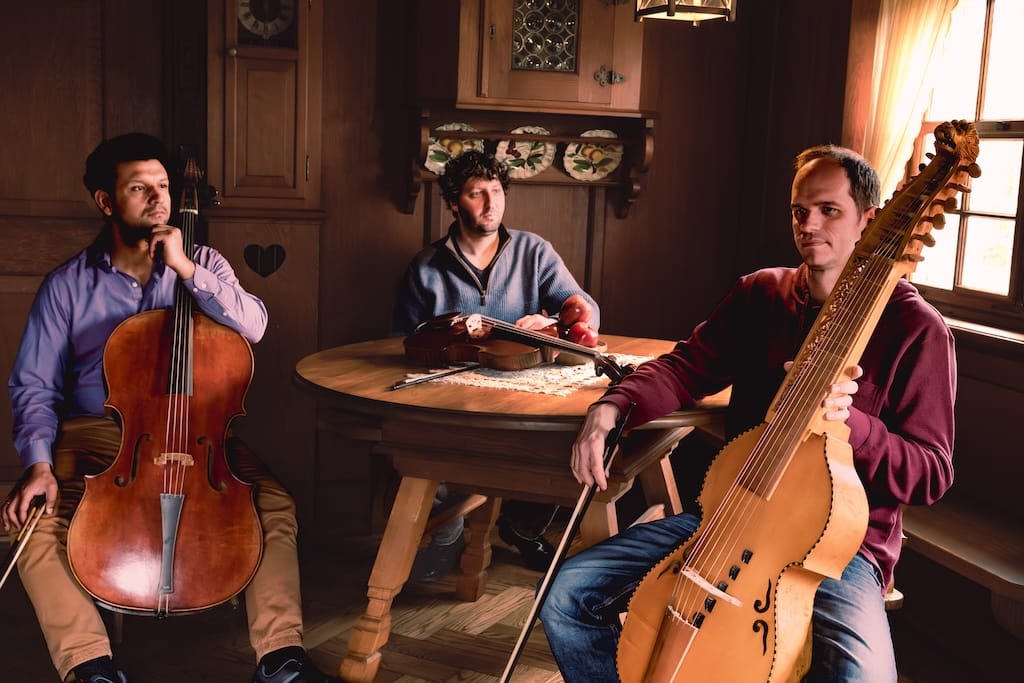
NS: As one of the few baryton specialists today, and given your work with the instrument beyond traditional classical contexts, how has that broader engagement shaped your approach to Haydn?
MB: Ever since I began playing the baryton, I knew I could not limit myself to the historical repertoire alone. From presenting what I believe was the first jazz baryton concert in 2019 to exploring medieval-jazz fusion in my project Amour Courtois, I have always been interested in discovering new possibilities for the instrument.
Ironically, those explorations have brought me back to Haydn with fresh ears. They have encouraged me to find interpretations that feel more immediate, more contemporary and perhaps even more accessible. My goal is to present Haydn’s music in a way that allows audiences to experience the excitement of hearing it for the first time.
I look for opportunities to introduce new colours, whether through cadenzas, ornamentation or carefully judged improvisation. Trio No. 72, for example, contains a cadenza with a distinctly Spanish flavour, while Trio No. 80 includes moments of improvisatory freedom in the second movement. These are the sorts of things that may well have happened in the Esterházy court itself.
I try not to perform these works exactly the same way every time. Touring gives us the opportunity to develop the music in front of live audiences, most of whom have never heard a baryton before and may never have encountered these particular trios. There is an immense joy in that process.
As much as I love the standard repertoire, there is often pressure to reinvent works that audiences already know intimately. With Haydn’s baryton trios, there is a different kind of freedom. The excitement I feel performing them is very similar to the feeling I experience when improvising in a jazz setting.