
Who Stole Haydn's Head? The Bizarre Tale of Skull Theft
Joseph Haydn's musical legacy is celebrated worldwide, but few know the extraordinary story of what happened after his death. Discover the bizarre tale of the composer's stolen skull, scientific obsession and the remarkable journey that lasted 145 years.

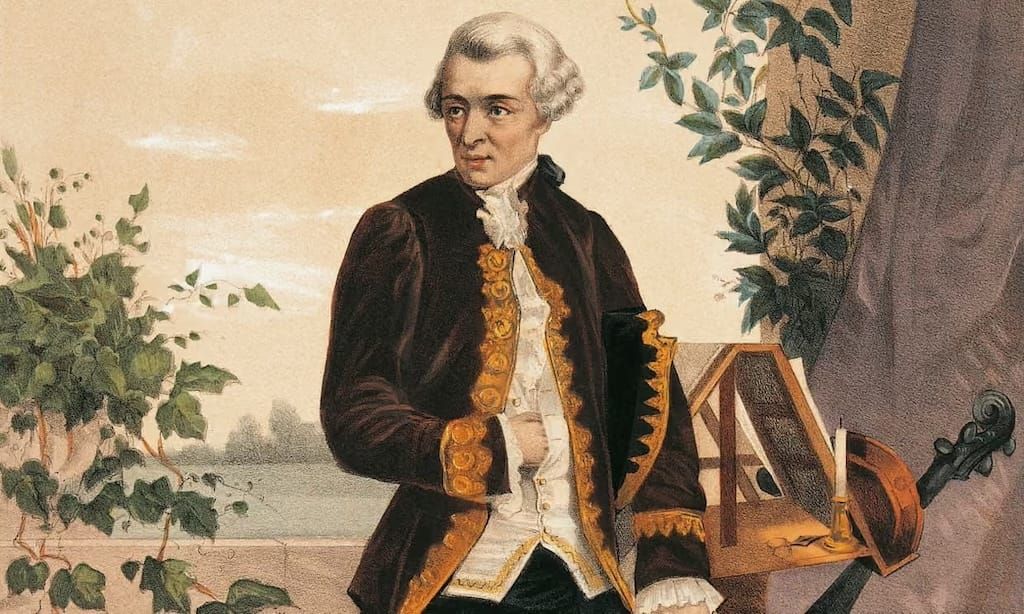
Few composers are remembered for having their remains stolen decades after their death. Yet this extraordinary fate befell Joseph Haydn, one of the most influential figures in the history of Western classical music. While his symphonies, string quartets and oratorios have secured his place in musical history, Haydn also became the unlikely protagonist of one of the strangest episodes in the history of science, medicine and grave robbing.
For more than 140 years, the composer's skull was separated from the rest of his body, passed between collectors, hidden from the authorities and eventually returned only after an extraordinary sequence of events. The story combines Enlightenment science, aristocratic intrigue and an enduring fascination with genius itself.
Haydn's Death
Haydn died on 31 May 1809 in Vienna at the age of 77. The city was under siege as the armies of Napoleon Bonaparte occupied Vienna during the Napoleonic Wars. Despite the turmoil surrounding the city, Haydn was treated with great respect. According to contemporary accounts, French officers visited the composer during his final days, recognising his immense contribution to European culture.
He was buried in the cemetery at Hundsturm, then on the outskirts of Vienna. At the time, few could have imagined that his grave would soon become the centre of an extraordinary scandal.
The Rise of Phrenology
To understand why anyone would want Haydn's skull, it helps to understand one of the most fashionable scientific theories of the early nineteenth century.
Phrenology, developed by the German physician Franz Joseph Gall, proposed that a person's mental abilities and personality could be determined by examining the shape of the skull. Different regions of the brain were believed to govern qualities such as intelligence, musical talent and morality. By studying skulls, practitioners claimed they could identify extraordinary abilities.
Although modern science has thoroughly discredited phrenology, it attracted enormous interest across Europe during Haydn's lifetime and after his death. Collectors eagerly sought the skulls of distinguished individuals in the hope of uncovering physical evidence of genius.
For devoted followers of the theory, Haydn's skull represented the perfect specimen.
The Grave Robbers
Among the most enthusiastic supporters of phrenology were two Viennese men: Joseph Carl Rosenbaum, a former secretary to the Esterházy family, and Johann Nepomuk Peter, who shared an intense interest in the emerging pseudoscience.
Only eleven days after Haydn's burial, the pair allegedly arranged for gravediggers to secretly exhume the composer's body. Under cover of darkness, the grave was opened, the head removed and the body reburied.
The skull was carefully cleaned and preserved before being added to Rosenbaum's private collection. According to later accounts, Gall himself examined the skull and reportedly declared that its unusually developed forehead confirmed Haydn's exceptional musical gifts.
Whether Gall truly made such observations remains uncertain, but the story helped reinforce the growing legend surrounding the composer's stolen remains.
A Prince Wants His Composer Back
The theft remained undiscovered for many years. In 1820, Nikolaus II Esterházy decided to honour Haydn by transferring his remains to the family mausoleum in Eisenstadt, where the composer had served the Esterházy court for nearly three decades.
When officials opened the grave, they made an astonishing discovery. The skeleton was intact, but the skull was missing.
The prince demanded an immediate investigation. Authorities eventually traced the theft to Rosenbaum, who by then had become an elderly and respected figure in Viennese society.
Faced with official questioning, Rosenbaum produced a skull. The investigation appeared solved. Except it was not Haydn's. The skull handed over belonged to another individual entirely.
Hiding the Real Skull
The genuine skull had already been hidden. According to popular accounts, Rosenbaum's wife concealed it beneath her skirts while officials searched the house. Other versions suggest it had been hidden inside a mattress or a secret compartment.
Whatever the truth, the deception worked. Unable to recover the authentic skull, the authorities accepted the substitute. As a result, Haydn's body was reinterred with the wrong head. Meanwhile, the genuine skull continued its curious journey through private collections.
A Skull Changes Hands
After Rosenbaum's death, Haydn's skull passed through several owners, including noted anatomists and collectors fascinated by phrenology.
Eventually it entered the collection of the Society of Friends of Music in Vienna, where it was displayed as a remarkable historical curiosity. Visitors could view what was believed to be the authentic skull of one of Europe's greatest composers.
By this point, phrenology had largely fallen into disrepute, but the skull itself had become famous because of its extraordinary history rather than its supposed scientific value.
The Long Road Home
The unusual situation persisted well into the twentieth century. Haydn's body rested in Eisenstadt with an incorrect skull, while the genuine one remained in Vienna.
Only after lengthy negotiations between Austrian authorities, museum officials and the Esterházy Foundation was the original skull finally returned. In 1954, 145 years after Haydn's death, the authentic skull was reunited with the composer's body in the Bergkirche in Eisenstadt.
Even then, the story retained one final twist. The substitute skull was not removed. Today, both skulls remain inside Haydn's tomb, making it one of the most unusual burial sites associated with any major composer.
Why the Story Matters
Haydn's stolen skull reflects more than an astonishing act of grave robbery. It reveals how ideas that were once regarded as cutting-edge science could inspire behaviour that now seems almost unimaginable.
The episode also illustrates the extraordinary reverence that surrounded great artists during the nineteenth century. Admirers did not merely preserve Haydn's music. Some believed that physical evidence of his genius could literally be found inside his skull.
Although phrenology has long since been dismissed as pseudoscience, the story continues to fascinate historians because it sits at the intersection of music, science, medicine and human curiosity.