Where Songbirds Came From and Why We Should Listen to Them
Songbirds have been singing for millions of years, long before humans began writing music. Their songs reveal an extraordinary story of evolution, vocal learning and communication, while offering us another way to hear the world around us.

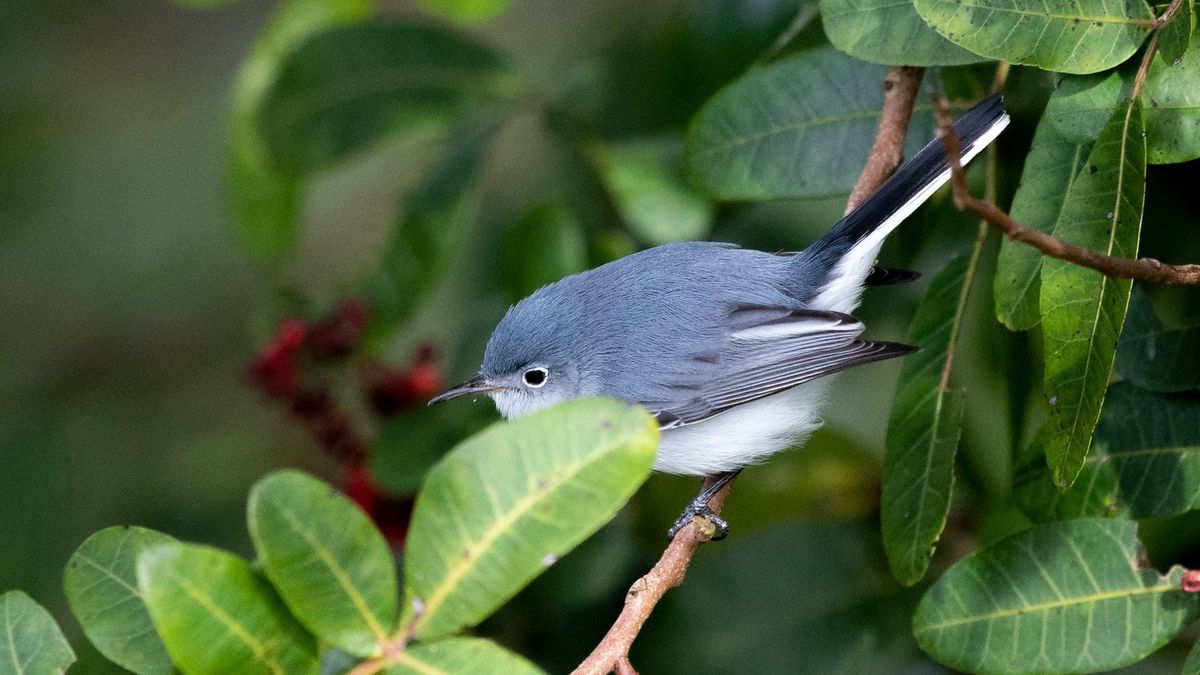
Before the first human composer put a melody on paper, birds had already been making music for millions of years. The comparison is imperfect, and calling birdsong “music” can impose a human idea on an animal behaviour that evolved for communication, reproduction and survival. Still, there is something difficult to dismiss in the experience of hearing a blackbird repeat a phrase from a garden wall, or a koel calling from somewhere beyond the trees, or a dawn chorus gathering outside a bedroom window before the day has properly begun. The birds are doing something. We are simply hearing one part of it.
An Ancient Australian Inheritance
Songbirds, formally known as oscine passerines, make up one of the largest and most widely distributed groups of birds on Earth. There are roughly 5,000 species, accounting for close to half of global avian diversity. Their evolutionary history is more geographically specific than their present distribution suggests. Genetic, fossil and geological evidence points to Australia as the birthplace of the songbirds, with their early diversification taking place there during the Oligocene, before later expansion through Southeast Asia and beyond during the Miocene.
That makes the sparrow outside a London window, the Indian magpie-robin in a Delhi garden and the thrush singing in a European woodland members of a remarkably successful diaspora. The reason for that success was not simply an especially good voice.
The Bird's Remarkable Voice
Birdsong depends on an anatomical structure called the syrinx, located where the trachea divides towards the lungs. Unlike the human larynx, which sits at the top of the windpipe, the syrinx allows birds to produce sound deeper within the respiratory system. Some birds can control the two sides of the syrinx independently, effectively allowing them to produce different sounds simultaneously. The result can be astonishingly fast and intricate vocal production.
But anatomy only tells part of the story. In many songbirds, singing is learned. A young bird does not simply emerge from the nest with a fully formed repertoire. It listens. It remembers. It experiments. It produces imperfect versions of what it has heard and gradually adjusts them through auditory feedback. The process bears striking similarities to the way human infants acquire speech, including a sensitive period during which learning is particularly effective.
They Have to Learn Their Songs
This is one reason the zebra finch has become such an important laboratory animal. Researchers can study how its brain stores an auditory model, how the bird attempts to reproduce that model, and how repeated practice changes the resulting vocalisation. There are specialised neural circuits involved in song learning and production, including pathways linking areas of the forebrain, basal ganglia and thalamus. Some of these circuits show functional and genetic similarities to systems involved in human vocal learning.
That does not mean a nightingale is secretly writing poetry. The resemblance between birdsong and human language has limits. A bird's song does not carry the elaborate semantic and grammatical system of human language. Scientists who study the comparison are more interested in the underlying mechanics of learning: hearing a model, storing it, practising a motor pattern, listening to the result and modifying the next attempt. In that respect, the young songbird is doing something surprisingly familiar. It is learning to speak with its body.
Not Every Song Is a Love Song
The familiar idea that birds sing primarily to attract mates is also incomplete. Song can advertise reproductive fitness, but it can also establish territory, maintain social relationships and communicate information between individuals. Bird sounds include a bewildering variety of calls, from alarm signals and contact calls to begging sounds and warnings. The neat division between “song” and “call” becomes less convincing the more closely birds are observed.
There is another correction worth making. For generations, popular accounts of birdsong have concentrated heavily on males. The image is familiar: the male sings, the female listens, and sexual selection explains the elaborate performance. The biology is considerably messier. Research published in Nature Communications found female song across more than two-thirds of the songbird species and families examined, with evolutionary analysis suggesting that female singing may have been present in the common ancestor of modern songbirds.
The female bird is not necessarily sitting quietly in the audience. In some species, males and females sing together. Duetting can help maintain a pair bond, defend a territory or coordinate behaviour. The sound of two birds answering one another can therefore be less like a solo performance than a conversation whose rules we have not learned to hear.
Learning to Hear What We Cannot See
Most of us encounter birds visually. We identify the robin by its shape, the peacock by its tail, the flamingo by its colour. Songbirds are different because their most distinctive characteristics may be impossible to see. A bird can be hidden deep inside a hedge and still announce its presence with remarkable precision.
The Cornell Lab of Ornithology makes this point particularly well: listening can identify species that remain completely invisible among dense vegetation. Once attention shifts from looking for birds to listening for them, an ordinary environment acquires another layer of information. This is not just a pleasant way of passing time. Birdsong is a record of place.
A particular habitat has its own acoustic population. Change the habitat and the sound changes with it. Remove birds and the absence is audible, even if we cannot immediately say what is missing. Recordings of bird vocalisations are consequently useful to researchers monitoring species and ecosystems, while large sound archives allow scientists to study variation in bird behaviour across populations and environments.
The Music Hidden in Ordinary Places
There is also a more intimate reason to listen.Human beings have become extraordinarily good at filtering out the sounds that surround us. Traffic, air-conditioning, phones, machinery and conversation occupy much of our attention. Birdsong usually loses that competition because we have learned to treat it as background. It becomes part of the weather.
Listening deliberately changes the relationship. The first time you learn the call of a common bird, a sound that was previously anonymous acquires a source. Learn five and the morning becomes more crowded. Learn twenty and a familiar street begins to reveal its inhabitants before you see them.
This is one reason birdsong can be so compelling to musicians. Its musical qualities are obvious enough: repetition, variation, rhythm, pitch, phrasing and pauses. Composers have borrowed from birds for centuries, from the cuckoo calls embedded in European music to Messiaen's painstaking transcriptions of bird vocalisations. But the deeper fascination lies in the fact that birds do not merely produce sequences of notes. Many species learn, modify and adapt those sequences. There is individuality in the sound.
A Song Belongs to the Bird, Not to Us
A bird may have a repertoire rather than one fixed song, and vocal behaviour can vary between individuals, ages, populations and circumstances. A song can be recognisable while still being flexible. It can belong to the species without being identical across every member of it.
That should complicate the way we think about imitation in music. Humans spend years being taught scales, exercises, pieces and stylistic conventions, then spend further years trying to sound like themselves. Songbirds face a related problem in a radically different biological setting. They inherit the capacity for song, listen to others, acquire local patterns and develop individual performances.
The resemblance is not that birds are musicians. It is that both birds and humans are unusually capable vocal learners.
Listen Before the Sound Disappears
Songbirds did not evolve in order to provide us with pleasant mornings. Their songs emerged from evolutionary pressures involving communication, reproduction, territory and social life, while the astonishing variety of modern songbirds is the result of millions of years of diversification and movement across changing environments.
The pleasure we take from their voices is ours. That pleasure is worth taking seriously. Listening to birds requires very little equipment and almost no expertise, but expertise changes what listening reveals. A soundscape that initially seems decorative becomes populated by individuals, rivalries, pairs, territories and learned traditions.
The next time a bird starts singing outside, there is no need to romanticise it. Listen closely instead. The bird is not performing for us. That is precisely what makes the performance so interesting.