Ralph van Raat on the Beauty of Contemporary Classical Music
The Dutch pianist discusses his lifelong fascination with modern music, his association with John Adams, and why the music of our time deserves a place on every concert programme.
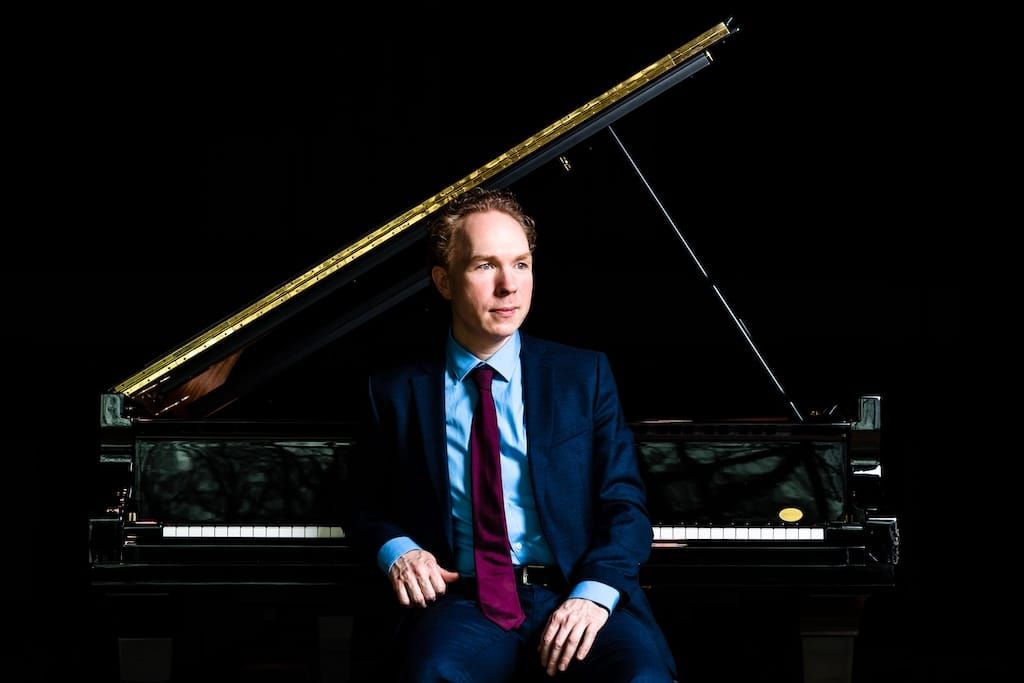
For Dutch pianist Ralph van Raat, the fascination with contemporary classical music began at the age of fourteen, when an encounter with the twelve-tone system and the works of Schoenberg and Webern opened up an entirely new musical world. What began as teenage curiosity developed into a lifelong commitment to championing the music of the twentieth and twenty-first centuries, with a repertoire that spans composers from Debussy, Bartók and Ives to Boulez, Adams and beyond.
An internationally acclaimed pianist, musicologist and Steinway Artist, van Raat has performed more than 60 piano concertos with orchestras including the Los Angeles Philharmonic, Royal Concertgebouw Orchestra and BBC Symphony Orchestra. With over 40 albums to his credit, he has also developed an extensive association with Naxos, releasing his first recording of the complete piano works of John Adams in 2006.
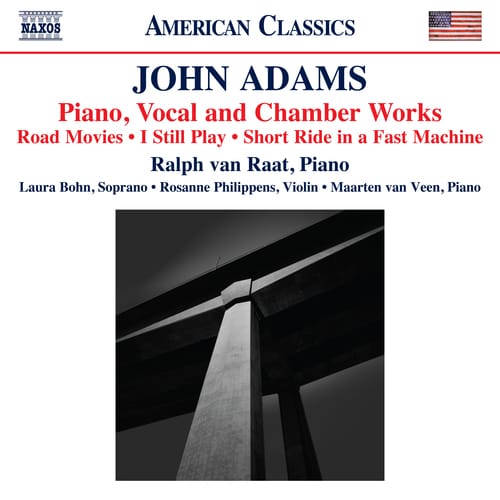
His latest release, John Adams: Piano, Vocal and Chamber Works, brings together a selection of compositions spanning more than three decades, including Road Movies, I Still Play, Roll Over Beethoven and Short Ride in a Fast Machine. Featuring collaborations with soprano Laura Bohn, violinist Rosanne Philippens and pianist Maarten van Veen, the album offers an opportunity to explore the breadth of Adams’ musical language, from its rhythmic vitality and jazz influences to its lyrical and introspective dimensions.
In this conversation, van Raat reflects on his early encounters with contemporary music, the importance of engaging with living composers, his longstanding relationship with John Adams, and the responsibilities of performers and educators in bringing new music to wider audiences. He also considers the relationship between historical and contemporary repertoire, arguing passionately for a concert culture in which music by living composers is an integral part of the experience.
Nikhil Sardana: You first became fascinated by 20th- and 21st-century classical music at the age of 14. What was it about contemporary music that captured your imagination so strongly at that age, and has the way you listen to new music changed over the years?
Ralph van Raat: After reading books about harmony during a summer holiday as a teenager, I came across a final chapter on the twelve-tone system, with examples by Schoenberg, Webern and Berg. The idea immediately fascinated me. At the time, besides playing and listening to classical music, I was listening avidly to jazz and had recently discovered free jazz through Chick Corea, Cecil Taylor and others. I wondered whether this new compositional system might explain some of the sounds and harmonies I had encountered in that music.
I was also attracted by the idea of music that seemed to be shaped more by the intellect than by emotion. When I returned home, I rushed to the local library and borrowed scores by Schoenberg and Webern. To my surprise, the experience was profoundly moving. The flurries of notes, the painful harmonies, the silences and sudden outbursts all spoke to me immediately.
The music felt alien and familiar at the same time. As a teenager discovering new emotions, doubts and insecurities, I somehow recognised myself in it. The cerebral image I had formed of this music quickly disappeared. What I found instead was music that felt deeply human and emotionally direct. That was the beginning of a lifelong journey through the music of the early twentieth century, the composers who preceded it, and those who continue to write today.
Over the years, my listening has undoubtedly changed. Experience, historical perspective and the privilege of working with many composers have helped me arrive more quickly at the essence of unfamiliar music. It is perhaps harder to be surprised than it was when I was fourteen, but I still experience the same sense of excitement when I encounter a composer with a genuinely personal voice, or when new sounds and harmonies open up worlds I have never heard before.
NS: You have often spoken about wanting to convince audiences of the beauty and diversity of contemporary music. What do you think prevents listeners from connecting with music written in their own time, and what can a performer do to bridge that gap?
RvR: I am convinced that many people would love a great deal of contemporary music if they were simply given the opportunity to encounter it. After all, much of this music is written by people who share the same experiences as we do: travelling by train, standing in a crowded city and navigating an increasingly complex and fast-moving world. All of that can be found in contemporary music.
One of the most important steps performers can take is to make music of our own time a normal part of concert life. I believe every recital should include at least one work by a living composer. When performers stop at Rachmaninoff, however wonderful his music is, they effectively interrupt a centuries-old tradition. Classical music can only remain a living art form if living composers continue to be heard.
It is often considered unusual to specialise in twentieth- and twenty-first-century music. To me, the opposite has always seemed remarkable: specialising exclusively in music written before our own time. Until well into the nineteenth century, performing works by living composers was entirely normal, whereas programmes dominated by historical repertoire were far less common. Besides, what we call 'contemporary music' today already spans roughly 150 years, making it a longer period than either the Classical or Romantic era. The stylistic diversity within it is enormous: Philip Glass and Karlheinz Stockhausen inhabit entirely different musical worlds, yet both are placed under the same umbrella term. In that sense, speaking of 'contemporary music' as a single style is rather misleading.
Thoughtful programming can also help bridge the gap. Pairing a late Beethoven sonata with a short work by Boulez, for example, can reveal unexpected similarities in musical thinking while highlighting differences in language. A brief spoken introduction, perhaps accompanied by musical examples, can make these connections immediately tangible.
Context matters. Music by Reich or Adams can often resonate strongly with younger audiences because of its pulse, energy and sonic immediacy. Likewise, audiences drawn to composers such as Einaudi might discover something new through Satie or Pärt. These composers inhabit very different worlds, of course, but there are enough points of contact to create meaningful pathways of discovery.
Ultimately, performers have a responsibility to understand the music they play beyond the notes themselves. Historical context, analysis and stylistic awareness all help reveal how a piece communicates. Every composer, however individual, draws upon fundamental human impulses. As my teacher Claude Helffer used to say, even the most complex Xenakis score ultimately contains profoundly romantic gestures.
NS: You have worked closely with composers ranging from Louis Andriessen and Gavin Bryars to Frederic Rzewski and Tan Dun, with many writing music specifically for you. How does performing music by a living composer differ from performing music whose composer is no longer there to answer your questions?
RvR: Working with a living composer is one of the great privileges of being a performer. It reminds you that a composition is not simply a vehicle for your own ideas or personality. There is a living creative mind behind the music, and very often you can speak directly with that person when questions arise.
Those conversations can be enormously illuminating. They provide insight not only into a particular work, but also into how composers think more generally. In turn, that helps us approach composers of the past with greater understanding and empathy.
At the same time, it is important not to overstate the difference. Whether a composer is alive or not, the performer ultimately has the same responsibility: to serve the work. Like an actor interpreting a role, our task is to communicate the intentions and expressive world of the piece as convincingly as possible.
Working with living composers allows you to test your assumptions directly against the source. Sometimes your instincts are confirmed; sometimes they are challenged. Either way, the dialogue is invaluable. The ultimate goal, however, remains unchanged: to bring the music to life for the audience.
NS: John Adams has been an important composer in your career, and you previously recorded his complete piano works for Naxos. Nearly two decades later, what do you hear differently in Adams’ music now, and what keeps drawing you back to it?
RvR: John Adams is a composer who has continually reinvented himself while remaining unmistakably John Adams. Following his output over many years feels almost like growing alongside him as an artist.
What strikes me increasingly is how many characteristics that seem distinctive of his later works were already present in embryonic form in the early pieces. Take Phrygian Gates from 1977–78. Although it is famous for its driving rhythms and exhilarating motoric energy, it already contains many elements that would later become central to his music: a strong sense of drama, large-scale architecture and moments of remarkable lyricism.
His music operates on multiple levels simultaneously. It can be rhythmic, emotional, virtuosic and intellectually engaging all at once. It draws on an extraordinarily rich range of influences while remaining immediately recognisable in voice. That combination gives it a timeless quality and continually rewards repeated listening and performance.
What keeps drawing me back is also Adams’ refusal to stand still. He has never seemed content to repeat himself. The oft-quoted description of him as 'a minimalist bored with minimalism' captures something important about his constant search for renewal.
NS: This album brings together works spanning more than 30 years, from Short Ride in a Fast Machine to I Still Play. What does that chronological range reveal about the evolution of Adams’ musical language that might not be apparent when hearing any one work in isolation?
RvR: What becomes particularly evident across such a wide chronological span is both the consistency and the evolution of Adams’ artistic personality.
The essential ingredients are remarkably constant: rhythmic vitality, dramatic pacing, rich harmonic imagination and an extraordinary ear for colour. Yet these elements are continually rebalanced and reimagined from one work to the next.
Listening across several decades reveals a composer engaged in a constant process of self-reflection and self-renewal. Certain ideas disappear for a time, only to reappear in transformed form years later. New influences are absorbed without ever obscuring the individual voice behind them.
The result is not a series of stylistic jumps, but an ongoing and highly organic evolution. Hearing these works together allows us to follow that journey in a way that is difficult to perceive when encountering any single piece in isolation.
NS: Your repertoire stretches from Bach to Boulez, but your particular commitment has been to music of the 20th and 21st centuries. Do you feel that playing the older repertoire changes the way you approach contemporary music, and vice versa?
RvR: Without question. The evolution of musical styles may be complex, but it is also remarkably interconnected. New ideas emerge from older ones, react against them or build upon them. No work of art exists in isolation.
For that reason, I have never believed in rigid divisions between 'old' and 'new' music. Nor do I entirely believe in the idea of a specialist who focuses exclusively on one period. A deep understanding of contemporary music benefits enormously from studying earlier repertoire, just as performing historical repertoire is enriched by engaging with living composers and contemporary artistic thought.
Working directly with composers has offered valuable insight into how creative minds function. That experience inevitably influences how I think about Bach, Beethoven or Chopin. While musical languages may change, many underlying artistic questions remain remarkably similar.
On a practical level, contemporary music often demands an extraordinarily broad palette. It may require the precision of popular music, the flexibility of Romantic rubato, the colouristic imagination of Impressionism and the structural awareness associated with earlier traditions. The broader one's musical experience, the richer and more convincing one's interpretation becomes.
NS: You are also a teacher and a frequent lecturer and broadcaster. Has explaining contemporary music to audiences or students changed the way you perform it yourself? Is there a danger that analysing a piece too much can actually get in the way of experiencing it?
RvR: Teaching has taught me an enormous amount about communication. It constantly forces me to consider why music does or does not connect with listeners and students. Observing when a musical idea truly lands is one of the greatest lessons a teacher or performer can receive.
I find analysis most valuable when it serves a practical artistic purpose. It can help identify structure, shape longer musical lines, determine points of tension and release, and clarify character. In that sense, analysis can be an indispensable tool.
I am less interested in analysis as an end in itself. Anton Webern reportedly became impatient when people focused excessively on the technical deployment of his tone rows. His response was essentially: that is not your concern; make sure you play the music beautifully.
Analysis helps us understand the architecture of a piece, and performers need a clear understanding of that architecture in order to shape a convincing interpretation. Beyond that point, however, our task is to transform notes on a page into a living artistic experience while remaining faithful to the composer's intentions.
In other words, understanding and feeling should complement one another, not compete. The most meaningful performances arise when intellect and imagination work together.
NS: After more than 40 albums, numerous premieres and performances with major orchestras around the world, what still gives you the greatest sense of discovery as a pianist? And is there something you feel you are still trying to achieve that you could not have imagined when you began your career?
RvR: The greatest sense of discovery comes when I experience the same irresistible urge I felt as a fourteen-year-old: the feeling that everyone should hear a particular piece of music.
Even now, there are works that leave me thinking, 'Why is this not performed everywhere?' I love the great classics, but I remain convinced that there is a vast amount of music that many listeners would cherish just as deeply if they were given the chance to encounter it.
Contemporary music still suffers from prejudices that often disappear the moment people genuinely engage with it. Time and again, I have seen audiences discover unexpected connections with music they initially assumed would be inaccessible.
When I began my career, I would never have imagined that I could earn a living by championing repertoire that is still often considered niche. Nor would I have dared to dream that I would have the opportunity to perform my favourite concertos, work closely with major composers and help bring new music into the world.
I hope I have contributed, in some small way, to broadening audiences’ appreciation of this repertoire. There remains much to do, however. The musical world is vast, and there are still countless remarkable works waiting to be discovered. As long as that remains true, I will continue trying to share them with as many people as possible.