Why Opera Singers Don’t Use Microphones
How do opera singers fill vast auditoriums and rise above a full orchestra without microphones? The answer lies in centuries of vocal training, remarkable acoustic techniques and opera houses designed to amplify the natural human voice.

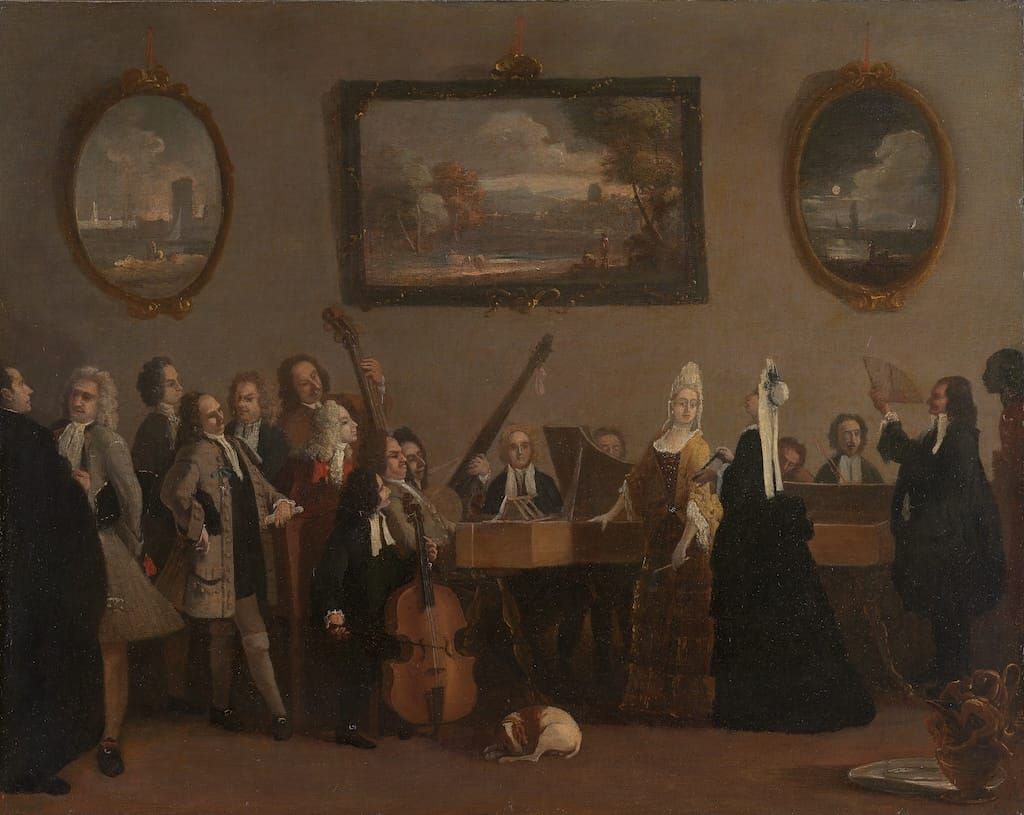
Walk into an opera house and you will notice something unusual about the performers on stage: unlike singers at pop, rock or even many musical theatre concerts, opera singers rarely use microphones. Their voices travel across vast auditoriums, rise above a full orchestra and reach the furthest seats without electronic amplification. How is this possible? The answer lies in centuries of vocal training, an extraordinary understanding of acoustics and a singing technique developed specifically to project the human voice.
The Power of the Trained Voice
Opera singers spend years developing a technique that allows them to produce remarkably powerful sounds without straining their vocal cords. Known as bel canto, or beautiful singing, this tradition places considerable emphasis on breath control, vocal resonance, agility and the ability to sustain long musical phrases. Although the term is associated particularly with the Italian operatic tradition, the principles of vocal training extend across different schools and styles of opera.
Unlike singers who rely on microphones to increase their volume, opera singers learn to use the natural resonance of their bodies. Sound is produced when the vocal cords vibrate as air passes through them. The resulting sound is then shaped and amplified by the resonating spaces of the vocal tract, including the throat, mouth and nasal cavities.
Through years of training, singers learn to coordinate these elements to produce a voice that is both powerful and rich in tonal colour. This enables them to fill an auditorium using their own vocal technique, without the need for electronic amplification.
The Secret of the 'Singer's Formant'
One of the most fascinating aspects of operatic singing is a phenomenon known as the singer's formant. This refers to a concentration of acoustic energy in a particular frequency range, generally around 2,500 to 3,500 Hz, which helps trained operatic voices stand out above an orchestra.
The human ear is particularly sensitive to frequencies in this region, allowing the voice to remain perceptible even when accompanied by dozens of orchestral instruments. This is especially important in opera, where singers must compete acoustically with a large ensemble without sacrificing the clarity of their words.
The singer's formant is developed through specific adjustments in the vocal tract, particularly around the larynx and pharynx. It is not simply a matter of singing louder. Rather, it is a highly refined way of producing sound that allows the voice to carry efficiently across a large space.
This is one reason why an experienced opera singer can be heard clearly at the back of a theatre, even when singing alongside a full symphony orchestra.
Opera Houses Are Designed for the Human Voice
The architecture of an opera house plays an equally important role. Traditional opera theatres were designed with the natural projection of the human voice in mind. Their proportions, ceilings, balconies and interior surfaces help sound travel throughout the auditorium.
Many historic opera houses feature horseshoe-shaped auditoriums, which bring audiences relatively close to the stage while allowing sound to circulate through the space. Materials such as wood, plaster and decorative surfaces also influence how sound is reflected and absorbed.
Good acoustics do not simply make a performance louder. They help preserve the richness, warmth and clarity of the voice, allowing audiences to hear subtle details in a singer's phrasing and expression.
A well-designed opera house therefore acts as a natural acoustic environment in which the human voice can flourish. Singers also adapt their technique to the space in which they perform, taking account of its acoustic characteristics.
How Can a Voice Be Heard Over an Entire Orchestra?
This is perhaps the most remarkable aspect of operatic singing. A large orchestra can produce an enormous amount of sound, sometimes reaching levels that would make it difficult for an unamplified voice to compete. Yet trained singers can often be heard clearly above it.
The secret is not simply volume, but the way the human voice produces and distributes sound energy. The singer's formant helps the voice cut through the orchestral texture, while conductors and composers also take care to balance the orchestra with the singers.
Orchestral writing in opera is frequently arranged to leave space for the voice. Composers may reduce the number of instruments playing during an important vocal passage, use lighter orchestration beneath a soloist or reserve the full force of the orchestra for instrumental interludes and dramatic climaxes.
This relationship between voice and orchestra is particularly evident in the works of composers such as Mozart, Verdi, Wagner and Puccini, although each developed very different approaches to orchestral colour and vocal writing.
Why Not Use Microphones Anyway?
If microphones can make singers easier to hear, why not use them in every opera production?
One reason is that traditional opera values the natural acoustic relationship between the singer, the orchestra and the auditorium. Introducing microphones changes this relationship, potentially altering the balance of sound and the way audiences experience the performance.
Microphones also capture and amplify aspects of the voice differently from the way it is heard naturally in a theatre. Electronic amplification can introduce changes in tonal balance, dynamics and spatial perception. In a conventional acoustic opera production, audiences hear the voice as it travels through the auditorium, blending with the orchestra and the surrounding acoustic environment.
There is also an artistic consideration. Opera singers are trained to create a wide range of vocal colours, from delicate pianissimo passages to dramatic climaxes. The ability to control these extremes without amplification is central to the operatic tradition.
However, it is worth noting that microphones are not entirely absent from opera. Modern productions may use them for recordings, broadcasts, outdoor performances and certain experimental stagings. Some contemporary opera productions also incorporate electronic sound design as part of their artistic concept. In such cases, microphones serve a practical or creative purpose rather than compensating for a lack of vocal technique.
What About Opera Singers in Large Stadiums?
An opera singer performing in a traditional theatre is in a very different situation from one appearing at an outdoor concert or in a large stadium. Open-air environments lack the reflective surfaces that help sound travel inside an auditorium, making natural vocal projection considerably more difficult.
This is why singers performing at large outdoor events, such as concerts in public squares or stadiums, often use microphones and amplification systems. The same applies to many crossover performances, televised concerts and events featuring opera singers alongside popular musicians.
The distinction is not that an opera singer is incapable of performing with a microphone, but that the traditional operatic voice is trained to function without one in an acoustically suitable environment.
An Extraordinary Instrument
The human voice is one of the most remarkable musical instruments, and opera provides perhaps its most spectacular demonstration. An accomplished singer can produce an extraordinary range of dynamics, sustain long phrases, communicate complex emotions and project over a large orchestra, all without electronic assistance.
The absence of microphones is not simply a matter of tradition or theatrical convention. It reflects a sophisticated combination of vocal physiology, years of technical training, musical composition and architectural design.
The next time you attend an opera, take a moment to consider what is happening on stage. A voice is travelling across an entire auditorium, reaching hundreds or even thousands of listeners, without a microphone, speaker or amplifier. It is a remarkable achievement of the human voice, and one of the reasons opera continues to inspire such fascination.