Why Was Tchaikovsky Afraid to Conduct? The Composer Who Feared His Head Would Fall Off
Pyotr Ilyich Tchaikovsky composed some of the most powerful orchestral music in history, but conducting it terrified him. So great was his anxiety that he feared his head might fall off while standing on the podium.

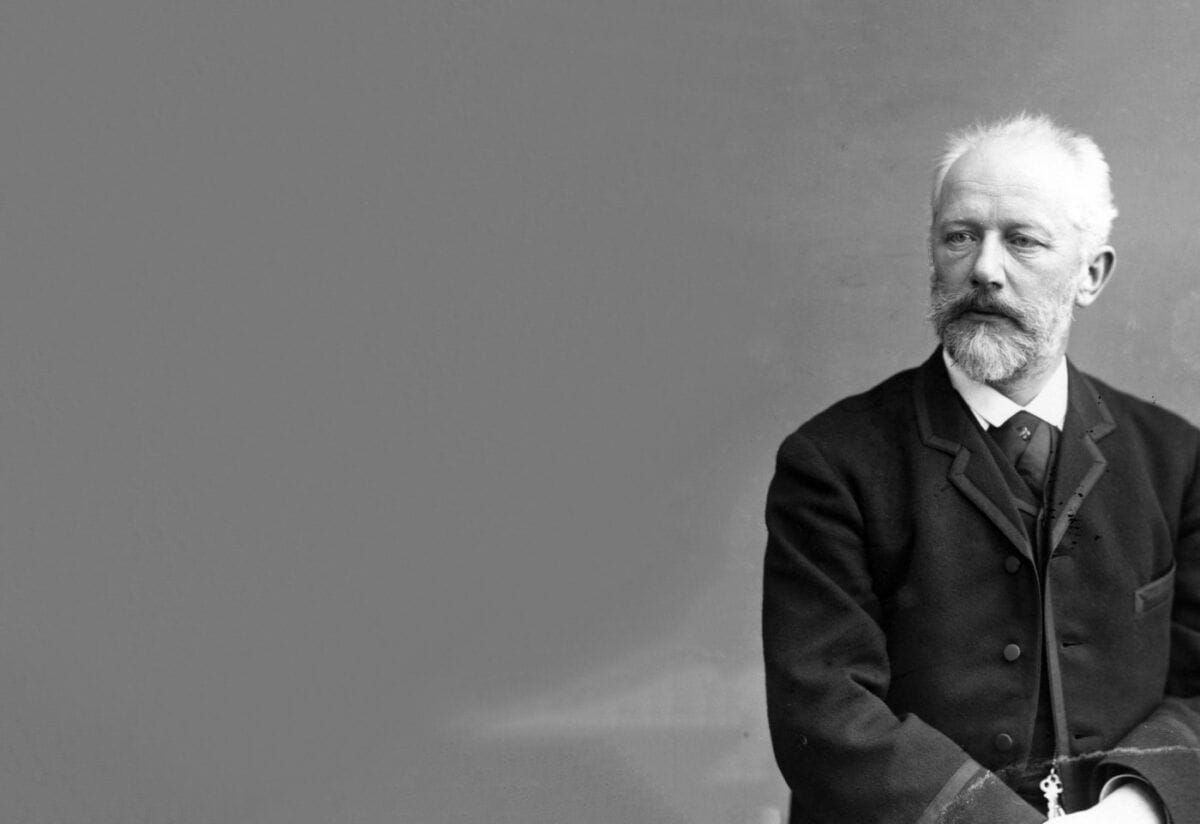
Imagine standing before a full orchestra, preparing to conduct a composition you have written yourself. The musicians are waiting for your first gesture, the audience is watching, and the baton is in your hand. There is just one problem: you are convinced that unless you hold your head firmly in place, it might fall off your shoulders.
It sounds like something out of a comedy, but this was a genuine fear experienced by Pyotr Ilyich Tchaikovsky, one of the greatest composers of the nineteenth century. Despite writing some of the most celebrated orchestral music in history, the Russian composer was so terrified of conducting that he developed an extraordinary habit: holding his chin with one hand while conducting with the other.
For a musician whose compositions demanded enormous orchestral confidence, it was an almost unbelievable contradiction.
A Composer Terrified of the Podium
Tchaikovsky was an intensely self-conscious and nervous man, particularly when appearing in public. Although he was perfectly capable of expressing himself through music, the prospect of standing before an audience and directing an orchestra filled him with dread.
His first experiences as a conductor did little to improve matters. In 1865, he conducted an early version of his Overture in F in St Petersburg, but it was his appearance at a charity concert at Moscow's Bolshoi Theatre in February 1868 that became particularly memorable.
On that occasion, Tchaikovsky was scheduled to conduct music from his opera The Voyevoda. His friend and fellow musician Nikolay Kashkin, who witnessed the performance, later described the composer's extraordinary nervousness.
Tchaikovsky appeared distracted and visibly uncomfortable. Once on the podium, he seemed to have forgotten his own music, gave cues at the wrong moments and appeared unable to coordinate the orchestra. Fortunately, the musicians knew the pieces well enough to carry on without paying much attention to their conductor's increasingly erratic gestures.
Afterwards, Tchaikovsky reportedly explained his peculiar behaviour to Kashkin. He had experienced such terror that he felt his head would fall off his shoulders unless he held it firmly in position.
The image of a composer conducting an orchestra while desperately clutching his own chin is difficult to forget. For Tchaikovsky, however, the experience was deeply humiliating.
Ten Years Away from the Baton
The incident left such an impression on the composer that he largely avoided conducting for years. He was particularly uncomfortable with the physical demands of the role and the scrutiny that came with standing in front of an orchestra.
In his own autobiographical account, Tchaikovsky admitted that until the age of 46, he had considered himself completely incapable of conducting. His aversion to the conductor's podium was so pronounced that even thinking about it made him shudder.
But circumstances eventually forced him to reconsider.
In 1885, preparations were underway for a production of his opera The Enchantress at the Moscow Imperial Theatre. The theatre's regular music director, Ippolit Altani, fell ill, creating an unexpected vacancy. Tchaikovsky decided to seize the opportunity to confront his fear. He offered to conduct the rehearsals and the eventual performance himself.
Although Altani recovered before the opera opened, Tchaikovsky continued with his responsibilities, receiving encouragement and guidance along the way. To his considerable surprise, he succeeded.
It was a turning point. The composer discovered that conducting was not beyond his abilities after all.
From Reluctant Conductor to International Celebrity
Following his success in the opera house, Tchaikovsky began appearing more regularly on the conductor's podium. In March 1887, he conducted an entire programme of his own compositions in St Petersburg, an experience that he described as a personal victory over his lifelong shyness.
The following year, he embarked on an extensive concert tour of Western Europe, conducting his music in cities including Leipzig, Hamburg, Berlin, Prague, Paris and London.
His reasons for taking up conducting were not simply artistic. Tchaikovsky wanted European audiences to become more familiar with Russian music, and he believed that personally introducing his compositions was an effective way of achieving this. His tour helped establish his reputation beyond Russia, with audiences and musicians increasingly recognising him as both a distinguished composer and a capable conductor.
He was still conscious of his limitations, admitting that he did not possess all the natural qualities associated with a great conductor. Nevertheless, he had discovered something important: his fear did not have to dictate what he could accomplish.
The Curious Contradiction of Tchaikovsky
There is something particularly revealing about this episode in Tchaikovsky's life. The composer who could write the sweeping melodies of Swan Lake, the dramatic intensity of the 1812 Overture and the emotional depths of his Fourth and Sixth Symphonies could become almost paralysed by the prospect of conducting an orchestra.
It is tempting to imagine that a man responsible for such commanding music would naturally possess an equally commanding personality. Tchaikovsky's experience reminds us that artistic confidence and personal confidence are not necessarily the same thing.
And what about the story of conducting with his eyes closed? While there is no reliable historical evidence that this was his characteristic conducting style, the image of Tchaikovsky standing before an orchestra, one hand holding his chin and the other waving a baton, is considerably more amusing.