How Mozart Became a Genius: Talent, Practice, and the Truth Behind the Myth
Mozart’s genius was not effortless magic but the meeting of rare talent, intense training, artistic curiosity, and relentless professional work. The truth behind the myth is more human, and ultimately more astonishing than legend suggests.

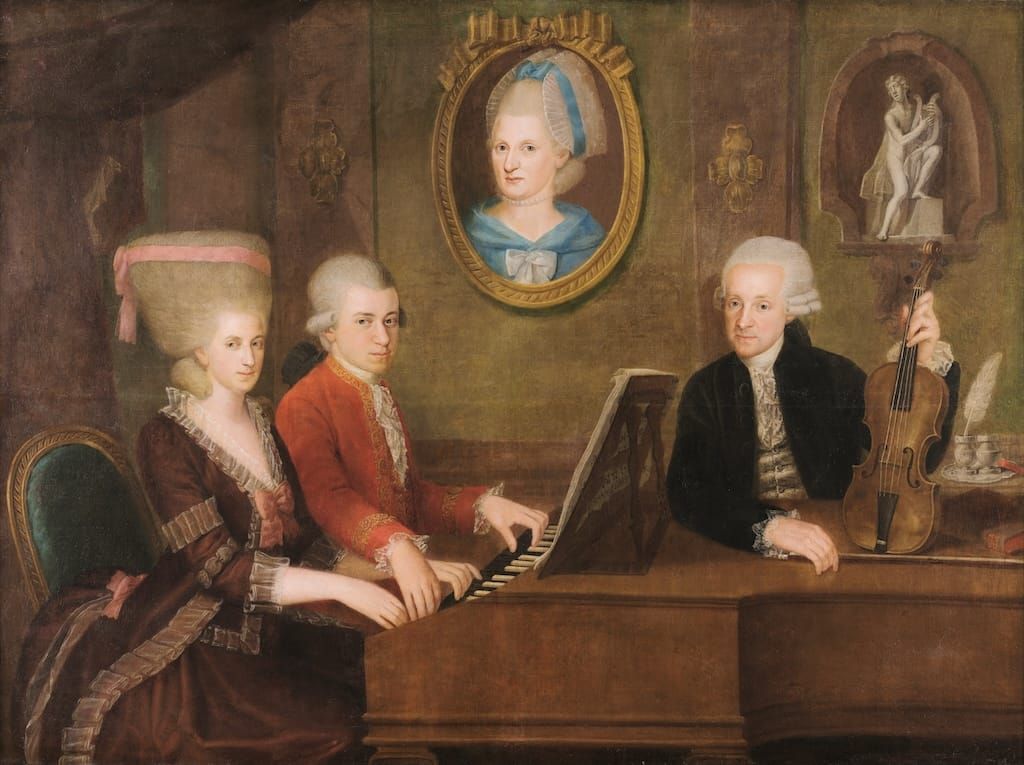
Few names in music carry quite as much mythology as Wolfgang Amadeus Mozart. He is often imagined as a miraculous child who simply received complete symphonies from heaven, wrote flawless masterpieces without revision, and floated through life untouched by the ordinary struggles of work, study, money, failure, and ambition.
The real Mozart was extraordinary, perhaps more extraordinary than the myth. Yet his genius was not a magic trick. It emerged from a rare combination of immense natural ability, remarkably early training, a rich musical environment, fearless curiosity, professional pressure, and a lifetime spent turning experience into craft.
Understanding that truth does not make Mozart less astonishing. It makes him human, and his achievement even more remarkable.
Myth: Mozart wrote everything perfectly on the first attempt
The most persistent Mozart legend is that he composed complete works in his head and simply copied them onto paper, without sketches, corrections, or effort.
There is a small element of truth in this. Mozart possessed an exceptional musical memory and an unusually advanced ability to imagine music internally. By adulthood, he could often plan long passages before writing them down, particularly when working quickly in familiar forms. His surviving manuscripts can look surprisingly clean when compared with those of composers such as Beethoven, whose pages are crowded with revisions.
However, neat manuscripts are not evidence that no work took place. Mozart revised passages, made corrections, replaced pages, adapted music for performers, and returned to earlier ideas. Much of his drafting may also have happened mentally before he put ink to paper. A manuscript is not always the start of composition. It can be the final stage of a long internal process.
The popular image of Mozart casually writing masterpieces therefore misses the point. His apparent ease was not the absence of labour. It was the result of a mind so deeply trained in musical language that much of the labour had become invisible.
Myth: he was simply born fully formed
Mozart’s gifts appeared astonishingly early. He was composing small pieces as a child and performing before European courts while still young. Yet even this prodigy did not develop in isolation.
His father, Leopold Mozart, was a skilled musician, composer, teacher, and author of one of the period’s most influential violin manuals. Leopold recognised Wolfgang’s ability early and devoted enormous energy to developing it. Mozart was taught keyboard, violin, composition, counterpoint, performance, languages, and the practical realities of a musician’s life.
This was not a child who was occasionally encouraged to play the piano after dinner. Mozart was immersed in music from the beginning. He rehearsed, performed, travelled, observed leading musicians, heard opera, absorbed regional styles, and worked under professional expectations that most children would never encounter.
The distinction matters. Mozart’s talent was real, profound, and unusual. But talent is potential, not a finished achievement. His early environment gave that potential an almost ideal setting in which to grow. He did not bypass learning. He learned with extraordinary speed, then continued learning throughout his life.
The child prodigy years were also an education
From childhood, Mozart travelled widely with his family through cities including Munich, Vienna, Paris, London, Milan, and Rome. These journeys were financially demanding and physically exhausting, but artistically invaluable.
In each city, Mozart encountered new traditions, instruments, audiences, composers, and performers. He absorbed the elegance of Italian opera, the drama of Mannheim orchestral writing, the sophistication of Viennese chamber music, and the expressive musical language developing across Europe.
He did not merely imitate what he heard. He collected ideas, tested them, transformed them, and gradually made them his own. This is one reason Mozart’s mature music feels so fluent across genres. He could write a comic opera with theatrical pace, a piano concerto of conversational brilliance, a sacred work of grandeur, a string quartet of intimate complexity, or a symphony of startling emotional power.
His versatility was not accidental. It was built through exposure, observation, and continual practice. Mozart’s genius had a cosmopolitan education.
Myth: he was effortless because he was carefree
Another familiar caricature presents Mozart as an irresponsible, giggling genius who was too gifted to care about the world and too playful to take work seriously.
Mozart certainly had a vivid sense of humour. His letters can be bawdy, silly, affectionate, and mischievous. He enjoyed wordplay, parties, dancing, billiards, and social life. He was not the solemn marble monument that later generations sometimes wanted him to be.
That should not be mistaken for laziness. As an adult in Vienna, Mozart worked constantly. He taught students, performed as a pianist, organised concerts, negotiated commissions, wrote for publishers, composed to deadline, and tried to support a household in an unpredictable freelance economy.
He often faced financial strain, professional rivalry, illness, and the uncertainty that came with relying on public taste and aristocratic patronage. Mozart was not a protected genius who created only when inspiration arrived. He was a working musician, and some of his greatest works were written under intense pressure.
The final three symphonies of 1788, for example, emerged during a difficult period in his life. Their elegance and confidence can obscure the circumstances in which they were created. Beautiful music does not necessarily come from an easy life.
Practice did not limit Mozart’s imagination
There is a modern temptation to set talent and practice against one another, as though practice belongs to ordinary people while genius belongs only to the naturally gifted.
Mozart’s life suggests the opposite. The deeper his knowledge of musical form became, the more freely he could play with it. He understood the architecture of a piano concerto, including the orchestral introduction, the solo entrance, thematic contrast, cadenzas, tonal structure, and the balance between virtuosity and drama.
Because he knew these conventions so thoroughly, he could bend them with confidence. A sudden modulation, an unexpected pause, a woodwind phrase interrupting the piano, or a shift from brilliance to melancholy can feel spontaneous because it is so expertly placed.
The same is true in his operas. In The Marriage of Figaro, Mozart does not merely write memorable melodies. He uses music to reveal status, desire, deception, frustration, seduction, and emotional transformation. In the great ensembles, several characters can be feeling entirely different things at once, yet the music holds their competing emotions together with extraordinary clarity.
Practice gave Mozart a vast vocabulary. Genius was his ability to make that vocabulary feel alive.
Mozart learned from the musicians around him
The genius myth can make great artists seem self-created. Mozart was anything but isolated. He studied and admired Johann Sebastian Bach and George Frideric Handel, particularly later in life when he became increasingly interested in counterpoint. He learned from Joseph Haydn, whose string quartets helped to shape Mozart’s own chamber music. He also responded to Italian opera composers, German instrumental traditions, and the virtuoso culture of the piano.
His relationship with Haydn is especially revealing. Haydn was more than two decades older and already a major figure in European music. Mozart learned from him, while Haydn deeply admired Mozart’s work. Their connection reminds us that artistic development is often collaborative, even when the finished masterpiece bears a single name.
Mozart’s originality did not mean inventing music from nothing. It meant hearing the music available to him more deeply than almost anyone else, then carrying it somewhere new.
The real miracle: speed, depth, and emotional range
If we set aside the exaggerated legends, what remains is still extraordinary. Mozart had phenomenal memory, rare natural gifts, rigorous early instruction, experience as a performer, exposure to Europe’s most important musical cultures, and an adult life shaped by deadlines, ambition, and financial need.
Above all, he had a creative mind capable of combining structure, beauty, surprise, and emotional truth at an almost unmatched level. Work, learning, instinct, and imagination fused so completely in him that the results can seem effortless.
Listen to the slow movement of the Piano Concerto No. 23, the menace and grandeur of the Don Giovanni overture, the tenderness of the Clarinet Concerto, or the extraordinary final movement of the “Jupiter” Symphony. The music is never merely clever. It is orderly without becoming mechanical, emotional without losing shape, and accessible without ever being simplistic.
That balance is the real mystery. Mozart was born with rare gifts, but those gifts became genius through relentless cultivation, a life saturated in music, and an imagination that could turn technical mastery into human experience.
Perhaps the most inspiring truth is this: genius is not the opposite of discipline. In Mozart’s case, discipline was one of the ways genius became audible.
Does understanding Mozart’s training make him more relatable, or does it make his achievement even more astonishing?