Dolly Parton: The Art of Being Dolly
Dolly Parton was far more than a country music legend. Behind the rhinestones and larger-than-life persona was an extraordinary songwriter, cultural icon and philanthropist whose sincerity, generosity and understanding of people made her unforgettable.

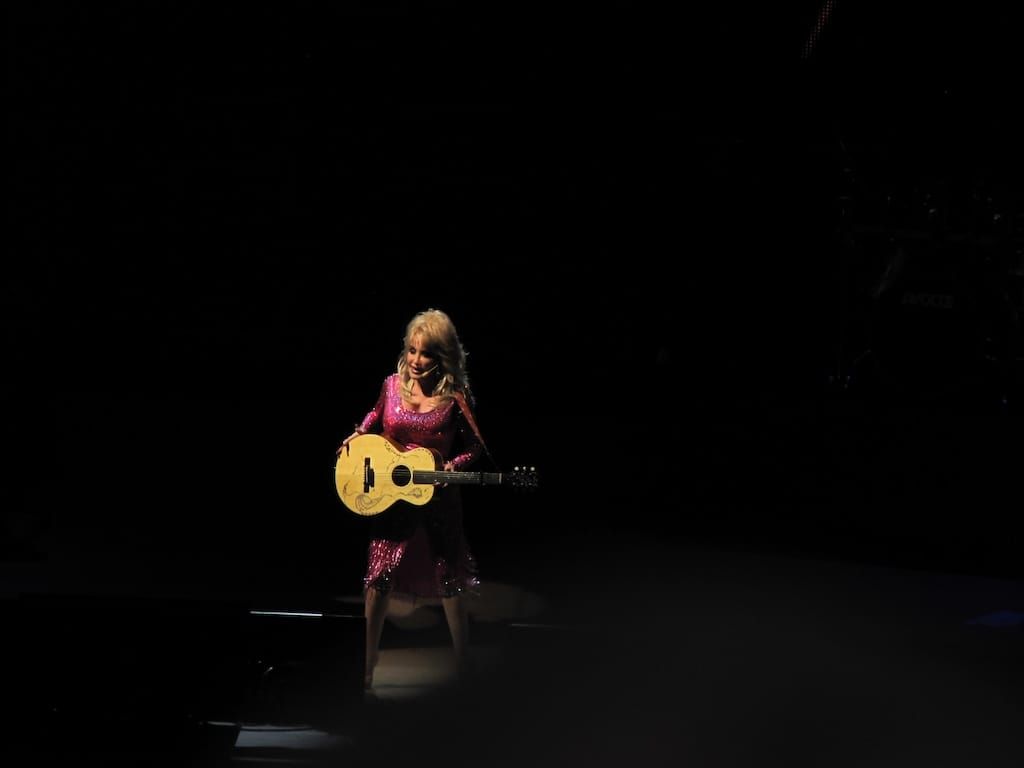
Dolly Parton died on 25 August 2026, aged 80, bringing to a close one of the most remarkable careers in modern popular culture. Her achievements are almost difficult to comprehend: more than 3,000 songs, over 100 million records sold, eleven Grammy Awards, films, television, businesses, theme parks and a literacy programme that has given hundreds of millions of books to children.
Yet statistics tell only part of the story. What made Dolly Parton extraordinary was not simply that she became famous. It was the way she managed to become famous while remaining unmistakably herself.
She spent decades presenting an image that could easily have been dismissed as frivolous. The enormous blonde hair, rhinestones, high heels, elaborate clothes, make-up and jokes about her appearance were deliberately exaggerated. Dolly understood glamour, but she also understood comedy. She knew exactly how the world saw her and was perfectly happy to play with that image.
The mistake was to assume that the joke was the whole story. Behind the spectacle was an artist of remarkable discipline and emotional intelligence. Dolly had an extraordinary instinct for melody, but her greatest gift may have been her ability to understand human feeling and turn it into song.
Consider “Jolene”. It is one of the simplest premises in popular music: a woman asks another woman not to take the man she loves. But Dolly gives the song an extraordinary psychological depth. There is jealousy, fear, insecurity and vulnerability, yet she never turns the narrator into a victim. The repeated plea creates a sense of desperation without ever becoming melodramatic.
That is songwriting as emotional economy. “I Will Always Love You” reveals another side of the same gift. Written as Dolly's farewell to Porter Wagoner when she decided to leave their professional partnership, the song is remarkable precisely because it does not turn separation into bitterness. It acknowledges love while accepting that something has to end. Dolly understood that sometimes the most powerful thing one person can say to another is goodbye.
The song later became one of Whitney Houston's defining recordings, crossing from country into pop and R&B and introducing Dolly's writing to an entirely new generation. But its extraordinary emotional architecture was Dolly's.
Then there is “Coat of Many Colors”, perhaps the song that most beautifully reveals the person behind the star. Dolly took a memory of growing up poor in Tennessee and turned it into something universal. A coat made from scraps could have been a symbol of deprivation. In Dolly's hands it became a symbol of love. The song does not deny poverty, but neither does it allow poverty to define the child wearing that coat.
That was one of her great artistic abilities: to take something intensely personal and make it belong to everyone.
“My Tennessee Mountain Home” does something similar with place and memory. “9 to 5” takes the frustrations of working life and turns them into an irresistible piece of popular music. The genius of the latter is that it manages to be socially observant without becoming heavy-handed. Dolly could make a point while making you want to sing along.
She understood something that technically accomplished musicians sometimes forget: people remember how a song makes them feel.
That understanding explains why her music repeatedly escaped the boundaries of genre. Dolly was country, but she was never only country. Her songs travelled into pop, soul and R&B. Other artists could inhabit them because the emotions were so clearly drawn. She could write for herself and yet somehow leave enough space for someone else to discover themselves inside the song.
That is perhaps the highest compliment one can pay a songwriter. But Dolly's genius was not confined to music. She understood something equally important about being a public figure: identity itself could be an art form.
She took the conventions of femininity and exaggerated them until they became unmistakably hers. She did not apologise for glamour. She did not pretend that she had accidentally become a star. She was ambitious, and she was comfortable with that ambition.
At the same time, she was constantly making fun of herself. That combination was disarming. Dolly could be glamorous without being intimidating, wealthy without seeming remote, ambitious without seeming ruthless. She could command enormous rooms and still make people feel as though she was sitting beside them.
There was also a striking absence of cynicism. In an age in which irony has become a kind of cultural armour, Dolly remained sincerely herself. She believed in hard work. She believed in music. She believed in family. She believed in books. She believed in helping people.
And she acted on those beliefs. Her business career was an extension of the same instinct for self-invention. Dolly did not simply leave Tennessee behind when success arrived. She built around her origins, most famously through Dollywood, transforming the landscape and culture of the Smoky Mountains into part of an enduring cultural and economic enterprise. Her success became connected to the place from which she came rather than a rejection of it.
But perhaps the most revealing expression of Dolly's character was the Imagination Library. She founded the programme in 1995 in honour of her father, who could not read or write. What began by giving books to children in her home county became an international literacy initiative. By June 2026, the programme had gifted more than 325 million books to children across the United States, Canada, the United Kingdom, Australia and the Republic of Ireland.
There is something almost perfectly Dolly about this. A child who grew up with very little becomes a songwriter and storyteller. She becomes extraordinarily wealthy through those stories. And then she spends part of that wealth making sure other children have stories of their own.
She did not simply give money away. She gave people access to the very thing that had shaped her own imagination. That makes her philanthropy feel less like an accessory to her celebrity and more like an extension of her art. Dolly spent her life turning what she had been given into something she could give back.
She was given a childhood full of stories, and she gave children books. She was given a talent for music, and she gave the world songs. She was given success, and she used it to build businesses, create opportunities and support causes that mattered to her.
This is why her legacy is so much larger than that of a country singer. Dolly Parton became a rare kind of cultural figure: someone who could be loved across generations, musical genres and social divisions without demanding that everyone agree on everything else. Her audience could simply recognise talent, humour, warmth and humanity.
And perhaps that is why her death feels so significant. There will be other great singers. There will be other great songwriters. There will be other entertainers who sell millions of records and build enormous businesses.
But there will never be another Dolly Parton. Because Dolly was not simply a collection of achievements. She was a complete piece of cultural authorship. The songs, the voice, the clothes, the humour, the businesses, the books and the generosity all belonged to the same remarkable creation: Dolly herself.
In the end, perhaps the best way to understand her legacy is through the songs. “Jolene” will continue to make people feel jealousy and vulnerability. “Coat of Many Colors” will continue to evoke childhood, family and dignity. “I Will Always Love You” will continue to give people a language for saying goodbye. “9 to 5” will continue to make the frustrations of ordinary working life sound almost exhilarating.
The songs will remain because the feelings remain. Dolly understood that people want to be entertained, but they also want to be understood. And she understood them. That may be her greatest legacy of all.