
Charles Mingus: The Passionate Jazz Composer and Bassist
Charles Mingus transformed jazz through compositions that united blues, gospel, classical influences and improvisation. Discover how the visionary double bassist and bandleader challenged musical conventions, confronted racism and expanded jazz's expressive possibilities.

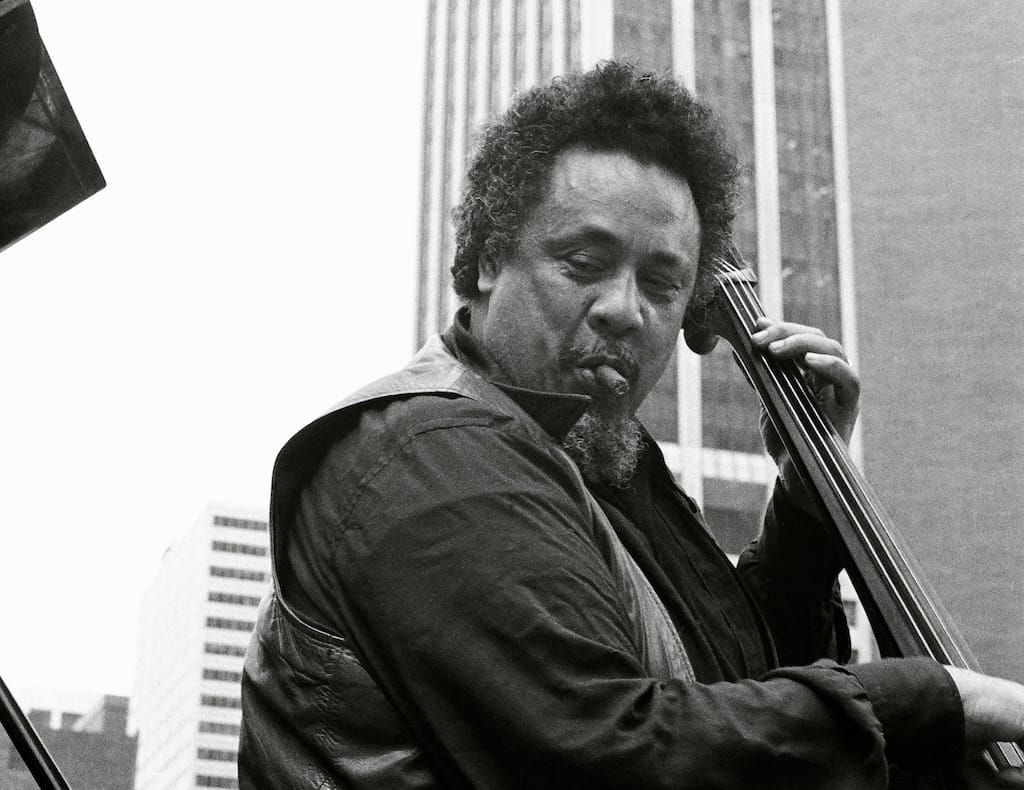
Charles Mingus was one of the most distinctive figures in twentieth-century jazz, a musician whose work brought together the freedom of improvisation, the sophistication of classical composition and the expressive intensity of the blues. Celebrated as a double bassist, bandleader and composer, Mingus developed a musical language that was deeply personal, politically engaged and resistant to easy categorisation. His compositions expanded the possibilities of jazz, while his uncompromising approach to performance established him as one of the genre's most formidable voices.
Born in Arizona in 1922 and raised in the Watts neighbourhood of Los Angeles, Mingus grew up surrounded by a variety of musical traditions. Gospel, blues and the music of Duke Ellington left lasting impressions on him, alongside the European classical music he encountered during his musical education. These influences converged in a body of work that treated jazz not simply as a vehicle for improvisation, but as a compositional art capable of expressing complex emotions, social tensions and the contradictions of American life.
Early Life and Musical Formation
Mingus began studying the trombone and cello before concentrating on the double bass, an instrument that would become central to his musical identity. His classical training introduced him to orchestration, counterpoint and musical structure, while his engagement with jazz exposed him to the spontaneity and rhythmic vitality that would define his mature style.
He studied with bassist Red Callender and later with Herman Rheinshagen, a former bassist with the New York Philharmonic. These experiences strengthened his technique and encouraged him to explore the double bass beyond its conventional role in the rhythm section.
By the 1940s, Mingus was performing professionally, including engagements with Louis Armstrong and Lionel Hampton. He subsequently worked with the bands of vibraphonist Red Norvo and trumpeter Dizzy Gillespie, gaining experience in the rapidly evolving landscape of modern jazz. His move to New York in the early 1950s brought him into contact with musicians and ideas that were reshaping the genre.
Mingus increasingly turned towards composition and bandleading, seeking greater control over the musical experience. He wanted to create works in which individual musicians could express themselves freely while contributing to a larger artistic vision.
Expanding the Language of Jazz
Mingus's contribution to jazz composition lies in his ability to unite seemingly disparate musical traditions without sacrificing their individual character. His work draws on blues, gospel, swing, bebop and elements of European classical music, creating compositions that are intricate in their construction but emotionally direct.
Rather than treating improvisation and written arrangements as opposing approaches, Mingus made them integral to the same creative process. His musicians were expected to understand the structure of a piece, listen closely to one another and respond to the music as it unfolded. A theme might emerge through collective improvisation, develop through exchanges between instrumentalists and return in a transformed form.
His arrangements frequently feature independent melodic lines, contrasting instrumental colours and dense passages of counterpoint. Different instruments contribute actively to the musical narrative, creating a texture that extends beyond the conventional division between melody and accompaniment.
Mingus was particularly influenced by Duke Ellington, who had demonstrated how a jazz orchestra could become an expressive compositional instrument shaped around the personalities of its musicians. Mingus developed this approach through music that demanded technical precision, emotional commitment and collective responsiveness.
His compositions could shift between lyrical passages, driving rhythms and sudden changes of mood, creating performances that felt spontaneous without losing their underlying coherence. This balance between structure and freedom became one of the defining characteristics of his musical identity.
Mingus Ah Um
Released in 1959, Mingus Ah Um remains one of the most celebrated albums of Mingus's career. It brings together the rhythmic energy of swing, the expressive freedom of modern jazz and a remarkable range of musical personalities within a carefully constructed ensemble.
Among its best-known pieces is Goodbye Pork Pie Hat, an elegy for tenor saxophonist Lester Young, who died in March 1959. Built around a blues-inflected harmonic language, the composition features a deeply expressive melody that captures the warmth and melancholy of its subject. It demonstrates Mingus's ability to communicate profound emotion through restrained musical material, allowing the melody and its harmonies to carry the weight of the music.
Another highlight is Better Git It in Your Soul, which draws on gospel music and the communal energy of church singing. Its exuberant rhythms, handclaps, shouts and shifting ensemble textures create an atmosphere of celebration. The piece also illustrates Mingus's approach to collective performance, with musicians contributing to a musical conversation that extends beyond conventional solo-and-accompaniment arrangements.
The album also introduced Fables of Faubus, one of Mingus's most pointed political statements. Inspired by Arkansas governor Orval Faubus's opposition to school desegregation in Little Rock in 1957, the composition uses biting satire to challenge racism and political authority. Columbia Records declined to include its intended lyrics on the original album, and Mingus subsequently recorded the vocal version for Charles Mingus Presents Charles Mingus, released by Candid Records in 1960.
Together, these works demonstrate the range of Mingus's imagination. His music could be tender, playful, confrontational or exuberant, with personal expression and social commentary frequently occupying the same musical space.
The Black Saint and the Sinner Lady
If Mingus Ah Um offers an introduction to his compositional style, The Black Saint and the Sinner Lady, released in 1963, reveals the full scale of his ambition.
Conceived as an extended work in several movements, the album moves between contrasting rhythms, instrumental colours and emotional states. Its music incorporates elements of blues, flamenco, Latin American music and orchestral writing, creating a richly layered sound world that resists straightforward classification. Arranger Sy Johnson helped realise Mingus's vision through intricate orchestration.
Rather than presenting a collection of unrelated performances, the album unfolds as a connected musical journey. Recurring ideas and contrasting sections contribute to a larger dramatic structure, while changes in rhythm, dynamics and instrumental texture sustain a sense of movement.
The influence of classical composition is evident in the layered instrumental lines and carefully controlled transitions. However, the work retains the physical energy of jazz, with improvisation and individual expression remaining central to its character.
The Black Saint and the Sinner Lady demonstrates that jazz can accommodate the scale and complexity of an extended composition without sacrificing its spontaneity. It remains one of Mingus's most significant achievements, challenging conventional distinctions between written composition and improvised music.
The Double Bass and the Art of Bandleading
Although Mingus is celebrated for his compositions, his achievements as a double bassist were equally important to his musical development. He embraced the instrument's traditional functions of establishing the harmonic foundation and rhythmic pulse, while expanding its expressive possibilities.
His playing combined powerful rhythmic articulation with a distinctive melodic sensibility. He could create driving bass lines that gave an ensemble momentum, then use the instrument to introduce themes or engage directly with other performers. In Haitian Fight Song, the bass becomes a commanding presence, establishing a musical identity that drives the composition forward.
His experience as an instrumentalist also shaped his approach to bandleading. Mingus assembled ensembles of accomplished musicians and expected them to engage deeply with the music, combining technical discipline with a willingness to take creative risks.
His collaborators included saxophonist Eric Dolphy, trumpeter Ted Curson and drummer Dannie Richmond, who became one of his closest musical partners. Mingus frequently wrote with particular performers in mind, drawing on their distinctive sounds and abilities to shape his compositions.
Rehearsals and performances could be demanding, reflecting his insistence that musicians take responsibility for the music as a whole. His intense temperament sometimes led to difficult working relationships, but his approach also produced performances of extraordinary energy and individuality.
Mingus's ensembles demonstrated how a jazz group could combine the responsiveness of an improvising band with the precision of a carefully rehearsed chamber ensemble.
Music, Race and Political Protest
Mingus's music was shaped by his experiences as a Black American during a period of profound racial inequality. He used composition to confront discrimination, challenge authority and express the frustrations of living in a society marked by racial prejudice.
Fables of Faubus remains the clearest example of this commitment. By targeting a politician who opposed school integration, Mingus transformed a contemporary controversy into a work of musical satire. Its directness reflects his determination to use jazz as a vehicle for political expression.
His commitment to artistic independence extended to the music industry. In the mid-1950s, he established publishing and recording operations to retain greater control over his compositions. He also founded the Jazz Workshop, providing opportunities for musicians to develop and perform new works.
These initiatives reflected his belief that jazz deserved to be recognised as a serious compositional tradition. For Mingus, maintaining control over his music was essential to pursuing artistic ambitions without compromising his ideas to satisfy commercial expectations.
His work consequently occupies an important place in the history of jazz as both an artistic and a cultural expression, demonstrating how musical innovation can emerge from personal conviction and a determination to challenge established conventions.
Epitaph
Mingus's compositional ambitions extended well beyond the recordings for which he is best known. Among his most extraordinary projects was Epitaph, an expansive work comprising more than 4,000 measures that remained largely unperformed during his lifetime.
Following his death, the score was prepared for performance, and conductor and composer Gunther Schuller led its premiere at Lincoln Center in New York in 1989. The performance, featuring an ensemble of 31 musicians, revealed the extraordinary scale of Mingus's musical imagination and his interest in extended forms and orchestration.
His widow, Sue Graham Mingus, played a crucial role in preserving his compositions and recordings and supporting performances of his music. The Mingus Big Band and Mingus Dynasty have continued to introduce his work to new audiences, ensuring that his compositions remain part of the living jazz repertoire.
Charles Mingus died in Mexico on 5 January 1979, aged 56, following complications associated with amyotrophic lateral sclerosis (ALS). Despite his relatively short career, he left behind a body of work that continues to challenge musicians and listeners.