Analysing Stravinsky’s 'The Rite of Spring'
More than a century after its explosive premiere, Igor Stravinsky’s 'The Rite of Spring' remains a landmark of musical modernism. This analysis explores its revolutionary rhythms, daring orchestration, folk influences and enduring impact on twentieth-century music.

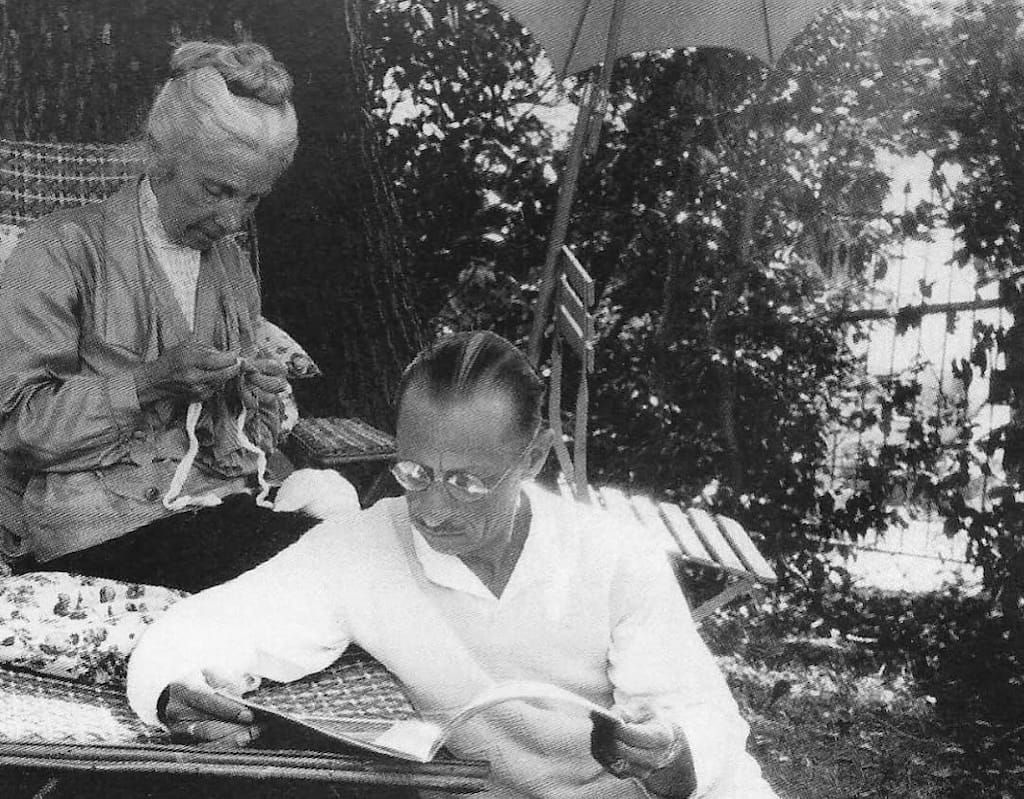
Few works in the history of classical music have altered the course of musical development as dramatically as Igor Stravinsky’s The Rite of Spring. Premiered in Paris on 29 May 1913 by Sergei Diaghilev’s Ballets Russes, the ballet has become one of the defining artistic achievements of the twentieth century. Its revolutionary use of rhythm, harmony, orchestration and structure challenged audiences and musicians alike, helping to usher in the modern age.
More than a century after its premiere, The Rite of Spring continues to fascinate performers, scholars and listeners. It remains both a landmark of musical innovation and a work of astonishing visceral power.
Historical Context
At the beginning of the twentieth century, Paris was one of Europe's most vibrant cultural centres. Artistic experimentation flourished across literature, painting, dance and music. Stravinsky had already attracted attention through his collaborations with Diaghilev on The Firebird (1910) and Petrushka (1911), both of which demonstrated his remarkable gifts as an orchestrator and dramatist.
The idea for The Rite of Spring emerged from a vision Stravinsky described as a pagan ritual in which a young maiden dances herself to death as a sacrifice to the forces of nature. Working closely with archaeologist and artist Nicholas Roerich, Stravinsky developed a scenario depicting prehistoric Slavic tribes celebrating the arrival of spring through a series of sacred ceremonies.
The resulting ballet was unlike anything audiences had encountered before. Rather than telling a conventional narrative, it presented a sequence of ritualistic scenes filled with primal energy and collective action. This departure from traditional ballet was matched by equally radical music.
The Famous Premiere
The premiere at Paris's Théâtre des Champs-Élysées has become one of the most famous events in music history. Accounts vary regarding the extent of the disturbance, but there is little doubt that the performance provoked outrage among sections of the audience.
Some objected to the unconventional choreography of Vaslav Nijinsky, while others were shocked by the music's harsh sonorities and relentless rhythms. Arguments erupted in the auditorium, making it difficult for the performers to hear one another.
Although the details have often been romanticised, the premiere established The Rite of Spring as a symbol of artistic revolution. Today, the work is regarded as one of the greatest masterpieces of modern music.
Structure of the Ballet
The ballet is divided into two parts:
Part I: Adoration of the Earth
The first section depicts the awakening of nature and the gathering of tribes to celebrate spring. It culminates in a frenetic dance known as the "Dance of the Earth".
Part II: The Sacrifice
The second part becomes increasingly dark and ritualistic. A chosen maiden is selected to dance before the elders until she collapses and dies, thereby ensuring the renewal of life.
The absence of traditional narrative development is significant. Rather than focusing on individual characters, Stravinsky presents collective rituals and elemental forces. The drama emerges through musical energy rather than storytelling.
Revolutionary Rhythm
Perhaps the most striking feature of The Rite of Spring is its treatment of rhythm.
Nineteenth-century music generally relied upon predictable metrical patterns and regular phrasing. Stravinsky shattered these conventions. Throughout the ballet, accents are displaced, metres shift rapidly, and rhythmic patterns are layered against one another.
The "Augurs of Spring" provides the most famous example. Here, repeated chords are hammered out with seemingly irregular accents. The result is music that feels unstable, aggressive and unpredictable.
Rather than allowing rhythm to support melody, Stravinsky places rhythm at the centre of the musical experience. The listener becomes aware of rhythm as an independent force, driving the music forward with extraordinary intensity.
This innovation would have a profound influence on later composers, including Béla Bartók, Aaron Copland and Olivier Messiaen.
Harmony and Dissonance
The harmonic language of The Rite of Spring was equally revolutionary.
Stravinsky frequently combines different tonal centres simultaneously, creating dense and often abrasive sonorities. One of the ballet's most famous moments occurs in the "Augurs of Spring", where two unrelated chords are superimposed. The resulting clash produces an effect that was startling to early audiences.
Unlike many Romantic composers who used dissonance to create tension that would eventually resolve, Stravinsky often treats dissonance as a stable sonority. Harsh combinations of notes exist for their own sake rather than as temporary departures from consonance.
This approach contributes to the primitive atmosphere of the work. The music seems to operate according to its own natural laws, unconcerned with traditional expectations of harmonic progression.
Orchestration and Colour
Stravinsky's orchestration remains one of the most admired aspects of the score.
The ballet calls for a massive orchestra, including an expanded woodwind section, a large brass contingent and an extensive percussion battery. Yet Stravinsky's achievement lies not simply in the size of the ensemble but in the originality of its use.
The opening bassoon solo provides a famous example. Played in an unusually high register, the instrument sounds almost unrecognisable. The melody evokes an ancient folk tune emerging from a distant past.
Throughout the score, Stravinsky experiments with unusual instrumental combinations. Woodwinds shriek, brass instruments deliver brutal fanfares, and percussion instruments contribute to the overwhelming sense of ritualistic energy.
The orchestra becomes a vast palette of colours, capable of producing sounds that range from delicate and mysterious to overwhelming and violent.
Folk Influences
Although The Rite of Spring sounds radically modern, it draws extensively upon folk material.
Stravinsky incorporated numerous melodies inspired by Russian and Lithuanian folk traditions. These melodies often consist of short, repetitive patterns that contribute to the work's ritualistic character.
However, Stravinsky rarely presents folk material in a straightforward manner. Instead, he fragments, transforms and recontextualises it within complex rhythmic and harmonic structures.
The result is music that feels simultaneously ancient and modern. It evokes a distant pagan world while employing techniques that would shape the future of composition.
Musical Form
Traditional musical forms such as sonata form play little role in The Rite of Spring.
Instead, Stravinsky constructs the ballet through blocks of musical material. Distinct sections are juxtaposed rather than developed according to conventional principles.
This technique has often been compared to modernist painting, particularly the work of artists such as Pablo Picasso. Just as Cubist painters fragmented visual perspectives, Stravinsky fragmented musical continuity.
The listener experiences a succession of powerful musical events rather than a smooth, continuous narrative. This approach would become highly influential throughout twentieth-century music.
The Chosen One and the Dance of Death
The climax of the ballet occurs in the "Sacrificial Dance".
Here, Stravinsky pushes rhythmic complexity to extraordinary levels. Constantly changing metres and violent accents create a sense of mounting tension. The music seems driven by forces beyond human control.
The final dance is exhausting both musically and physically. As the chosen maiden dances herself to death, the orchestra unleashes some of the most ferocious music ever written.
The ending provides no comforting resolution. Instead, it concludes with a brutal affirmation of the ritual itself, emphasising the power of collective belief and natural cycles.
Influence and Legacy
The influence of The Rite of Spring extends far beyond classical music.
Its rhythmic innovations transformed twentieth-century composition and influenced jazz, film music and contemporary concert music. Composers from Leonard Bernstein to John Williams have acknowledged its importance.
The work also altered perceptions of what an orchestra could achieve. Its bold orchestration and emphasis on rhythm continue to inspire composers and conductors.
Today, The Rite of Spring occupies a central place in the orchestral repertoire. What once shocked audiences is now studied in conservatories and performed by leading orchestras around the world.