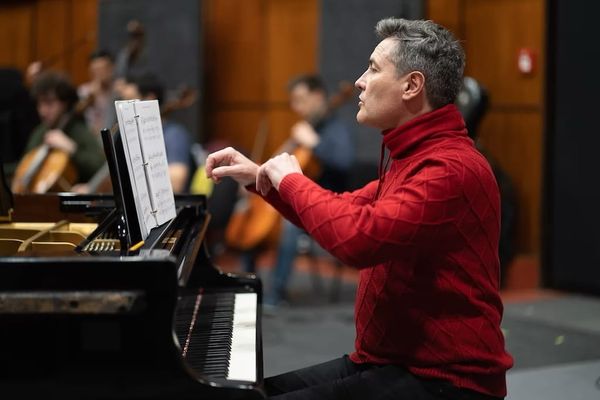
How to Interpret a Score Like a Professional Musician
Interpreting a score like a professional musician goes far beyond correct notes. It demands structural insight, harmonic awareness, stylistic understanding and emotional intelligence, transforming printed notation into a living, breathing musical narrative shaped by informed artistic choice.


To the untrained eye, a musical score can appear like an intricate code: black dots, stems, slurs, foreign words, dynamic markings and mysterious symbols scattered across five lines. Yet for a professional musician, the score is not merely a set of instructions. It is a living blueprint, a map of structure, character, architecture and emotional intent.
Learning to interpret a score like a professional musician is less about playing the correct notes and more about reading between them. It requires historical awareness, analytical clarity, stylistic sensitivity and, above all, imagination. Here is how professionals approach the page.
1. See the Architecture Before the Details
A professional musician rarely begins by playing from bar one. Instead, they step back and ask: What is the structure of this piece?
Is it in sonata form, a binary dance, a through composed song, a fugue? Understanding the architecture determines how the musical narrative unfolds. For example, in a sonata by Ludwig van Beethoven, identifying the exposition, development and recapitulation clarifies where tension builds and where it resolves. Similarly, in a prelude by Johann Sebastian Bach, recognizing harmonic sequences and patterns helps reveal forward momentum.
Professionals often mark formal sections, identify key changes, highlight thematic returns and observe large scale dynamic arcs. Only once the macrostructure is clear do they move to the micro details.
2. Decode the Harmony
Harmony is the emotional engine of Western music. Professionals scan the score vertically as much as horizontally.
They ask: What is the harmonic rhythm? Where are the cadences? Are there modulations? Which chords create tension and which offer release?
For example, in a nocturne by Frédéric Chopin, the melody may seem improvisatory, but the harmonic underpinning guides phrasing and rubato. Understanding where dissonance resolves shapes how long a note should breathe and where intensity should peak.
Even instrumentalists who are not pianists benefit from reducing passages to chord progressions. A violinist playing Brahms must understand the harmonic density beneath the melodic line to shape phrasing convincingly.
Harmony transforms the score from a sequence of notes into a narrative of tension and resolution.
3. Study the Composer’s Language
Every composer speaks a distinct musical dialect. Professionals immerse themselves in that language.
A Mozart allegro is not Beethoven. A Debussy crescendo is not Mahler. Stylistic awareness prevents interpretative distortion.
Wolfgang Amadeus Mozart demands clarity, balance and elegance. Claude Debussy invites colour, fluidity and harmonic nuance. Gustav Mahler requires long breathed architecture and existential intensity.
Professionals ask when the piece was written, what aesthetic movement it belongs to and what instruments or performance practices were standard at the time.
Historically informed performance practice has reshaped interpretations of Baroque and Classical repertoire. Knowledge of ornamentation conventions, articulation norms and tempo flexibility fundamentally changes how the notes are realised.
The score is not isolated ink. It is a product of its time.
4. Observe Every Marking and Understand Its Hierarchy
Dynamics, articulations, accents, phrasing marks and tempo indications are deliberate. Yet professionals understand hierarchy. Not all markings carry equal weight.
A sudden piano after a fortissimo may be structurally significant. A staccato in a transitional bar may be colouristic. The performer must distinguish between structural directives and surface detail.
Tempo markings also require interpretation. Allegro does not simply mean fast. In Beethoven’s era, it implied brightness and vitality. Metronome markings, where provided, are guides rather than rigid commands.
Italian terms such as dolce, con fuoco and sostenuto describe emotional states. A professional translates them into sound, not just speed or volume.
5. Shape the Phrase Like a Sentence
Music breathes. Professionals think in phrases, not bars.
They identify where the phrase begins, where it peaks and where it resolves. A melodic line often mirrors speech. There is direction, inflection and punctuation. Playing every bar with equal weight results in monotony. Professionals build towards climaxes and taper towards cadences.
Consider a Schubert song. The melody may rise towards a word of longing or despair. The musical phrase and textual meaning align. Even in purely instrumental music, phrasing reflects rhetorical logic.
One effective exercise is to sing the line away from the instrument. Singing reveals natural breaths and contour that fingers alone may obscure.
6. Understand Texture and Voicing
Professional musicians constantly balance voices within a texture.
In a Bach fugue, each subject entry must be audible. In a Romantic piano work, inner voices often carry emotional weight equal to the melody. Voicing determines clarity.
For pianists, this means controlling finger weight so one line sings while another whispers. For ensemble players, it means listening actively and adjusting colour and volume in real time.
Score study away from the instrument is crucial. Conductors analyse full scores to understand how instrumental lines interact. They read vertically and horizontally simultaneously.
Texture shapes interpretation as profoundly as melody.
7. Contextualise the Emotional Narrative
Professionals look beyond technique to narrative.
What is this piece about emotionally? Is it introspective, defiant, pastoral, tragic?
In the slow movement of a Beethoven sonata, silence may speak as powerfully as sound. In a Chopin mazurka, national dance rhythms mingle with nostalgia. In Mahler, irony may coexist with sincerity.
The score contains clues such as minor keys, chromaticism, rhythmic instability and orchestration choices. Professionals decode these signals and build a coherent emotional arc.
Without narrative intent, even flawless playing can feel empty.
8. Compare Editions and Sources
Serious musicians consult multiple editions when possible.
Editorial markings can differ. Slurs, dynamics and even notes may vary depending on the source. Urtext editions aim to reproduce the composer’s original manuscript with minimal editorial intervention, but even manuscripts contain ambiguities.
Examining different editions cultivates critical thinking. Why might one editor add a crescendo? Is it implied harmonically? Is it stylistically consistent?
Interpretation involves informed choice.
9. Listen Thoughtfully
Professionals listen widely, but not passively.
Hearing multiple interpretations reveals possibilities. A Rubinstein Chopin differs from a Pollini Chopin. A historically informed Bach differs from a Romantic one.
Listening sharpens aesthetic judgment. Yet imitation is avoided. Professionals absorb influences while cultivating an individual voice.
The score remains primary. Recordings are perspectives, not prescriptions.
10. Practice with Intentionality
Interpretation deepens in the practice room.
Professionals practice slowly to understand harmonic shifts. They isolate voices to clarify texture. They experiment with articulation and colour. They record themselves critically.
Technical mastery and interpretative clarity are inseparable. A phrase cannot crescendo convincingly if the technique collapses under pressure.
Practising interpretation means making deliberate choices and refining them repeatedly.
11. Embrace Silence and Space
One hallmark of mature musicianship is comfort with silence.
Rests are not empty gaps. They frame ideas, create suspense and allow resonance. A fermata invites reflection. A breath before a phrase creates anticipation.
Professionals respect silence as part of the score’s architecture.
12. Accept That Interpretation Evolves
Even professionals do not finish interpreting a piece.
Experience reshapes understanding. A Beethoven sonata played at twenty will sound different at fifty. Life experience, exposure to scholarship and collaboration with other musicians all alter perception.
Interpretation is dynamic. The score remains constant. The performer changes.
Reading Between the Lines
To interpret a score like a professional musician is to move beyond mechanical accuracy. It is to see structure before detail, harmony beneath melody, history behind notation and narrative within abstraction. The score is both precise and open. It demands discipline and invites imagination.
Professional interpretation rests on three pillars: knowledge of theory and history, analytical clarity and artistic imagination. When these converge, the black ink on white paper becomes transformative. The performer ceases to be a note player and becomes a storyteller. And that, ultimately, is the professional difference: not simply reading what is written, but understanding what it means.