Andreas Brantelid on Elgar, Intimacy, and the Art of Restraint
From a teenage debut in Elgar’s Cello Concerto to a deeply personal new Naxos recording, Andreas Brantelid reflects on English cello music, restraint and intimacy, live performance, and the artistic values shaping his work today.
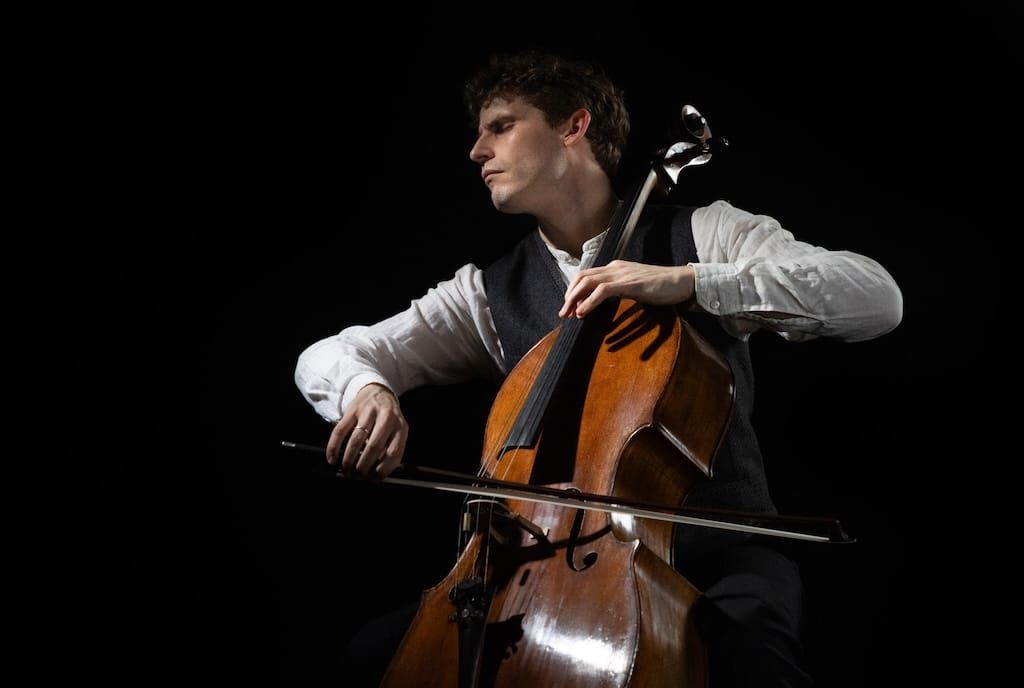
Born in Copenhagen in 1987 to Swedish and Danish parents, Andreas Brantelid made his soloist debut at the age of fourteen performing Elgar’s Cello Concerto with the Royal Danish Orchestra, an encounter that would quietly shape his artistic life. Since then, he has emerged as one of Scandinavia’s most compelling musicians, admired for an approach that allows music not only to sound, but to speak, breathe, and sing. Equally at home on the world’s major concert stages and in intimate chamber settings, Brantelid’s career has been marked by a rare combination of intellectual depth, emotional restraint, and expressive freedom.
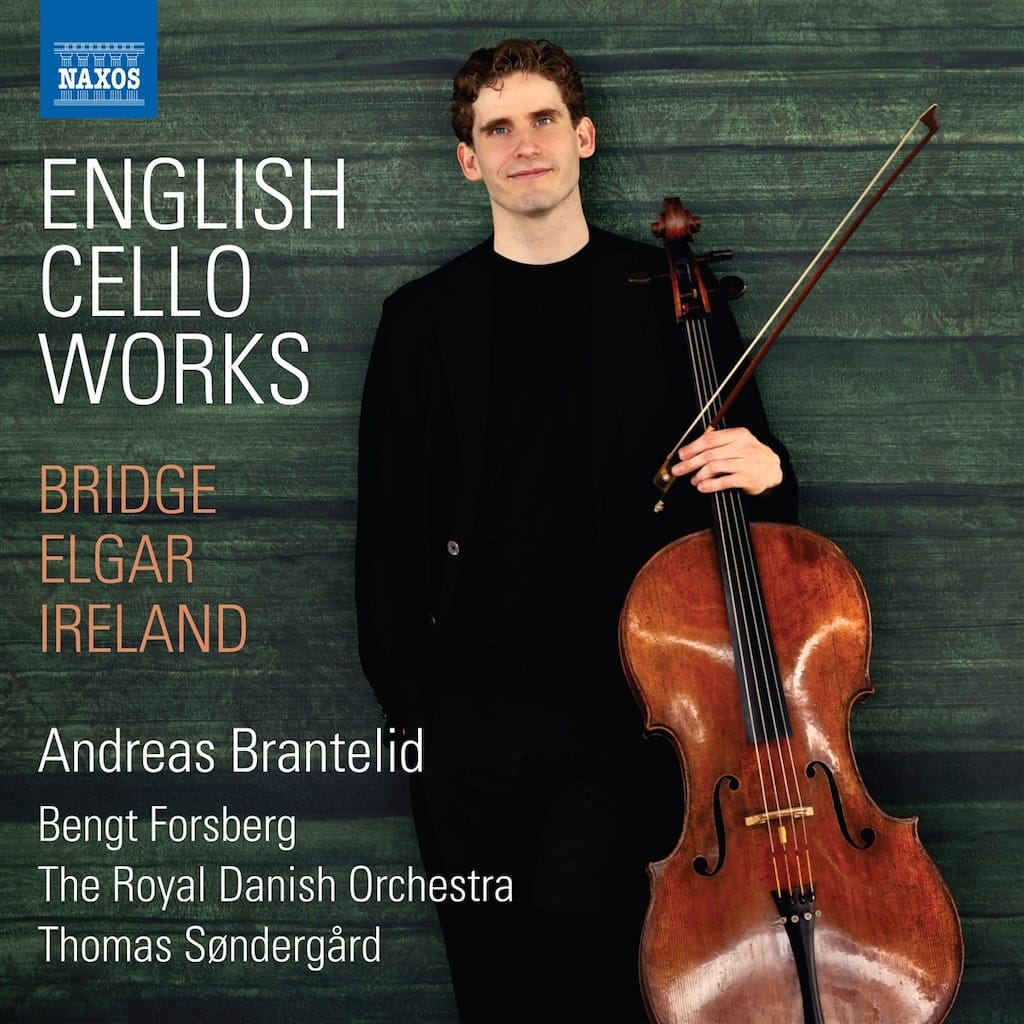
These qualities are on full display in his latest Naxos release, English Cello Works, which brings together Elgar’s late Cello Concerto with chamber works by John Ireland and Frank Bridge. Recorded partly live with the Royal Danish Orchestra and in close collaboration with pianist Bengt Forsberg, the album explores English music written in the shadow of the First World War, works that balance grief and introspection with dignity, clarity, and inner resolve.
In this interview, Brantelid reflects on returning to the Elgar concerto decades after first performing it as a teenager, on the architectural complexity of Ireland’s Cello Sonata, on the poetic inwardness of Bridge’s wartime music, and on the artistic values that continue to guide him as a performer, teacher, and festival director. What emerges is a portrait of a musician deeply committed not to spectacle, but to meaning, continuity, and musical truth.
Nikhil Sardana: You made your soloist debut at just fourteen performing Elgar’s Cello Concerto with the Royal Danish Orchestra. Now, many years later, you return to the work on this new Naxos release. How has your relationship with the concerto evolved since that formative first encounter?
Andreas Brantelid: I have played the piece a lot over the past almost twenty five years. It is probably one of the works I have performed most frequently. To be honest, I am not always consciously aware of how my relationship with it has changed. I suppose that as a human being you naturally develop from the age of fourteen to now, or at least one hopes so, but it is not something I reflect on very explicitly.
With any great music, though, the relationship begins in childhood. For me, Elgar was the first truly big piece I ever played. When I was about twelve, my father, who I had practised with every day as a boy, sent me to study with a wonderful teacher in Sweden, Mats Rondin. The very first thing he did was give me the Elgar Concerto to learn. I was incredibly excited because suddenly I was facing a real challenge. It became my own project rather than something I was simply told to practise.
My father played in the Opera Orchestra in Copenhagen for many years, and I grew up going to the theatre with him. But Elgar was a piece he had never played himself, and that made it feel even more personal. It was really mine. When I eventually made my debut with the Royal Danish Orchestra, he was actually sitting in the orchestra. That meant a great deal to me.
This recording is especially close to my heart because it is a live recording. I had never done that before with this piece. When I listened back during the editing process, I could really hear that it was live, and that added something extra for me. Playing with that orchestra, with people I know and care about deeply, meant a lot.
NS: The programme places Elgar alongside English cello works by John Ireland and Frank Bridge, written around the aftermath of the First World War. What initially drew you to pairing these composers on a single recording?
AB: Elgar’s concerto is, of course, one of the most famous works in the cello repertoire. I wanted to use the opportunity to place it alongside lesser known pieces from roughly the same period. Bridge’s sonata was written between 1913 and 1917, Elgar’s in 1919, and Ireland’s a few years later, in the early 1920s. They belong to the same historical moment.
Bridge and Ireland also go further harmonically than Elgar, especially Ireland. His Cello Sonata is an extraordinary piece. It is still a mystery to me that it is not more widely known. I think it is a sensational work and an architectural masterpiece. Studying the score feels like solving a puzzle. The music is extremely complex and highly original. At times it almost does not sound like music in a conventional sense. There are moments that could belong to completely different styles. Sometimes it feels as though it could be advanced jazz from decades later.
NS: Elgar’s Cello Concerto is often described as autumnal, valedictory, even fragile. How do you approach balancing its deep sense of loss with its moments of resolve and defiance?
AB: For me, the concerto is very unique, particularly because the soloist’s role is not that of a heroic figure in the Romantic sense. It is not about dazzling cadenzas and domination over the orchestra. The orchestral writing is deeply integrated. It feels more like chamber music. There are constant conversations between the cello and individual instruments, especially in the first movement.
That intimacy is also what makes the piece difficult. Physically, the soloist is separated from the wind players, and yet the music demands closeness. The pacing is crucial. The work is free in terms of pulse, but it cannot become rhapsodic. There has to be a frame, a kind of inner discipline. Even in the final movement, there is a strictness beneath the freedom.
NS: The concerto opens with the cello alone, and that opening seems to set the emotional tone for the entire work. How do you approach that moment?
AB: The opening is incredibly important. There is a danger that it can sound like shouting, and that is completely wrong for this piece. It is full of pain and nostalgia, but if you play it too sentimentally, it also fails.
There is a wonderful marking in the score, the word nobilmente. I understand that as carrying painful feelings with dignity. Not suppressing them, but not indulging them either. There is a noble quality to the music. It can be full of longing and sorrow, but it never becomes tragic in the way Russian music sometimes does, which I also love, by the way. Capturing that specifically British restraint and dignity is very important to me.
NS: John Ireland’s Cello Sonata is tightly constructed, but it also feels deeply narrative. How do you engage with that aspect of the work?
AB: There is absolutely a storytelling quality to this music. Bengt Forsberg and I worked a great deal on understanding how the material functions, which motifs belong where, and how ideas reappear. The writing is incredibly subtle. A motif might return almost unnoticed, sometimes hidden in the piano’s left hand, and material from the first movement resurfaces much later.
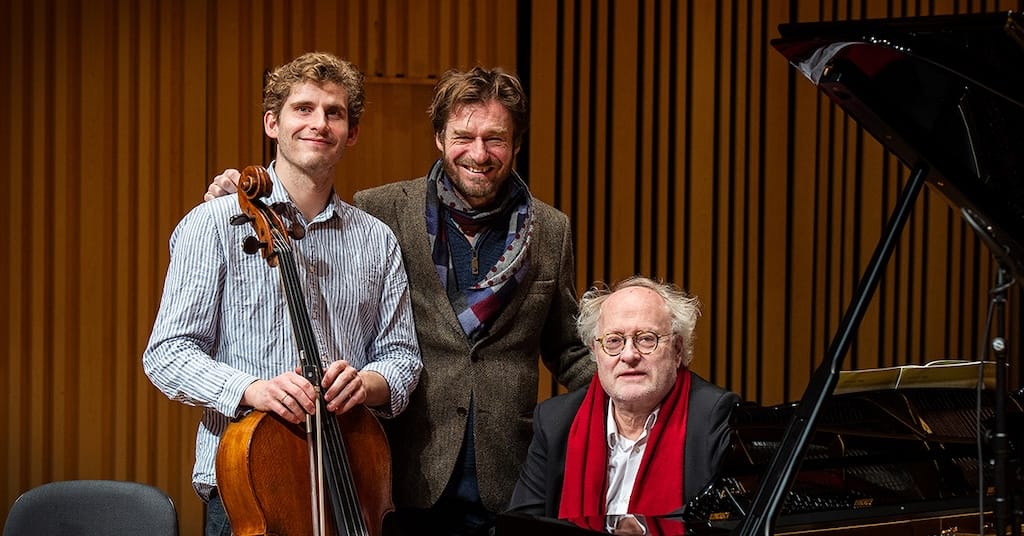
Bengt is an enormous influence on me. He is actually my godfather and one of my parents’ closest friends. I started playing with him when I was very young, around the same time I made my Elgar debut, and it completely changed my musical life. His understanding of music is extraordinary. He can make even the most complex music sound utterly natural.
He probably knows more repertoire than anyone I have ever met. He is like a living encyclopaedia. The way he connects harmony, timing, and structure is remarkable. He plays very freely, never metronomically, but always naturally. There is a hierarchy in how he treats harmony, which tells you what really matters. In that sense, the music breathes and swings. He is truly a musician’s musician, held in the highest regard by other players.
NS: Frank Bridge’s Cello Sonata reflects a stylistic transition, from late Romantic warmth to something more ambiguous and inward. How do you approach unifying its contrasting movements?
AB: I mostly trust intuition. I try not to overthink things because it is very easy to do that. Bridge’s sonata is deeply Romantic in its DNA, even though the harmonic language becomes more complex. It is a very poetic piece. There are moments that remind me of moonlight. It inhabits a dreamy, introspective world.
At the same time, there are traces of folk music, particularly in the second movement, where simplicity becomes essential. That did not come immediately for me. I had to investigate that aspect more deeply.
The two movements are very different, partly because Bridge began the piece earlier and only completed it during the war. His state of mind had changed dramatically. During the First World War, he was devastated by what he saw around him, walking through Hyde Park in a deep sense of despair. The second movement is more abrupt, more inward, full of pain and mystery. It is a beautiful and deeply human piece.
NS: Alongside your performing career, you are also a teacher and a festival artistic director. How have these roles influenced the way you think about music and artistic responsibility today?
AB: To play at the level I want to play, it costs me a great deal of energy and ambition. Especially now, when my life is fuller than it was fifteen years ago. I have four daughters, I teach, and I am involved in programming festivals. All of that requires focus.
Beyond that, I am not very active in making statements through programming. I do not approach music politically, and I do not feel the need to connect repertoire directly to what is happening in the world. I programme music I love and invite musicians I admire. Of course, there are themes at the festival in Norway, but they always arise from the music itself. It is very simple, really.
NS: You work closely with young musicians. What advice would you offer to the next generation today?
AB: I do not know if this makes me sound like an old, grumpy man, but I would say stay away from social media as much as possible. Do not stare at screens too much. Focus on playing rather than on building a career. If you play well enough, things will happen.
That has always been my way. I focused on my instrument and tried to push the noise away. It is not easy today, but I still believe it is the right path.