Winchendon Music Festival 2026 Explores Artistic Excellence, Access, and the Future of Music
From 16–25 April 2026, the Winchendon Music Festival in Massachusetts presents performances and discussions with leading artists and scholars, exploring artistic excellence, accessibility, and the evolving role of music in a rapidly changing cultural and technological landscape.

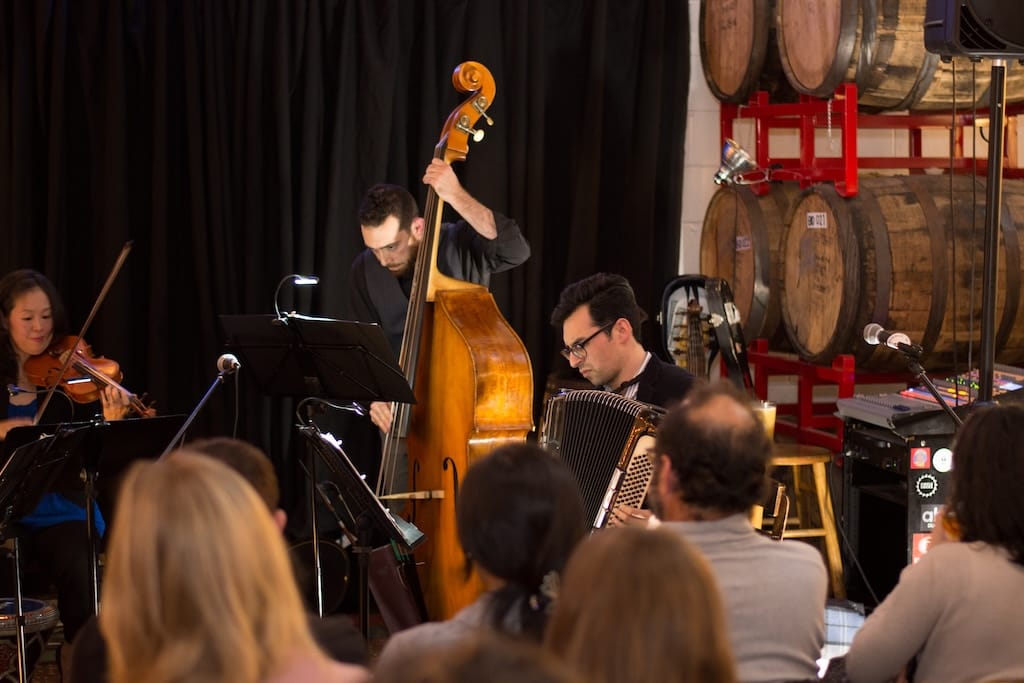
In an era where cultural production is often concentrated in major metropolitan centres, the Winchendon Music Festival offers a compelling counter-model. By presenting artists who regularly perform at leading international venues within the intimate setting of a small New England town, the festival challenges long-held assumptions about where meaningful artistic exchange and cultural discourse can occur.
Founded by performer-scholar Andrew Arceci, the festival has steadily evolved into a recognised platform that brings together internationally acclaimed performers, scholars, and audiences in a deliberately community-oriented environment. Central to its ethos is a commitment to free public access, situating the festival within broader conversations around cultural equity, accessibility, and the role of the arts in civic life.
Over the years, the festival has hosted a distinguished roster of artists including Aldo Abreu, Anne Azéma (Boston Camerata), Arcadia Players, Asako Takeuchi, Chris Shephard, Colin Davin, Emily Marvosh, Joshua Rifkin, Kevin Deas, and Teresa Wakim, among others—an indication of its growing stature despite its modest geographic footprint.
A Season Framed by Music and Inquiry
The Spring 2026 season, scheduled across four dates—16, 19, 23, and 25 April—reflects the festival’s distinctive curatorial vision, combining performance with critical inquiry.
The opening event, How AI Is Changing Music (16 April), brings together faculty and specialists from leading institutions including Berklee College of Music, the New England Conservatory, the Longy School of Music of Bard College, and the University of Massachusetts Amherst. Rather than serving as a promotional showcase for emerging technologies, the panel is conceived as a rigorous forum examining how artificial intelligence is reshaping composition, performance, pedagogy, authorship, and copyright.
By incorporating perspectives from musicologists, technologists, and legal experts—such as music and entertainment attorney Sally R. Gaglini—the discussion acknowledges that the implications of AI in music extend far beyond aesthetics. Questions of authorship, intellectual property, and regulatory frameworks are becoming increasingly central as machine-generated content challenges existing norms. The festival’s interdisciplinary approach underscores the complexity of these developments, positioning the conversation within broader economic and legal contexts.
Concert Highlights
The remainder of the festival presents a diverse range of performances:
- 19 April – Classical guitarist An Tran performs works by Juan Erena, Olga Amelkina-Vera, Nguyễn Thế An, Khiêm Nguyễn-Duy, Sara d’Ippolito Reichert, and Đặng Ngọc Long. Praised by The Boston Globe for his “subtle, graceful virtuosity,” Tran’s programme promises both technical brilliance and expressive depth.
- 23 April – A baroque ensemble featuring Asako Takeuchi (violin), Andrew Arceci (viola da gamba), and John Lenti (theorbo) explores works by Arcangelo Corelli, Antonio Vivaldi, and Francesco Barsanti. The programme offers a historically informed perspective on early music repertoire, brought to life by performers deeply engaged with period practice.
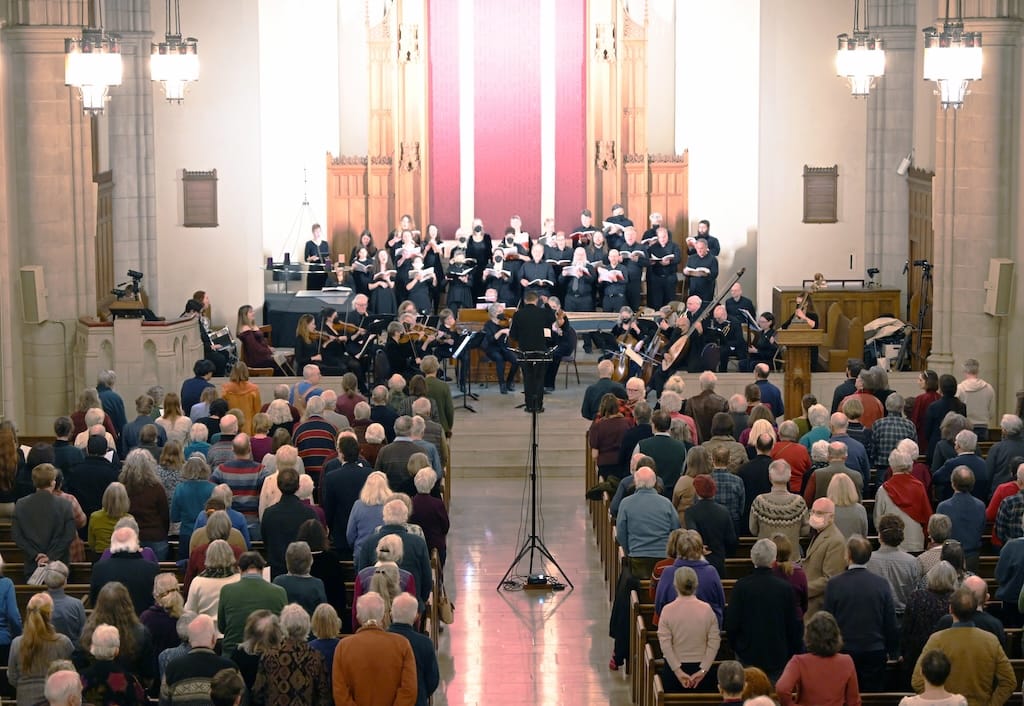
- 25 April – The festival concludes with a chamber choir and ensemble programme featuring works by Pauline Oliveros, Terry Riley, and a world premiere of Arceci’s Missa Brevis. This closing concert reflects the festival’s commitment to bridging early music traditions with contemporary compositional voices.
Rethinking Cultural Models
At its core, the Winchendon Music Festival represents an experiment in decentralised cultural production. By combining high-calibre artistic programming with intellectual engagement—and embedding both within a freely accessible, community-based structure—it offers a viable alternative to scale-driven models of cultural presentation.
In doing so, the festival not only maintains a commitment to artistic excellence but also foregrounds public value, suggesting new pathways for how cultural institutions might respond to ongoing social and technological transformations.
About Andrew Arceci
As a performer-scholar, Andrew Arceci has collaborated with leading institutions including the Metropolitan Museum of Art (The Cloisters), the National Gallery of Art, the Rijksmuseum, and the Art Gallery of Ontario. A Visiting Fellow at Harvard University’s Center for Middle Eastern Studies (2019–2020), he has also held leadership roles with organisations such as Arcadia Players and Collegium Musicum at Wellesley College.
An active educator, Arceci has delivered lectures, masterclasses, and workshops at institutions including The Juilliard School, the University of Oxford, and Berklee College of Music, among many others. His international festival appearances span the Brighton Early Music Festival, Boston Early Music Festival, and Göttinger Reihe Historischer Musik, further reflecting the global perspective he brings to the Winchendon Music Festival.
All events are free and open to the public.