Why Verdi’s Middle-Period Operas Still Speak to the Soul
Travelling through Austria and Germany, I encountered three of Verdi’s middle-period operas—Rigoletto, Il Trovatore and La Traviata—works that reveal why his focus on individual passion, not grand politics, still grips audiences today worldwide across generations.

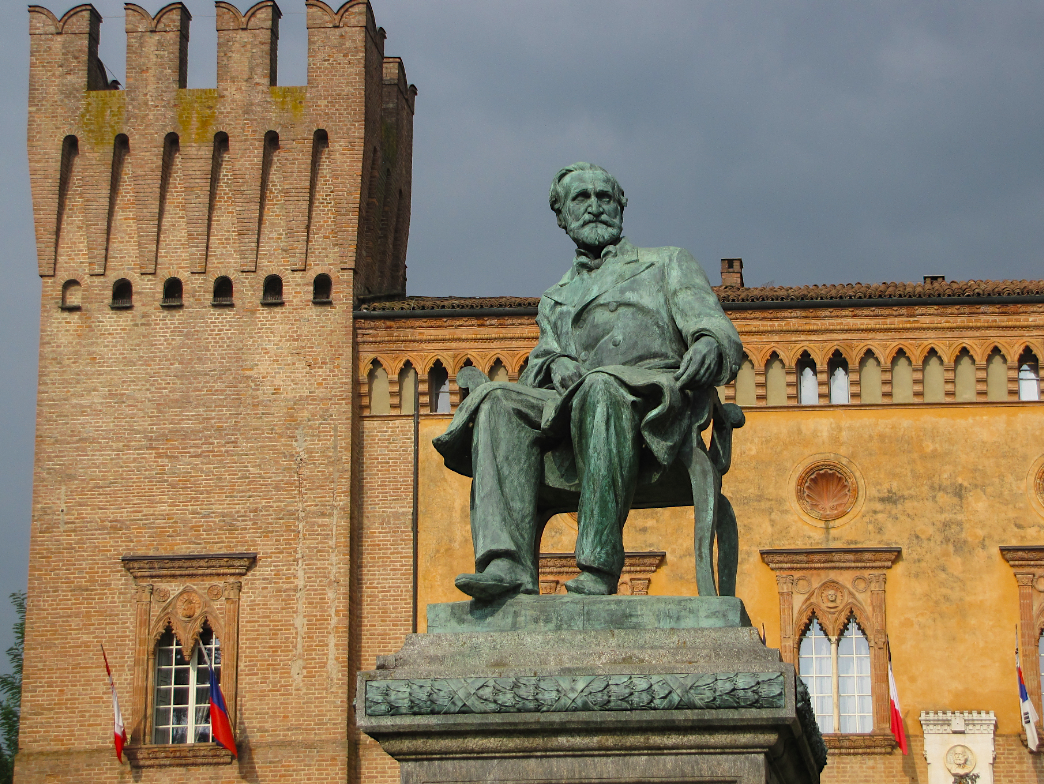
I recently visited Austria and Germany with opera-keen travel companions from Mumbai. Three out of the four opera we went to were from Giuseppe Verdi’s ‘middle-period’ (the decade from 1849 to 1859) opera trilogy, a testament not to coincidence, but to how enduringly popular they are.
They are ‘Rigoletto’ (1851), ‘Il Trovatore’ (‘The Troubadour’ 1853) and ‘La Traviata’ (‘The fallen or wayward one’, 1853).
Verdi dominated the Italian opera scene after the death of Gaetano Donizetti in 1848. He also had financial security due to the new royalty agreement with his main publisher Ricordi. It gave him more creative freedom as he could take more time to compose, and even, as in the case of ‘It Trovatore’, without a commission from a specific theatre, impresario or publisher.
Verdi had become jaded with the older familiar, so-called ‘essential’ operatic conventions: with their peculiar ‘formats’ the aria, the duet, the ensemble, and the finale sequence of an act.
Verdi wrote in April 1851 to Salvadore Cammarano, his librettist for ‘Il Trovatore’, that if there were no standard forms—"cavatinas, duets, trios, choruses, finales, etc. ... and if you could avoid beginning with an opening chorus....", he would be quite happy.
Further, the failure of the revolutions of 1849-49 in Italy and a crackdown by censors on everything including operatic libretti meant Verdi could no longer compose operas with an overt or covert ‘Risorgimentno’ (‘Resurgence’, the 18thcentury politico-social movement supporting the unification of Italy) message.
He shifted toward stories of individuals instead, and their conflicts, with an emphasis on personal motives, earthy ones we can all relate to: love, jealousy, greed, revenge.
It also cannot be a coincidence that Verdi’s ‘middle period’ heroines (Gilda in ‘Rigoletto’, Leonora in ‘Il Trovatore’ and Violetta in ‘La Traviata’) are much more realistic than those of his early period, as the ‘middle period’ he was in a stable, if controversial, relationship with the soprano Giuseppina Strepponi who seems to have loved him deeply.
Julian Budden, opera scholar and author of three books on Verdi operas, even goes so far as to say that “It is not until the masterpieces of the middle years that Verdi realizes all the poetry of romantic love.”
Verdi, who was nicknamed ‘Papà dei Chori’ (Father of the Choruses) in his earlier operas (the most famous one being ‘The Chorus of the Hebrew Slaves’ in his 1842 opera ‘Nabucco’) wrote far fewer choruses or other numbers in which the chorus has a supporting role, in his middle period, due to his focus now instead on individua characters. Writing again to Cammarano, he confessed he had grown weary of openings (choral or otherwise) that delayed the onset of the drama.
The reduction in choruses is replaced by more dramatic pieces (solos, duets, terzets, quarter, quintets) that highlight the emotional interactions between the individual characters.
The Italian composer Luciano Berio (1925 -2003), whose 100th birthday was celebrated last month, attributed the success of the middle period trilogy to “a more melodramatic conception that was basically simple; musical gestures [that] tended to simplify the psychology of the characters and the dynamics of their conflicts.”
First up on our itinerary was ‘Il Trovatore’ at the Wienr Staatsoper (Vienna State Opera). But before I go any further, let me state that I find it most unfortunate, if not infuriating, that largest portion of the cost of an opera ticket (and which I appreciate the least) goes to the insane, logic-defying ‘conception’ of some smug director who compulsively feels s/he has to transplant the original opera setting to another time-zone and location, just for ‘shock value’.
Thankfully, ‘‘Il Trovatore’ shifted only in time from fifteenth-century Spain to the 1930s Spanish Civil War, and wasn’t too jarring. Manrico’s (unforgettably sung by Piotr Beczala) band of gypsies are transformed into Partisan guerillas. I was disappointed to hear the Anvil Chorus sans anvils, though.
The synopsis is based on a play ‘El trovador’ by Antonio García Gutiérrez and couldn’t be sillier, involving, among other things, chucking the ‘wrong’ child into a bonfire. But the music is gorgeous. And with a sterling orchestra (from whose ranks the Vienna Philharmonic is recruited) under Marco Armiliati, and a cast to match Beczala, a magical night was guaranteed.
We caught the other two operas at Berlin’s Deutsche Oper. Both libretti were written by Francisco Maria Piave. ‘Rigoletto’ is based on an 1832 Victor Hugo play ‘Le roi s’amuse’ (The King has fun), and ‘La Traviata’ on ‘La Dame aux camélias’ (The Lady of the Camellias, 1852) by Alexandre Dumas fils.
The staging of ‘Rigoletto’ was bizarre: the stage was a smaller replica of the Deutsche Oper’s seating layout, complete with stalls and balcony. Some found it ‘clever’, but it meant a lot of awkward leaps of imagination for audience (and cast) as the action shifted from the Duke of Mantua’s palace, to the outdoors, Rigoletto’s home and the tavern where Gilda meets her end.
Baritone Juan Jesús Rodríguez was an outstanding Rigoletto despite the ridiculous tinselly Carnivalesque get-up. I just love the score, and the other highlights for me were Gilda’s (Hye-Young Moon) ‘Caro Nome’ lovesick aria, and the famous Act 3 quartet "Bella figlia dell'amore" ("Beautiful daughter of love") and the storm scene (an ascending and descending chromatic passage sung by an offstage male chorus and an arpeggiating flute used to fearsome effect).
The last opera we went to, ‘La Traviata’ was overall the best experience for me, even in terms of staging. This opera tale, of a courtesan (Violetta Valér, sung magnificently by Elena Tsallagova, pictured in red in the famous ‘Brindisi’ aria) who discovers her capacity for romantic love was the inspiration for the 1990 rom-com ‘Pretty Woman’. Indeed, in the film Edward Lewis (Richard Gere) flies Vivian Ward (Julia Roberts) in his private jet to the San Francisco Opera to see a production of ‘La Traviata’, and Violetta’s aria ‘Amami, Alfredo’ (‘Love me, Alfredo’) became instantly recognizable worldwide because of the film’s runaway success.
But for 15 minutes of Verdi’s genius at giving us a whirlwind of the gamut of emotions, you have to experience this opera’s Act 3 stormy confrontation between Violetta and Giorgio Germont (sung here by Thomas Lehman). In that short span, Violetta goes through the five Elisabeth Kübler-Ross stages of grief: denial, anger, bargaining, depression, and acceptance, not necessarily in that order.
It is impossible to experience ‘La Traviata’ and still be dry-eyed at the end.
In ‘Petty Woman’, Gere’s character Edward Lewis is given this line: “People’s reactions to opera the first time they see it, is very dramatic. They either love it or hate it. If they love it, they will always love it. If they don’t, they may learn to appreciate it, but it will never become part of their soul.”
I don’t entirely agree. One can grow to love opera over time, and it can become part of your soul if you give it a chance. That has been my experience.
If this column has piqued your interest in opera, find any of Verdi’s middle-period opera trilogy (‘Rigoletto’, ‘Il Trovatore’, ‘La Traviata’) on YouTube, mute your phone and doorbell, and let opera become part of your soul too.
This article first appeared in The Navhind Times, Goa, India.