Why Repeated Listening Matters More Than Musical Knowledge
Classical music reveals itself through familiarity, not theory. Repeated listening trains the ear, deepens emotional connection, and builds understanding over time, proving that attentive return matters far more than technical knowledge.


For many people approaching classical music, there is an unspoken anxiety. One must know something first. One must understand form, harmony, historical context, or the composer’s biography before daring to form an opinion. Concert halls, programme notes, and even well-meaning enthusiasts can unintentionally reinforce this idea, suggesting that musical knowledge is the gateway to meaningful listening. Yet the deeper truth is far simpler and far more democratic. What matters most is not what you know, but how often and how attentively you listen.
Repeated listening, rather than formal musical education, is the real engine of musical understanding. It is through familiarity, memory, and gradual recognition that music begins to speak with clarity and depth. Knowledge can enhance the experience, but it is repetition that allows music to enter the listener’s inner life.
The illusion of instant understanding
Modern culture encourages instant comprehension. We are used to grasping content quickly and moving on. Classical music resists this habit. A symphony or a string quartet does not reveal itself fully on first encounter. Expecting immediate understanding can lead to frustration or disengagement.
This is not a failure of the listener. It is a feature of the art form. Many classical works are built around long-term development. Themes return transformed, tensions are delayed, and resolutions arrive only after extended journeys. On a first hearing, the listener is simply orienting themselves. Repeated listening allows the mind to relax its need to keep up and instead begin to notice relationships, contrasts, and emotional arcs.
How the ear learns through repetition
Listening is an active process, even when it feels passive. Each time we hear a piece of music, our brain makes predictions based on memory. With repetition, those predictions become more refined. We begin to recognise motifs, anticipate harmonic turns, and sense structural landmarks.
This process does not require theoretical vocabulary. A listener does not need to know that a theme is modulating or that a passage is in sonata form to feel its effect. Recognition itself creates meaning. When a melody returns, altered or expanded, the listener experiences continuity and change on an intuitive level. Repeated listening trains the ear in a way that no amount of abstract explanation can replicate.
Emotional familiarity and depth
One of the most powerful effects of repeated listening is emotional deepening. A piece of music that feels distant or puzzling at first can, over time, become intensely personal. This happens because familiarity creates space for emotional nuance.
On a first hearing, much of the listener’s attention is spent simply following the sound. With repetition, that effort diminishes. Emotional details come into focus. A sudden silence feels more charged. A harmonic shift feels more poignant. What once sounded complex begins to feel inevitable.
This is why people often form lifelong relationships with certain works. They become companions through different stages of life, revealing new meanings as the listener changes. Musical knowledge can name these changes, but repetition allows them to be felt.
Why knowledge can sometimes get in the way
Musical knowledge is not inherently negative. For performers, scholars, and critics, it is indispensable. For listeners, however, it can sometimes create a barrier. When listening becomes an exercise in identifying forms or spotting technical details, the immediacy of the experience can be lost.
There is also the risk of self-censorship. Listeners who believe they lack the right knowledge may distrust their own responses. They may wonder whether they are hearing the music correctly or missing something important. This anxiety can prevent genuine engagement.
Repeated listening counters this problem by building confidence. Familiarity breeds trust in one’s own perceptions. Over time, listeners learn that their emotional and sensory responses are valid starting points, not shortcomings to be corrected.
Memory as the foundation of musical meaning
Music unfolds in time, and memory is essential to making sense of it. Unlike a painting, which can be taken in at once, music relies on the listener’s ability to remember what has already happened. Repeated listening strengthens this memory.
With each encounter, the listener’s internal map of the piece becomes clearer. One begins to sense when a turning point is approaching or when a return is imminent. This awareness creates anticipation, one of music’s greatest pleasures. Anticipation does not come from analysis, but from having lived with the music.
In this way, repetition turns listening into a dialogue between past and present experience. Each hearing carries traces of the previous ones, enriching the moment with accumulated understanding.
The role of surprise and inevitability
One of the paradoxes of music is that repetition does not eliminate surprise. In fact, it heightens it. When we know a piece well, we are more aware of the moments that break expectation or confirm it in unexpected ways.
A dramatic pause, a sudden dynamic change, or an unexpected harmony can feel more powerful when we know it is coming. This sense of inevitability combined with surprise lies at the heart of many great works. Repeated listening allows the listener to experience this balance fully.
Musical knowledge may explain why these moments work, but repetition allows the listener to feel their impact repeatedly without diminishing returns.
Learning without labels
Repeated listening enables a form of learning that is embodied rather than intellectual. Listeners begin to recognise styles, moods, and gestures without needing to label them. Over time, they may notice differences between composers, periods, or ensembles, simply through exposure.
This kind of learning mirrors how we acquire language. We do not begin by studying grammar rules. We listen, imitate, and internalise patterns. Only later, if at all, do we name what we already understand intuitively.
Classical music listening follows a similar path. Repetition builds a private, personal vocabulary of sound. Knowledge can later refine this vocabulary, but it cannot replace the initial process.
The concert hall and repeated exposure
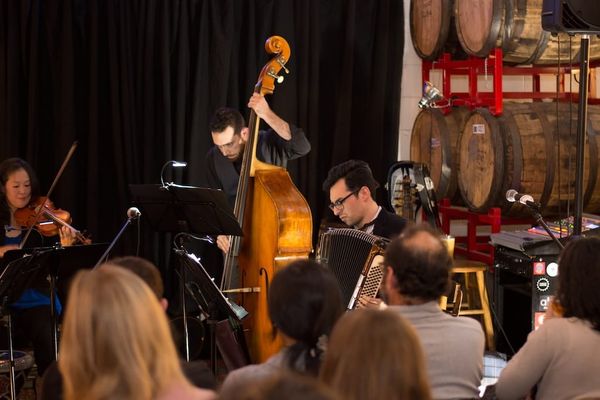
Historically, repeated listening was built into musical life. Audiences heard the same works multiple times in a season, often performed by the same musicians. Today, recordings have transformed access, allowing listeners to return to a piece as often as they wish.
This abundance can be both a gift and a challenge. The temptation is to sample endlessly without returning. Yet the deepest rewards come from choosing a piece and staying with it. The concert hall, with its rituals of return and attention, still offers a powerful space for this kind of engagement.
Hearing the same work live more than once, perhaps with different performers, further deepens understanding. Each performance highlights new aspects, reminding us that repetition does not mean sameness.
Why first impressions are unreliable
First impressions in music are often shaped by surface elements. Tempo, orchestral colour, or even recording quality can strongly influence our response. These factors can obscure deeper qualities that emerge only over time.
Repeated listening allows the listener to move beyond surface reactions. What initially seemed slow may begin to feel spacious. What sounded dense may reveal clarity. Works that challenge easy consumption often prove the most rewarding in the long run.
This is why many listeners grow into certain composers or genres rather than embracing them immediately. Repetition gives difficult music the time it needs to communicate on its own terms.
Listening as a lifelong practice
Repeated listening transforms music from an object of consumption into a practice. It encourages patience, curiosity, and openness. Rather than asking what a piece means, the listener learns to ask what it does, how it changes with time, and how it resonates with their own experiences.
Musical knowledge can enrich this practice, but it is not a prerequisite. The most profound musical insights often come from attentive listeners with no formal training, only a willingness to return.
In an age of distraction, repeated listening is quietly radical. It asks us to slow down, to dwell, and to accept that understanding unfolds gradually. This approach restores music to its proper scale, not as something to be mastered, but as something to be lived with.