Why Ludwig van Beethoven Still Shapes the Modern Concert Hall
Beethoven transformed music from courtly entertainment into a public, philosophical art. His symphonies, sonatas, and ideals of expression continue to define how modern concert halls programme, perform, and listen.

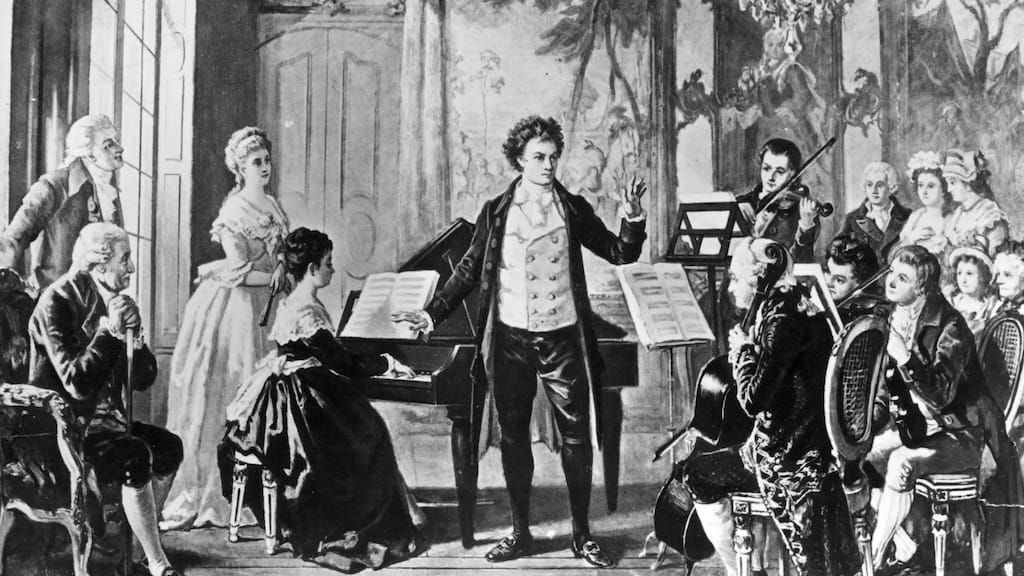
Walk into almost any major concert hall today, whether in London, Berlin, Mumbai, Tokyo, or New York, and the chances are high that you will encounter Beethoven somewhere in the season brochure. His symphonies anchor subscription series, his piano sonatas fill recital programmes, and his string quartets remain touchstones for chamber ensembles. More than two centuries after his birth, Beethoven continues to define what audiences expect from a concert, what performers demand of themselves, and how institutions imagine their artistic purpose. His presence is not a matter of tradition alone. Beethoven still shapes the modern concert hall because his music changed the very idea of what music could express, how it could be performed, and why it matters in public life.
From courtly entertainment to public art
Before Beethoven, much Western art music was written for courts, churches, or private salons. Composers were skilled craftsmen, often employed to provide functional music for specific occasions. Beethoven inherited this world but fundamentally transformed it. Living at a moment when the old systems of patronage were weakening and public concert life was expanding, he addressed a broader audience, not just aristocratic employers.
This shift had profound consequences. Beethoven wrote music that assumed attentive, even morally engaged listeners. His symphonies were not background entertainment but experiences that unfolded over time, demanding concentration and emotional investment. In the modern concert hall, where audiences sit in silence and listen with near religious focus, we still inhabit the listening culture that Beethoven helped to create.
Redefining the symphony
The symphony was already an established form before Beethoven, but he expanded its scale, ambition, and expressive range beyond recognition. His Third Symphony, the Eroica, stretched the form to unprecedented lengths and infused it with dramatic conflict and resolution. Later symphonies pushed these boundaries even further, culminating in the Ninth, which introduced voices into a genre previously defined as purely instrumental.
Today, the symphony remains the central genre of orchestral programming, and Beethoven’s works form its backbone. The very architecture of modern concert halls, designed to accommodate large orchestras and long, immersive works, reflects the symphonic ideal that Beethoven helped establish. When an orchestra programmes Beethoven, it is not simply revisiting the past. It is reaffirming the symphony as a space for serious artistic and human reflection.
The orchestra as a collective voice
Beethoven also reshaped the role of the orchestra itself. In his hands, the orchestra became a dramatic protagonist rather than a polite ensemble. Individual instruments gained sharper identities, and sections engaged in dialogues that suggested debate, struggle, and triumph. This approach laid the groundwork for the modern understanding of the orchestra as a collective voice capable of expressing complex ideas and emotions.
Contemporary orchestral musicians still measure themselves against the demands of Beethoven. His music requires precision, stamina, and a deep sense of ensemble. It is no accident that auditions, competitions, and professional milestones so often involve Beethoven excerpts. In mastering his works, orchestras affirm their technical competence and their artistic seriousness.
The performer as interpreter
Before Beethoven, performers often enjoyed considerable freedom to embellish or adapt music according to taste. Beethoven’s increasingly detailed scores, with precise dynamics, articulations, and tempo indications, signalled a new relationship between composer and performer. He expected fidelity to his intentions, even as he demanded intense expressive commitment.
This tension lies at the heart of modern performance practice. Musicians today are trained to respect the score while bringing their own insight and personality to the music. Beethoven’s works, which seem endlessly open to interpretation despite their specificity, provide the ideal testing ground. Each generation of performers asks anew how fast a tempo should be, how sharply a rhythm should bite, or how lyrical a phrase should sing.
The modern concert hall thrives on this interpretative dialogue. Audiences return not only to hear Beethoven’s music, but to hear how today’s artists understand it.
A model for the recital tradition
Beethoven’s influence extends far beyond the orchestra. His piano sonatas, in particular, shaped the modern recital. Spanning his entire creative life, these works chart a journey from classical clarity to visionary experimentation. They demand both technical mastery and profound introspection.
The idea of a solo recital, in which a single performer holds the audience’s attention for an entire evening, owes much to Beethoven. His sonatas are not collections of charming miniatures but substantial musical arguments. In performing them, pianists present themselves not merely as entertainers, but as thinkers and storytellers. The same is true of his string quartets, which continue to define the highest aspirations of chamber music.
Music as a moral and human statement
Perhaps the most enduring reason Beethoven still shapes the modern concert hall lies in the values his music seems to embody. Beethoven has long been associated with ideas of struggle, resilience, freedom, and human dignity. These associations are not arbitrary. His music often stages conflict and resolution in ways that feel deeply human, even philosophical.
The Ninth Symphony’s choral finale, setting Friedrich Schiller’s Ode to Joy, has become a global symbol of unity and hope. It is performed at moments of celebration, commemoration, and even political change. Modern concert halls, increasingly aware of their social role, turn to Beethoven when they wish to speak beyond aesthetics, to address shared human concerns.
In an era when institutions are questioned about their relevance, Beethoven offers a powerful answer. His music suggests that the concert hall can be a place where individual experience connects with collective meaning.
Beethoven and the idea of the canon
The modern classical canon, with its emphasis on a relatively small group of composers, is often debated today. Yet Beethoven remains central to these discussions precisely because he represents both continuity and challenge. He stands at the intersection of classical balance and romantic expressiveness, tradition and innovation.
Programming Beethoven allows orchestras to build bridges between past and present. His works sit comfortably alongside earlier composers such as Haydn and Mozart, while also pointing forward to later figures like Brahms and Mahler. In this sense, Beethoven functions as a kind of musical axis around which much of the repertoire revolves.
A living presence, not a museum piece
It is tempting to think of Beethoven as a monument, fixed and unchanging. Yet his influence endures precisely because his music resists final answers. Questions about tempo, phrasing, historical instruments, and modern acoustics continue to animate debate. Historically informed performances and modern symphonic traditions coexist, enriching rather than cancelling each other.
Modern concert halls reflect this plurality. Beethoven can be heard on period instruments in intimate venues or on large modern orchestras in vast auditoriums. His music adapts, survives, and continues to provoke thought. This adaptability keeps it alive, rather than embalmed.
Why Beethoven still matters today
In a world saturated with sound, Beethoven’s music asks us to listen deeply. It challenges performers to reach beyond comfort, audiences to engage beyond distraction, and institutions to uphold standards of artistic seriousness. The modern concert hall, for all its changes in technology and presentation, still rests on these principles.
Beethoven matters not because he is old, but because he remains demanding. He reminds us that music can be a space for personal reflection and shared experience, for beauty and struggle, for joy wrested from difficulty. As long as concert halls aspire to be places where such encounters are possible, Beethoven will continue to shape them.