The Making of a Modern Classic: Inside Eifman’s Anna Karenina
Ahead of the India premiere of his acclaimed ballet, a conversation with choreographer Boris Eifman on his artistic practice and the journey it has taken across continents.

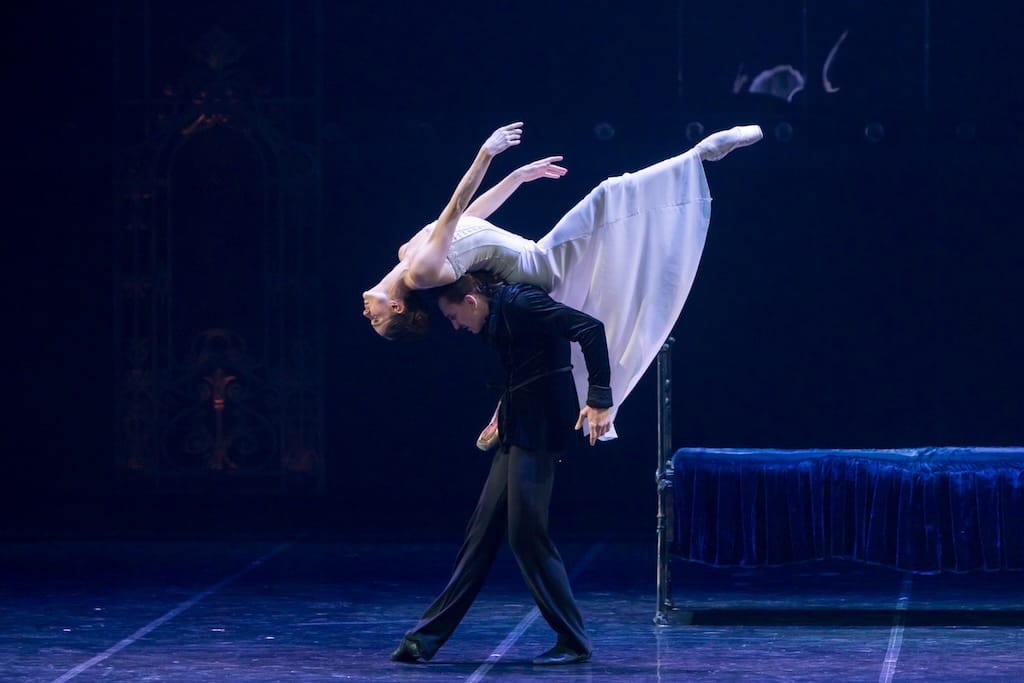
Every so often, there come along artistes who rewrite the laws and codes of the art of the land. Convention is questioned, the threshold is tested and tides are turned. In Soviet-era St. Petersburg, where classical ballet had reached its pinnacle, Boris Eifman’s audacious blend of the form with contemporary elements and psychological theatre wrote a new choreographic language. The concept of ‘New Ballet’ was innovative for its time, and the Eifman Ballet of St. Petersburg—established in 1977—became a playground that earned recognition from critics for its significance in Russian ballet art.
This vision finds one of its most powerful expressions in Anna Karenina, Eifman’s celebrated adaptation of Leo Tolstoy’s novel, all set to have its India premiere at the NCPA this month. His architecture of movement dips into the worlds within the characters. The tragic tale of a woman mired in moral conflict and an allconsuming passion is grounded in emotional truth. There is undeniable beauty in ballet, the kind born out of unyielding physical effort and punishing discipline. This rigour, often camouflaged, is also felt in Eifman’s productions.
As India awaits Anna’s arrival, Eifman speaks to ON Stage about the making of his masterpiece and bringing it to a new audience.
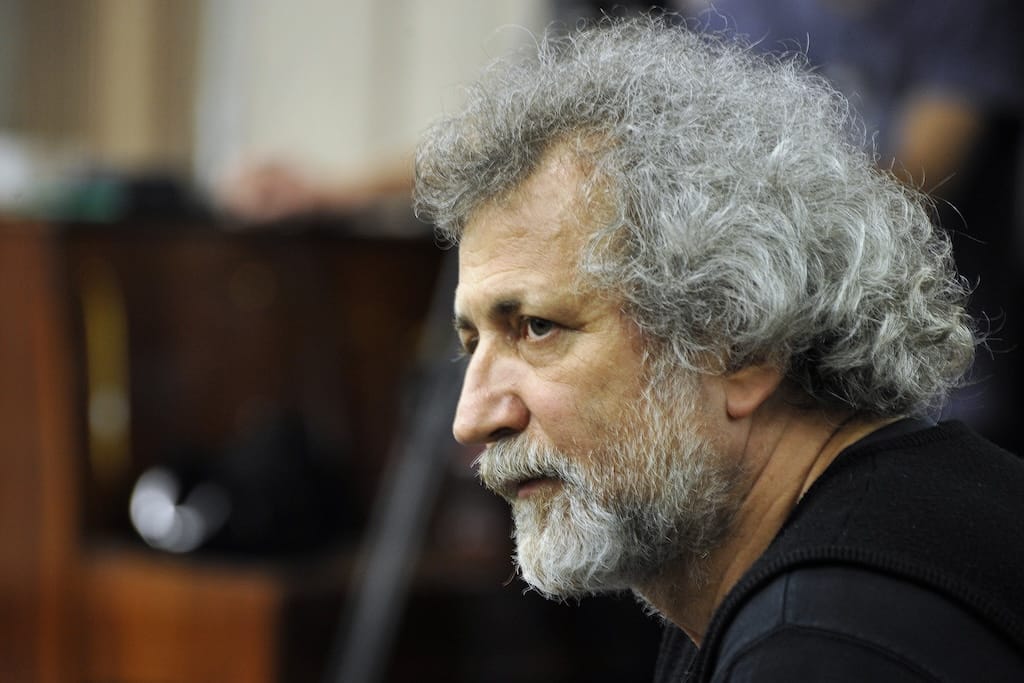
ON Stage: St. Petersburg has an extensive lineage in classical ballet, yet your work diverges from that tradition with its emotional intensity and theatricality in what you describe as psychological ballet. Could you elaborate on the process of turning subliminal ideas into grand movement pieces?
Boris Eifman: Everything truly begins with an idea, a vision for the future production. And this idea, as you have rightly noted, sometimes emerges at the subconscious level as something ephemeral, spectral, not yet fully formed. Then it matures within me for a long time, sometimes for years, gradually acquiring clear contours. And typically, I carry multiple visions at once. Some fade away, never coming to fruition. Others undergo radical metamorphosis and become building blocks for future ideas. And then there are those concepts that ultimately become the foundation of ballets. Once I have chosen the theme for a new production—a very significant moment, even a torturous one—I proceed to the desk work. I delve into every accessible material related to the ballet over many months. I read literature, watch films and fill thick notebooks with notes. I listen to hundreds of records, trying to find in the ocean of sound a composer who could become my co-author. When the musical score is complete, the production acquires a constructed dramaturgical structure, and then I come to the studio and my dancers. It is there, during rehearsals, that the choreography is created. I have devoted nearly my whole life to this, yet I cannot say how or why any particular movement is born. It is a mystical thing, an enigma.
OS: The novel is grounded in a specific period of Russian history, marked by the emancipation of the serfs, railway expansion and tensions within the aristocracy, and yet it remains deeply introspective. How do you maintain that balance while depicting Anna’s timeless emotional journey?
BE: The social and historical context of Tolstoy’s novel is not of primary importance to me. In my productions, I typically don’t strive to depict the specific markers of an era. I cherish what is immune to the passage of time. Anna Karenina is, first and foremost, an eternal, universal story of a woman’s ethical choice between mind and heart, between maternal duty and the call of passion. Anna sacrifices everything for the sake of personal happiness, rejecting the moral conventions imposed by society and as a result, her soul undergoes a rupture. For me, Tolstoy is not so much a chronicler of everyday life as the creator of one of the first examples of psychoanalysis in world cultural history. His novel is an experience of extraordinary intellectual power and insight, and a psycho-erotic exploration of a woman’s inner world.
OS: How does the choreography of the corps de ballet depict the weight of social ritual and moral duty on Anna?
BE: I try not to analyse the choreographic choices I make. That is the job for critics and dance scholars. I should emphasise that in our company (as opposed to classical troupes), the corps de ballet is not simply background or extras, but rather a distinct, autonomous character, one that carries tremendous weight in terms of the production’s meaning, dramaturgy and choreographic design. In Anna Karenina, the corps de ballet alternately personifies the wave of social judgement faced by the protagonist and, at times, manifests as the embodiment of her drug-induced nightmares and hallucinations. But I do not want to give away too much. I am certain that spectators experiencing our production for the first time will find their own answers.
OS: Tchaikovsky’s music is deeply interwoven with the ballet, much like an external narrator. It may also be seen as a reflection of his own life which carried an undercurrent of inner conflict and desire. What was the process of translating the composer’s brilliant score for the stage like?
BE: Tchaikovsky is my favourite composer. I have choreographed seven ballets to his works. Moreover, the first music I ever heard in my life was his and the first ballet I ever saw was Swan Lake. The astonishing psychological nuance and dramatic power inherent in Tchaikovsky’s creations have never ceased to amaze me. In his music, the subtlest lyricism merges with majesty, tragedy with ecstasy. This incomparable emotional universe has sustained me for decades and compelled me to create choreography. It is no coincidence that for the score of Anna Karenina—a production that marked a turning point for Eifman Ballet—Tchaikovsky’s compositions were chosen. They stirred my artistic fantasy and enabled me to create a unique flood of movements, capturing with remarkable accuracy the inherent contradictions of the characters. But again, I cannot explain how choreography is born or describe in detail the way music, as heard by the ballet’s creator, materialises into choreographic imagery. The creative process cannot be reduced to schemes and algorithms.
OS: Anna Karenina begins with Tolstoy’s famous words: “All happy families are alike; each unhappy family is unhappy in its own way.” How did you interpret the opening maxim when shaping your ballet? Additionally, how do you think the family life of an artiste influences their creative life?
BE: When creating ballets based on great literary works, I never simply illustrate the original text. I find it more compelling to uncover what is concealed between the lines, that which can be conveyed only through the enchanted language of dance. This is my prerogative as a choreographer. Although, of course, the theme of family is unmistakably present in our ballet too. We reveal how, behind the illusory façade of external wellbeing and propriety, insoluble conflicts begin to mature in the Karenin household, inevitably shattering their accustomed life. For me, family is a spiritual sanctuary. A place where I replenish my strength [as a creator] and receive invaluable support.
OS: Anna Karenina’s India premiere comes as part of bringing the Russian classic to global audiences. How does performing in countries where ballet’s cultural influence arrived much later—but those with an everevolving audience—challenge or enrich your work?
BE: Eifman Ballet has a history spanning almost half a century. For four decades, we have toured extensively across the globe, introducing audiences to the creative achievements of modern Russian choreographic art. The company has performed in America, Europe, Asia and Africa. Dance is a universal language of communication. It speaks equally to people across all cultures, religions and political systems. We can create a ballet in St. Petersburg about French sculptors Auguste Rodin and Camille Claudel, set to music by French composers and then take it on tour to China, and find that the audience comprehends the art. After all, we bring them that pure emotional energy which they will never get from the internet, television or stadium shows. I am looking forward to our debut in India. I hope that the audience in a country with such a rich and distinctive culture will embrace and appreciate our art.
OS: Your work has consistently been pushing the boundaries of classical ballet. How do you envision the art form evolving in the coming years?
BE: This is a very difficult question for me. For the global art of ballet to break free from the stagnation that has gripped it for so many years and to make a real leap into the new century, it desperately needs fresh blood. What we need are new generations of young creative leaders. Most importantly, choreographers who can liberate themselves from the shackles of clichés, cease the endless reproduction of identical patterns of dance abstraction, and commit themselves to the development of original choreographic forms. We need versatile dancers ready to bring to life the most complex visions of choreographers. The Boris Eifman Dance Academy in St. Petersburg is designed to nurture such performers and has spent 12 years training talented youngsters from every corner of Russia through its experimental programme. Our academy has now been granted the authority to reform the system of professional choreographic education and develop a fundamentally new pedagogy. We want to train dancers whose technical capabilities will be closely aligned with the demands of contemporary ballet theatres. I hope we will be able to make a meaningful contribution towards addressing the global crisis facing the art of choreography.
Anna Karenina, a ballet by Boris Eifman, will be presented on 8th, 9th and 10th December at the Jamshed Bhabha Theatre.
By Aishwarya Bodke. This piece was originally published by the National Centre for the Performing Arts, Mumbai, in the December 2025 issue of ON Stage – their monthly arts magazine.