The Love Life of Classical Composers and How It Shaped Their Music
Behind some of the greatest masterpieces in Western classical music lie stories of longing, devotion and heartbreak. From Beethoven to Mahler, love shaped not only composers’ lives but the very sound and emotional depth of their music.

Romantic love has inspired some of the most transcendent music ever written. Yet behind many of the masterpieces in the Western classical canon lie stories of longing, obsession, devotion, betrayal and quiet companionship. For composers, love was rarely a private matter. It entered their manuscripts, coloured their harmonic language and shaped entire musical forms.
To understand certain works fully, one must understand the emotional lives of their creators.
Ludwig van Beethoven
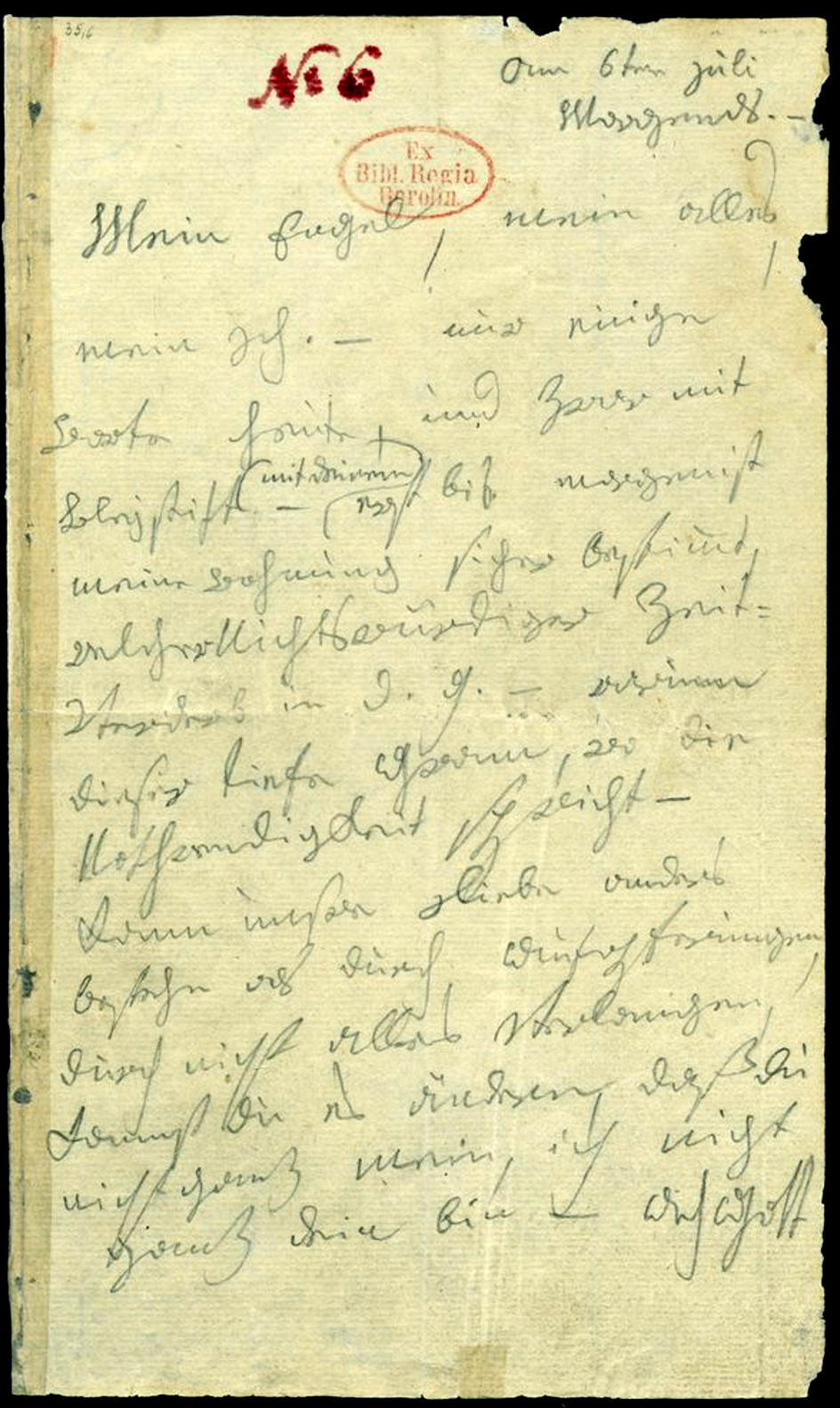
Few romantic mysteries in music are as enduring as that of Ludwig van Beethoven and his so called Immortal Beloved. In 1812, Beethoven wrote a passionate letter to an unnamed woman, declaring his eternal love. The identity of the recipient remains debated, with candidates including Antonie Brentano and Josephine Brunsvik.
Beethoven never married. His intense personality, financial instability and worsening deafness made stable relationships difficult. Yet his music brims with emotional depth that seems inseparable from his unfulfilled desires.
The Piano Sonata No. 14 in C sharp minor, popularly known as the Moonlight Sonata, though not explicitly linked to the Immortal Beloved, captures an atmosphere of yearning introspection. Later works such as the Ninth Symphony transcend personal sorrow, transforming private longing into universal brotherhood. The slow movement of the String Quartet in A minor, Op. 132, written after serious illness, expresses gratitude and spiritual renewal that many hear as deeply personal.
In Beethoven’s case, love was often unattainable, but that very distance intensified the emotional charge of his music.
Frédéric Chopin and George Sand
The relationship between Frédéric Chopin and George Sand was one of the nineteenth century’s most famous artistic partnerships. Sand, born Aurore Dupin, was a celebrated novelist, fiercely independent and unconventional. Their liaison began in 1838 and lasted nearly a decade.
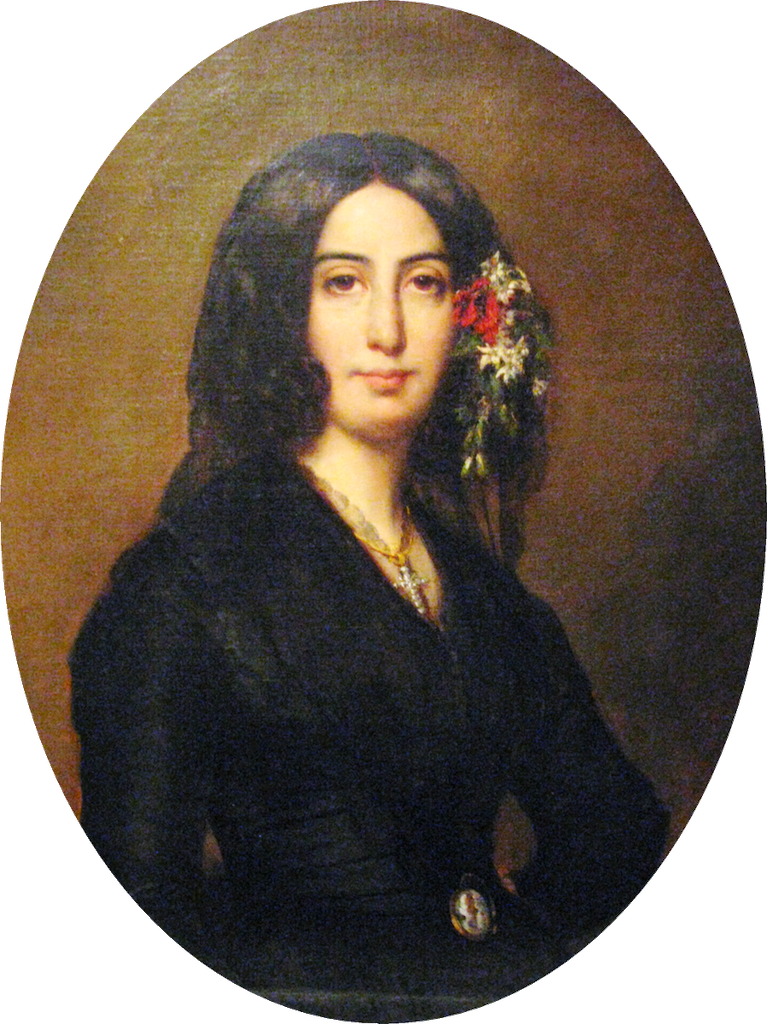
During their winter in Mallorca, Chopin composed some of his Preludes, Op. 28. The damp climate worsened his tuberculosis, yet the creative output was extraordinary. The Preludes range from intimate whispers to storms of agitation, perhaps reflecting both physical suffering and emotional intensity.
At Sand’s estate in Nohant, Chopin found relative stability and produced some of his greatest works, including the Ballades and the Polonaise-Fantaisie. Sand provided practical support and emotional structure. However, tensions gradually emerged, particularly involving Sand’s children. Their eventual separation deeply wounded Chopin.
His late works grow increasingly spare and harmonically daring. The Mazurkas from his final years possess a haunting inwardness. Love had offered him sanctuary and inspiration, but its collapse left an audible fragility in his music.
Clara and Robert Schumann
The marriage of Clara Schumann and Robert Schumann represents a rare example of mutual artistic respect in the nineteenth century.
Their courtship was fiercely opposed by Clara’s father, Friedrich Wieck, who feared that Robert lacked financial stability and professional prospects. After a prolonged legal battle, the couple married in 1840.

That year became Robert’s Liederjahr, or year of song. He composed over 130 songs, including the cycle Dichterliebe. Many scholars interpret this astonishing outpouring as a direct response to his impending marriage. The songs pulse with ardour, tenderness and vulnerability.
Clara was not merely a muse. She was one of Europe’s leading pianists and a formidable composer in her own right. She premiered Robert’s works, edited his scores and sustained the family financially through extensive touring, particularly during Robert’s periods of mental illness.
Their relationship complicates the romantic stereotype of the solitary male genius. Here was a partnership in which love fostered collaboration and artistic growth, even amid tragedy. Robert’s later works darken in tone as his mental health deteriorated, yet Clara’s devotion ensured that his music endured.
Richard Wagner
If Beethoven’s love was elusive and Schumann’s collaborative, Richard Wagner transformed desire into mythic theatre. Wagner’s personal life was tumultuous. He had numerous affairs and relied heavily on wealthy patrons.
His relationship with Cosima, the daughter of Franz Liszt and wife of conductor Hans von Bülow, was scandalous. Cosima eventually left her husband to marry Wagner, becoming his lifelong companion and later the guardian of his legacy at Bayreuth.
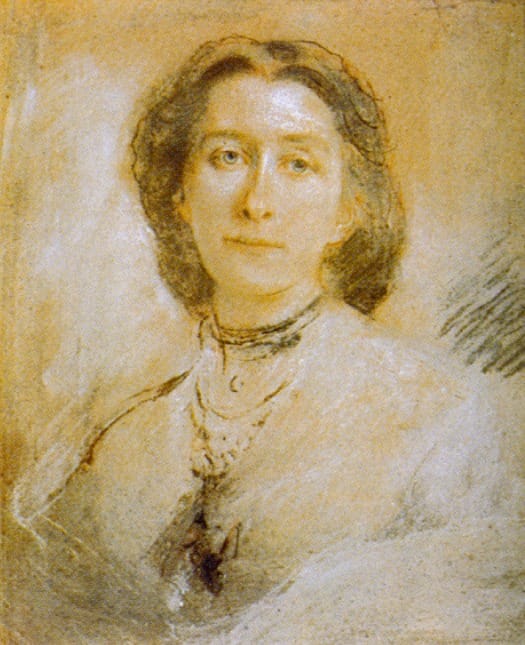
Wagner’s opera Tristan und Isolde is perhaps the most intense musical depiction of erotic longing ever composed. The famous Tristan chord, heard at the very beginning, destabilises traditional harmony and creates a sense of unresolved yearning that permeates the entire work. Composed during Wagner’s affair with Mathilde Wesendonck, the opera blurs the line between art and autobiography.
In Wagner, love becomes metaphysical. It is not merely personal but cosmic, dissolving boundaries between self and other. His revolutionary harmonic language can be heard as an extension of emotional extremity.
Gustav Mahler and Alma Mahler
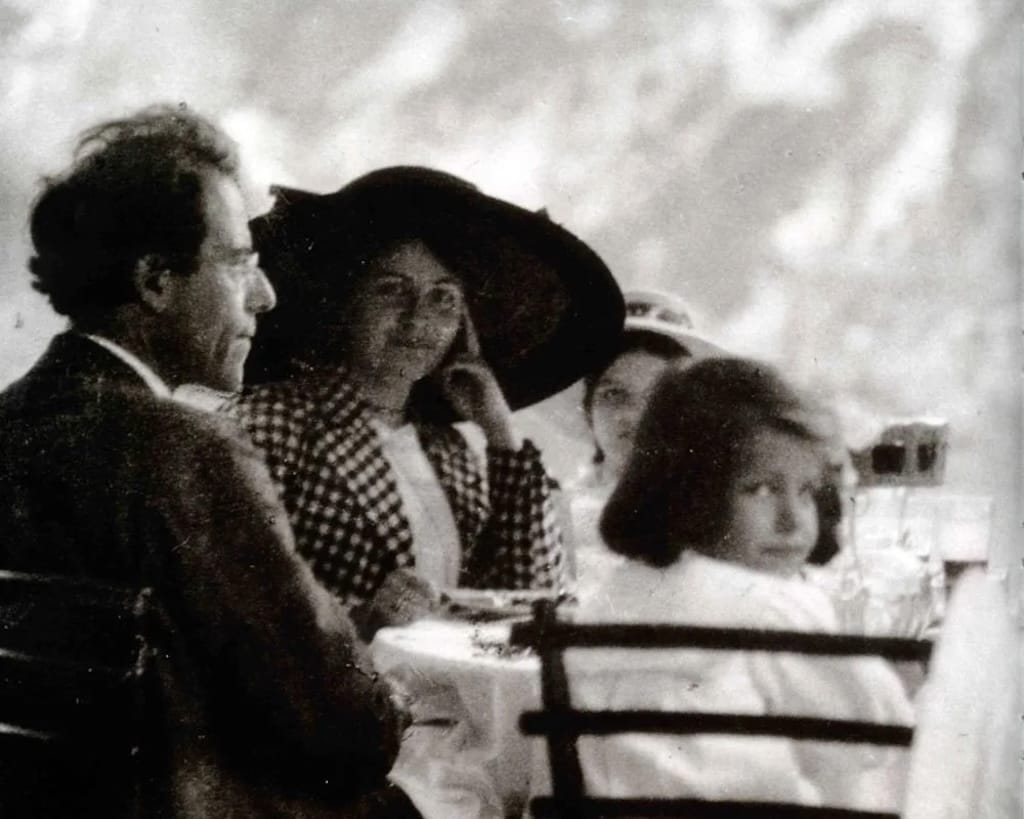
The marriage between Gustav Mahler and Alma Mahler was intense, ambitious and fraught.
Alma was herself a gifted composer, but Mahler discouraged her creative ambitions, insisting that one household could not support two composers. Their relationship suffered further strain following the death of their daughter and Mahler’s demanding conducting career.
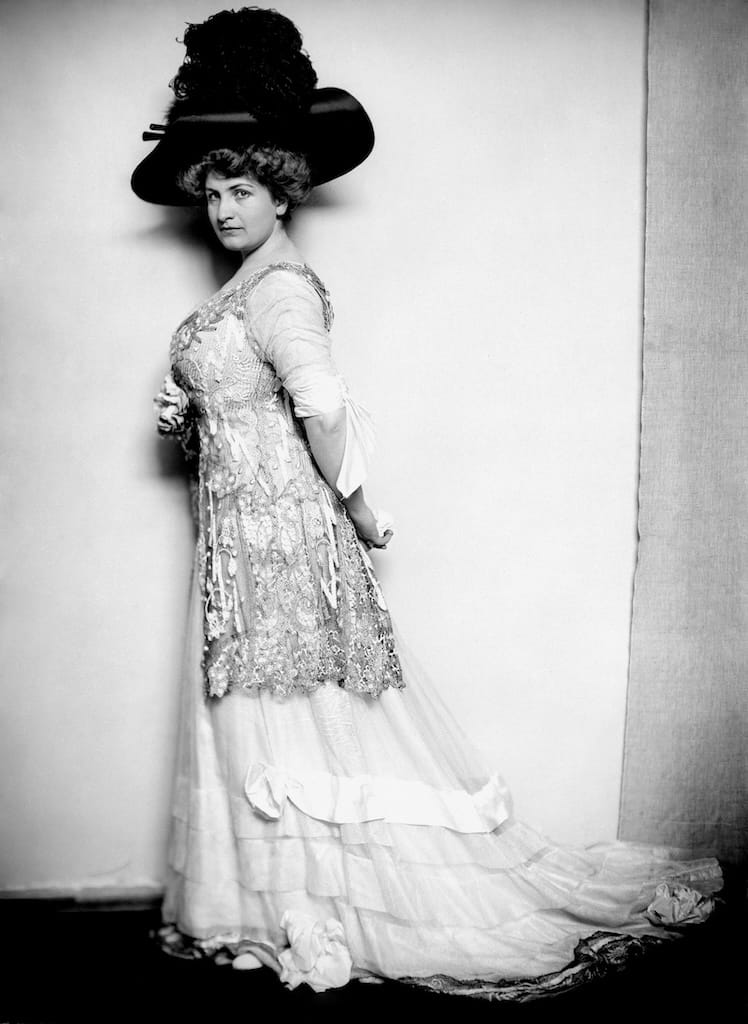
The Adagietto from Symphony No. 5 is often interpreted as a love letter to Alma. Its luminous string writing conveys tenderness and vulnerability. Later, when Alma began an affair with architect Walter Gropius, Mahler sought counsel from Sigmund Freud and attempted reconciliation.
Mahler’s late symphonies, particularly the Ninth and the unfinished Tenth, grapple with mortality and loss. The emotional volatility of his marriage seems mirrored in the music’s oscillation between ecstatic affirmation and desolate farewell.
Love as Muse and Catalyst
Not all composers lived through dramatic romances. For some, stability sustained creativity; for others, unrequited love or emotional upheaval sparked innovation.
Romanticism elevated the ideal of the suffering artist, linking authenticity with intense feeling. Love became not only private experience, but public aesthetic force.
Yet great music cannot be reduced to biography. Beethoven’s longing becomes universal brotherhood. Chopin’s heartbreak turns into poetic miniatures. Wagner’s desire grows mythic. Mahler’s tensions expand into meditations on existence.
Love shaped these figures through companionship and collaboration as much as ecstasy or despair. Clara Schumann’s influence, Alma Mahler’s curtailed ambitions and George Sand’s support all reveal how creativity depends upon shared lives and unseen labour.