Seeds of Hope: Alison Mathews on Music, Education, and Solidarity
British composer and educator Alison Mathews discusses ‘Seeds of Hope’, a collaborative piano collection inspired by nature and Palestinian music, and reflects on creativity in music education, composing for young pianists, and music’s potential to foster empathy.

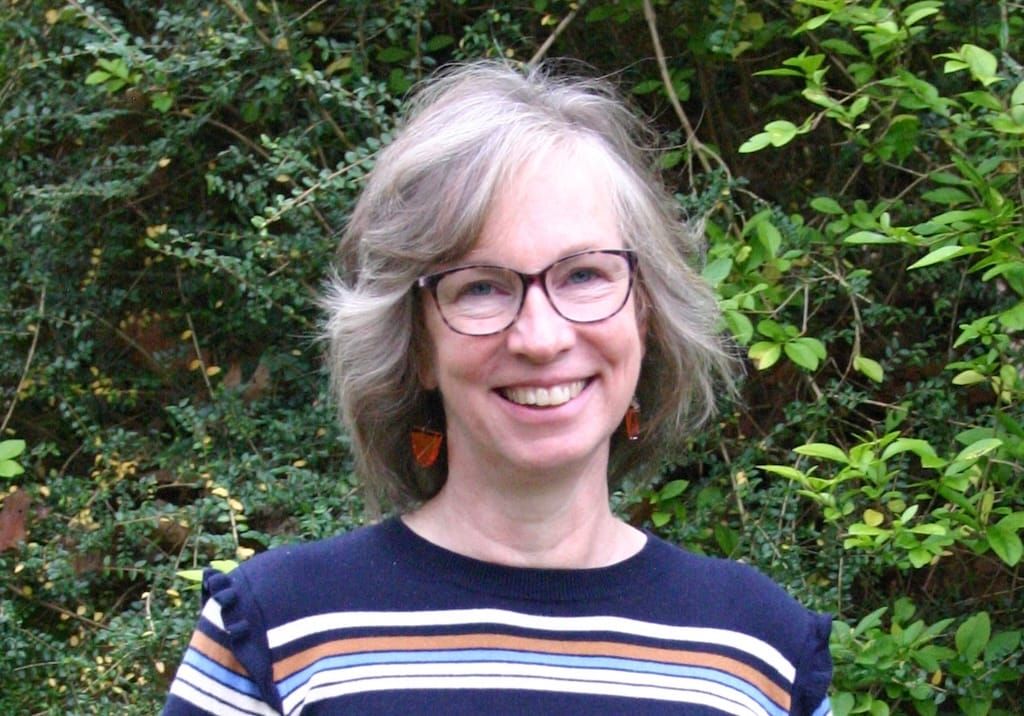
British composer and pianist Alison Mathews has built a distinctive career at the intersection of composition, performance, and music education. Based in Surrey, she is widely known for writing imaginative pedagogical piano music that appears in the syllabi of major examination boards including ABRSM, Trinity College London and the Royal Conservatory of Music.
Her latest project, Seeds of Hope, brings together twenty-two international composers in a collaborative collection for young pianists inspired by nature and Palestinian musical traditions. Conceived as a fundraising initiative for PalMusicUK and Musicians Without Borders, the book reflects Mathews’s longstanding commitment to creativity in music education and her belief that music can foster empathy and connection across cultures.
Serenade Team: You have built your career as a pianist, composer, and educator. How do these three identities inform one another in your work, particularly in a project like Seeds of Hope?
Alison Mathews: These identities are closely intertwined, but education sits firmly at the centre. Many of the projects I have undertaken connect directly to teaching, such as co-founding the UK composition festival Compose Yourself! and writing pedagogical publications for exam boards. In Seeds of Hope, these strands come together in a book that is musically appealing while remaining pedagogically sound, encouraging students to explore and be creative.
My training as a classical pianist gives me a wide knowledge of repertoire and a deep understanding of the instrument. I know what lies comfortably under the hand, how to write pianistically, and how to explore the wide range of sounds the piano can produce. Combined with my teaching experience, this strongly informs how I compose.
Having taught for more than thirty-five years, I also have insight into how students develop technically and musically across a wide range of ages and abilities. Choosing repertoire that motivates students is essential. There is no single approach that works for everyone, so flexibility and curiosity about new repertoire are vital. Music must inspire students, and with Seeds of Hope I have tried to create a book that educates, engages and inspires.
Working closely with exam boards has also helped me understand the demands of different grade levels. That knowledge is invaluable when writing music across a range of levels, ensuring the book is balanced in style and progression. My familiarity with the publishing world also helped in editing, compiling and planning the distribution and promotion of the book.
ST: Your compositions appear across major exam boards including ABRSM, Trinity and RCM. How do you balance writing music that satisfies pedagogical frameworks while still feeling imaginative and artistically alive?
AM: I genuinely enjoy writing to a specific brief. It pushes me to respond creatively while still working within certain limits. My aim is always to produce music that feels alive. I like experimenting with colour, harmony, texture and register, and with small details such as articulation that help bring a piece to life.
Often a piece begins with a simple image or idea. In Ta-Dah!, for example, one of my contributions to Seeds of Hope, the inspiration came from the simple joy of growing vegetables. In another recent collection inspired by nature, I tried to capture the sound of wind rustling through leaves in a way that a beginner could play, using high registers, simple melodic shapes and cluster chords.
In Swoop, Peck and Fly (RCM Preliminary), inspired by the blue tits in my garden, broken chord patterns describe the movement of birds in flight. Crossing hands encourages freedom of movement around the keyboard, while light staccato articulations imitate the birds’ quick pecking sounds.
At higher levels there is more room for development. My book Treasure Trove, used by several exam boards, explores the musical possibilities of gemstones. In Buried Rubies, currently an ABRSM Grade 4 piece, I imagined a temple in Myanmar where rubies gleam in the rock face. The piece combines three contrasting textures: a glittering high register representing the gemstones, a flowing legato melody moving across registers, and deep resonant bass notes. The sustain pedal helps create warmth and shimmer, enhancing the atmosphere of mystery.
It is very easy to write music that becomes too difficult or strays outside the intended level. I therefore often test pieces with my own students or ask colleagues to try them with theirs. It also helps to leave a piece aside for a while before returning to it with fresh ears.
ST: What first sparked the idea for Seeds of Hope, and how did the collaboration with twenty-two international composers come together?
AM: At the beginning of last year I felt strongly that I should do something professionally to respond to the terrible situation in Gaza, particularly for children. I have long believed that all children should have access to music education, regardless of their circumstances.
In February 2025 I attended a fundraising concert organised by the classical music collective Make Freedom Ring. That event made me think seriously about what I could contribute. The most natural response was to create a fundraising book.
At the time I had been following the stories of families in Gaza trying to maintain everyday life despite displacement and constant danger. Many were growing plants, caring for animals or tending rooftop gardens. One story that particularly moved me was that of Ahmed Aaed, known on social media as the “little farmer,” who cared for chickens and a cat called Simba. These everyday moments of resilience inspired the idea of using nature as a central theme for the book.
Having organised the Compose Yourself! festival, I already had connections with many composers who had previously written pieces for children. I initially approached colleagues and friends and then gradually reached out to other composers. Most responded enthusiastically, seeing the project as a meaningful way to contribute in a situation where many people feel powerless. All the composers offered their work freely.
Two collaborators were especially important: my colleague Barbara Arens, who engraved the music, and the artist Tiril Valeur, who created the illustrations and cover design.
One of the most challenging aspects was connecting with Palestinian musicians, as my professional network is largely European. Palestinian friends offered advice and shared links to folk music. I also met Wissam Boustany of PalMusicUK, whose guidance proved invaluable.
Eventually I was introduced to Raji Ghareeb at the Edward Said National Conservatory of Music in Bethlehem. Soon afterwards the conservatory’s Academic Director, Tamer Al-Sahouri, offered support and allowed us to include music from their publication Let’s Play: Arabic Melodies for Beginning Pianists. This meant we could include arrangements of traditional songs and works by composers such as Salvador Arnita and Rima Nasir Tarazi.
I also connected with the composer Ahmed Abu Abed and the singer-songwriter Zaid Hilal, who contributed his song Libre Palestine, now widely known online as the “Shel Shel” or drone song.
I encouraged each composer to respond freely to the themes of nature and Palestinian folk music in their own style. It was important that the book bring together both Western and Arabic musical traditions, with Palestinian music at its heart.
ST: The book includes Palestinian folk songs such as “Yomma Mweel Al Hawa” and “Ween Ala Ramallah.” Why was it important to include these melodies?
AM: Including Palestinian folk and children’s songs was essential. Music is deeply connected to culture and heritage, and songs are a powerful way of teaching children about both similarities and differences between cultures.
Many of the songs reflect universal themes: harvest, community, family and food. For example, Ala Del’ona celebrates the spirit of collective work, such as harvesting olives together. Songs like Hal Sisan (Little Chicks) are immediately engaging for young players.
Other songs address more complex themes such as displacement and longing for home, as in Ween Ala Ramallah. For children this can be explained in terms of love for home and a sense of belonging.
By playing these songs and listening to the original versions sung and performed on instruments such as the oud, young pianists can gain insight into another culture and develop empathy. The creative activities included in the book, such as exploring the Arabic scale Maqam Hijaz and simple rhythmic patterns known as iqa’at, offer accessible ways to engage with this musical language.
ST: The theme of nature runs throughout the collection. In times of conflict and uncertainty, what does nature represent to you?
AM: Nature represents resilience, renewal and beauty. It offers a sense of healing and hope, and these ideas are reflected in many pieces in the book.
Elissa Milne’s Before the Flowers Bloom conveys both fragility and hope through repeating tones that create tension and resolution. Wynn-Anne Rossi’s Hills and Valleys captures the contours of landscape through a flowing melodic line shaped by Arabic modes.
Melanie Spanswick’s Sharjara Zaytun depicts the steadfast olive tree using a melody derived from five notes of an Arabic scale. Other pieces are more direct: my own piece about growing vegetables celebrates the satisfaction of cultivating food, while Pam Wedgwood’s jazzy Cool Cats and Cucumbers was inspired by Ahmed Aaed’s rooftop garden.
Garreth Brooke contributed an imaginative aleatoric piece titled Chickens!, filled with fragments of music representing pecking and clucking that can be played in any order. Marcel Zidani’s Bird Flying High evokes the image of a soaring bird, symbolising freedom.
Across the collection, composers respond to nature in diverse ways, reflecting both creativity and hope.
ST: You previously directed the UK-wide competition Compose Yourself!. How has working with young composers shaped your philosophy about creativity in music education?
AM: Compose Yourself! grew directly from my belief that creativity should be central to music education. My own students have shown me how powerful composing can be for musical development. For some pupils it builds confidence in ways that performance alone cannot.
Composition encourages students to explore the instrument fully while learning essential musical concepts such as form, motifs, harmony and structure. It also provides a means of self-expression.
The festival aimed to give every young pianist the opportunity to compose, regardless of level. We offered both competitive and non-competitive categories and provided feedback to every participant. The response was inspiring, with teachers across the UK introducing composition projects in their studios for the first time.
These experiences have continued to shape my writing. My newest publication, Explore With Me!, released by Piano Safari, contains six duets that encourage improvisation and composition for young pianists. It reflects my belief that creativity should be a natural part of every student’s musical journey.
ST: All profits from the book go to PalMusicUK and Musicians Without Borders. What role do you believe musicians and educators have in responding to global crises?
AM: I believe musicians and educators have an important role to play. Education helps shape understanding and empathy, especially when introduced early in life, but learning and reflection can happen at any age.
Throughout history composers and musicians have used their art to speak out against war and injustice. Today we see musicians organising fundraising concerts and using their platforms to raise awareness of humanitarian issues.
Music connects people. It creates unity and solidarity, especially in difficult times. For me, responding to humanitarian crises is not about politics but about compassion. My mother, who sadly passed away recently, believed strongly that we should use our talents to help others whenever we can.
Musicians are fortunate to communicate through a universal language that can express emotion and provoke reflection. Using that gift to support others feels both natural and necessary.
Organisations such as PalMusicUK and Musicians Without Borders are already making a tangible difference by supporting children and young people affected by conflict. As Musicians Without Borders beautifully puts it: even in the hardest moments, music can offer a space for expression, connection and strength.