On the Horizon: Melissa Dunphy and Dominick DiOrio on Climate, Community, and Choral Music
Composer Melissa Dunphy and conductor Dominick DiOrio discuss ‘On the Horizon’, a large-scale cantata confronting climate change through the voices of young singers, and reflect on collaboration, responsibility, and the enduring communal power of choral music.

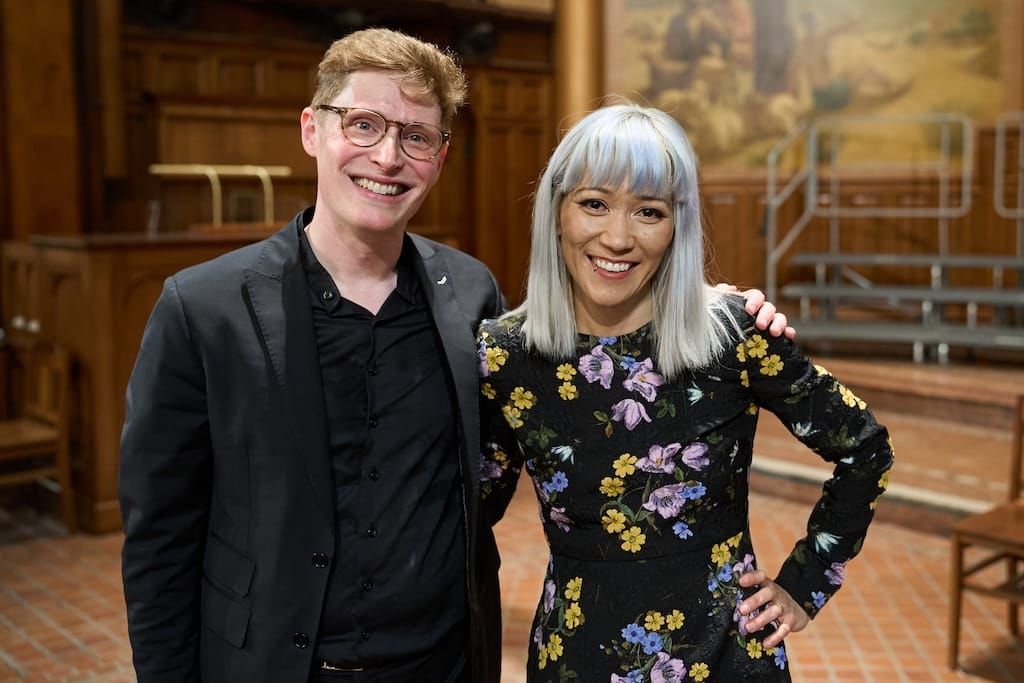
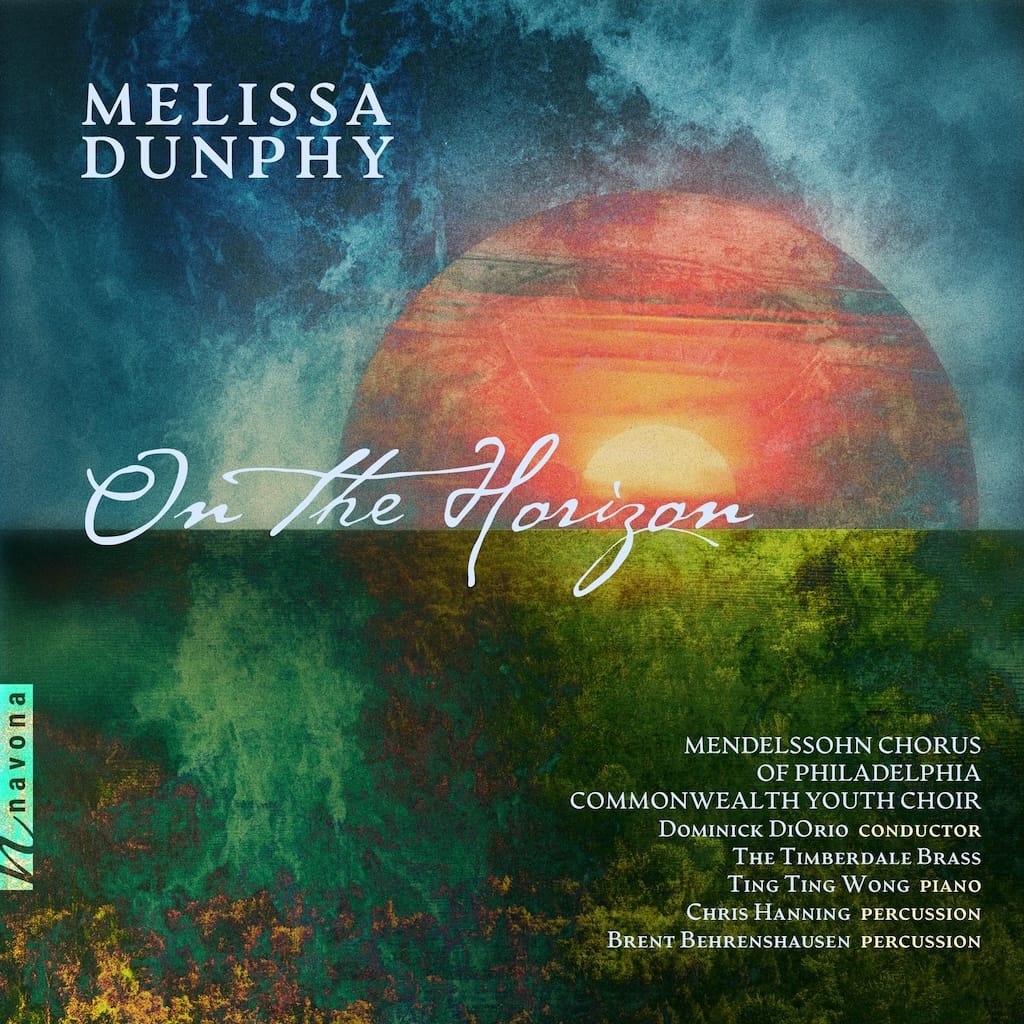
With On the Horizon, composer Melissa Dunphy and conductor Dominick DiOrio bring together the Mendelssohn Chorus of Philadelphia and the Commonwealth Youth Choir for a large-scale musical response to the climate crisis. Recorded live with The Timberdale Brass, pianist Ting Ting Wong, and percussionists Chris Hanning and Brent Behrenshausen, the nine-movement cantata places young voices at the centre of a work shaped by reflections on environmental uncertainty, responsibility, and hope.
Dunphy, whose music frequently engages with political and social themes through a deeply theatrical and vocal language, has earned international recognition for works ranging from Totality, premiered at the BBC Proms in 2024, to the widely discussed Gonzales Cantata. DiOrio, Artistic Director of the Mendelssohn Chorus of Philadelphia and professor of choral conducting at the Indiana University Jacobs School of Music, has long championed contemporary choral music and collaborative artistic practice.
In this conversation, Dunphy and DiOrio reflect on the origins of On the Horizon, the process of working with young singers, and the role choral music can play in confronting the defining challenges of our time.
NS: On the Horizon brings together adult and youth voices in what feels both like a musical statement and a call to action. Could you speak about how the idea for the cantata first took shape, and at what point it became clear that the work needed to centre young singers as both participants and protagonists?
DD: Absolutely! As Mendelssohn Chorus was about to celebrate a major anniversary, 150 years, we wanted to commission a significant work from a local Philadelphia composer with global recognition for the occasion. We had worked with Melissa on a shorter piece during COVID, A Slice of Pie, and the chorus loved it.
A year or two later, I met Melissa for coffee and asked her, “What do you really want to write?” She shared that she had tackled many subjects as a composer but had yet to respond to climate change in her music, and that the only meaningful way to do that was to ensure that those who would inherit our planet had a voice in its creation.
We absolutely loved this idea. Mendelssohn Chorus already had an established relationship with Commonwealth Youth Choir, so we developed a process in which the young singers could share their thoughts through workshop discussions. Melissa then took their words and crafted the libretto for the work. It was a truly inspiring process.
NS: The libretto is shaped by young people’s reflections on climate change, balancing urgency with moments of hope and introspection. How did you approach transforming these individual voices into a cohesive musical and emotional arc without losing their immediacy or authenticity?
MD: Much of the direction and shape of the libretto was inspired directly by the source material, so I have to give most of the credit to the youth contributors, as well as their mentors: the leadership of Commonwealth Youth Choirs, the families who raised such thoughtful children, and especially Alix Davatzes, a choir parent and Professor of Environmental Science at Temple University, who moderated the group discussions.
During these sessions, I was at once devastated by the young singers’ clear-eyed perception of the climate crisis and awed by their insight and empathy while tackling difficult topics. I witnessed teenagers display more respect and maturity in navigating disagreements than many middle-aged adults.
My biggest challenge was, as you say, remaining as authentic as possible in my interpretation and resisting any impulse to soften or mitigate their opinions and emotions. If we hope to see a path forward, older generations need to learn how to tolerate our discomfort when young people justifiably call for accountability. We also have a responsibility to find solutions that cut through apathy and despair to create a better future for the next generation.
This tension, between old and young, privileged and oppressed, anger and hope, is so deeply intertwined with the dynamics of human community that it has appeared in literature for thousands of years. I therefore curated and created additional texts to help frame the issue on an even broader scale.
NS: Melissa, your work often engages with political, historical, and social themes through a distinctly vocal and theatrical lens. In writing On the Horizon, did working with youth voices and a contemporary global issue lead you to rethink or expand your compositional language in any way?
MD: I’m gratified to have written several works for younger musicians; in my view, the world of academic composition needs to be reminded that engagement with students and amateurs is an underrated skill and vital to our genre. It’s rewarding to become familiar enough with performers to write music that is accessible but doesn’t patronise or underestimate them.
Stylistically, I’ve been described as a “magpie,” and I cheerfully accept that label. In my vocal writing, I always let the lyrics guide my setting, so if an apocalyptic text wants to be couched in operatic drama, while an ironic expression of resentment demands a menacing but catchy bassline, I’ll go with it.
I stopped worrying about developing a consistent compositional language a long time ago, and paradoxically, I think my music feels more personal because of that. Perhaps future musicologists and theorists will have the last word on defining my musical style one day, if I’m lucky!
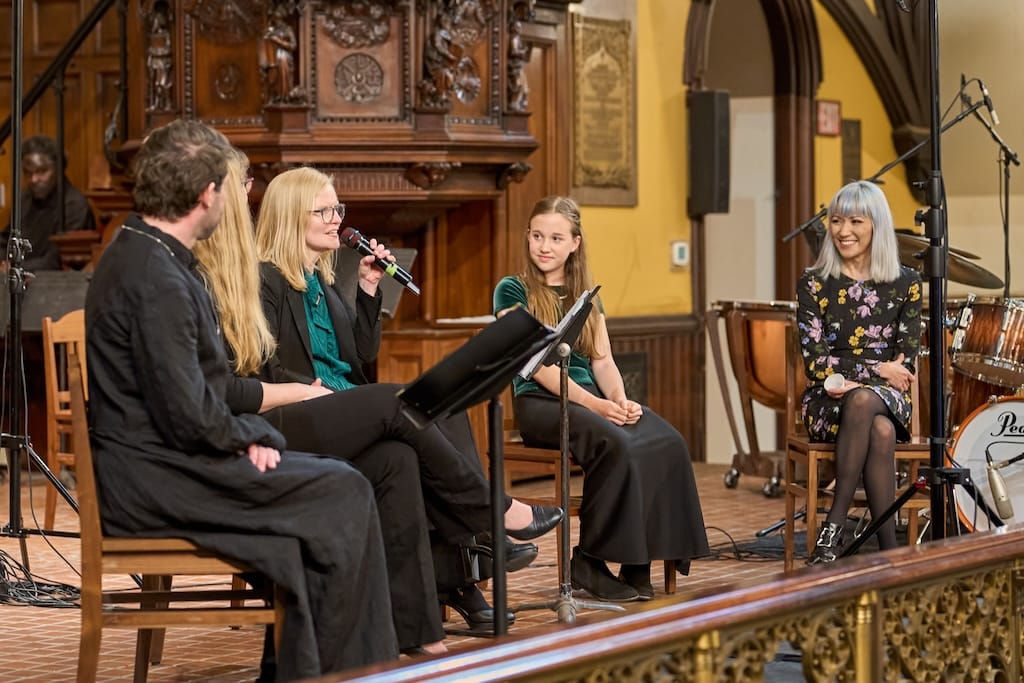
NS: Dominick, this project brings together adult choir, youth choir, brass quintet, percussion, and piano in a live performance context. What were the particular musical and logistical challenges in preparing and shaping such a large and varied ensemble, and how did you approach achieving clarity and balance across these forces?
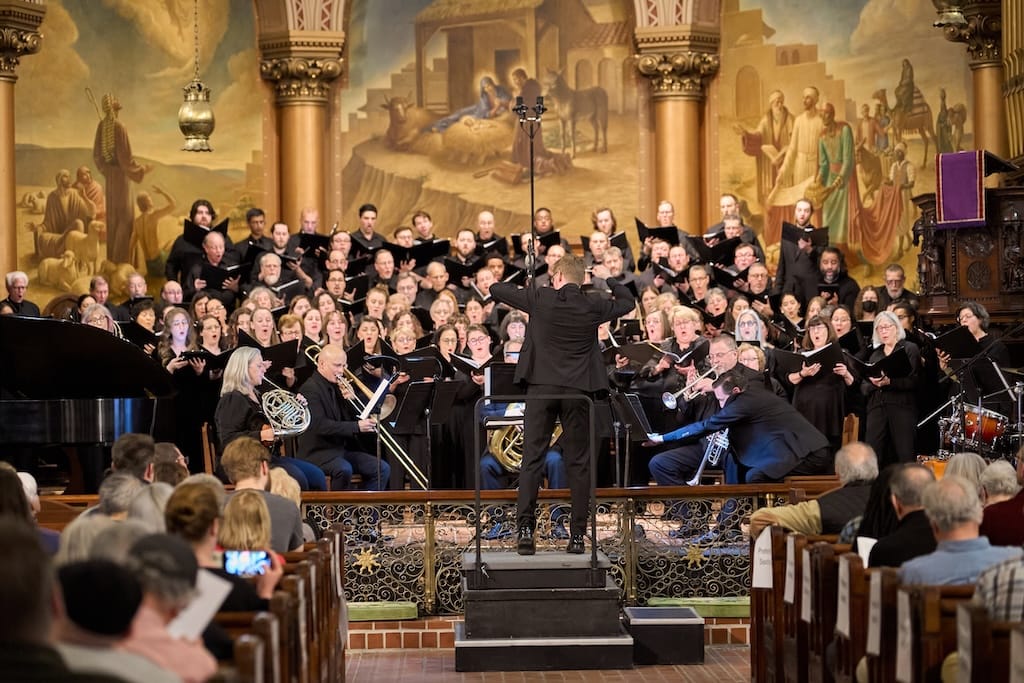
DD: You’re right, it is quite a large array of forces! We knew we wanted both the adult chorus and the youth singers to be part of the performance, and we wanted them to sing together often while also having moments where they were featured independently.
So Movement IV, Caretakers of Tomorrow, is really a showcase for the young people, while Movement III, The Trumpet Sounds, allows Mendelssohn Chorus to stand on its own as a symphonic powerhouse.
At the same time, we wanted an instrumental setup that would remain accessible for future ensembles. In that sense, brass quintet, two percussionists, and piano felt like an achievable combination that could still provide the power and colour we wanted, while also remaining financially practical for choral organisations that often operate within limited budgets.
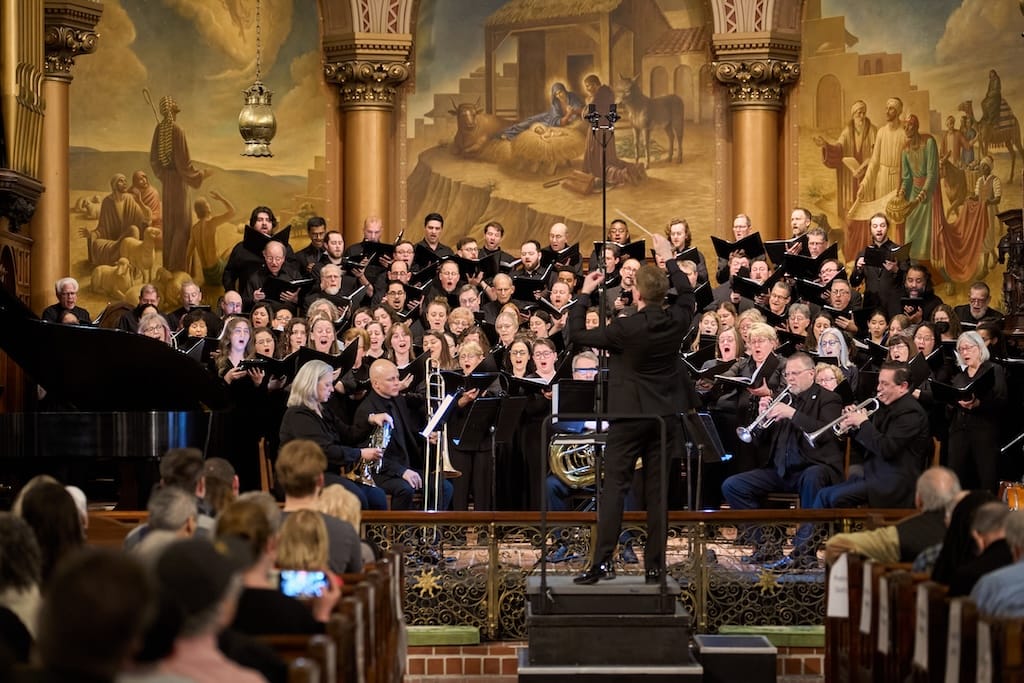
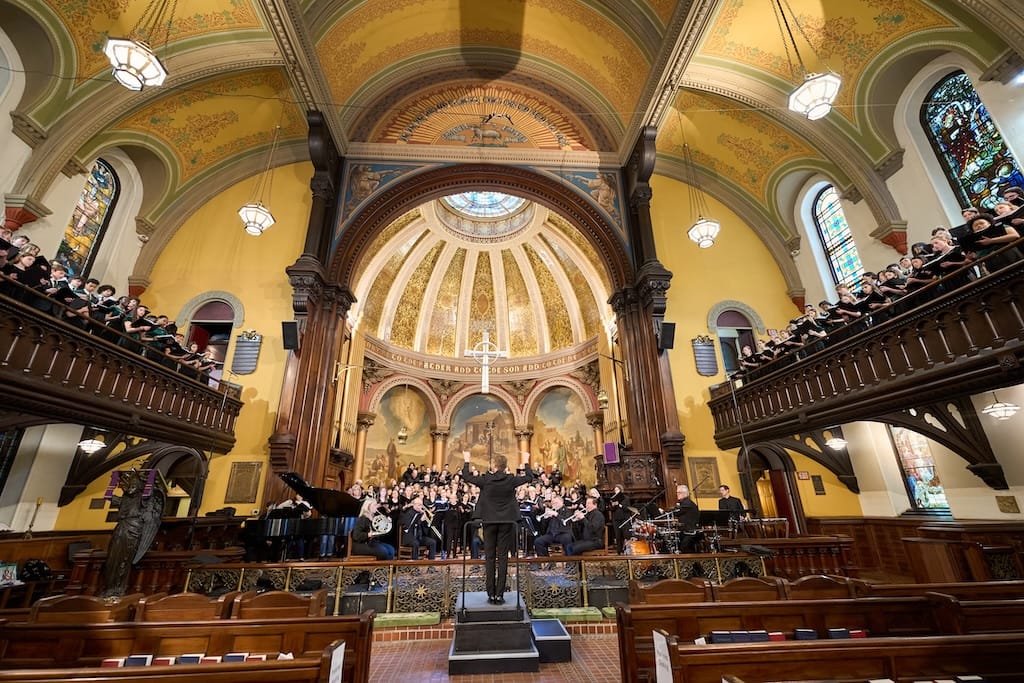
Then, of course, bringing everyone together in performance was its own challenge. Where would we put more than 200 singers? We were delighted that The Episcopal Church of the Holy Trinity on Rittenhouse Square allowed us to place Mendelssohn Chorus in the centre, Commonwealth Youth Choir in the balconies, and the instrumentalists on the floor.
It was a tremendous joy putting everything together in that space, and quite a monumental sonic experience once it all came together.
NS: As a collaboration between composer and conductor, On the Horizon seems to rely on a close alignment of musical vision and interpretative insight. How did your dialogue evolve over the course of the project, from the early stages of the score to the final performance?
DD: I trust Melissa implicitly. She has such a clear vision and voice, and I was honoured to watch her engage with the young people throughout the process of crafting the text. We were also deeply grateful to Elizabeth Cassidy Parker, Temple University professor of music education and conductor with Commonwealth Youth Choir, and Alix Davatzes, a Temple University professor and CYC parent, both of whom facilitated these sessions.
We also had to work on an extended timeframe for the commission to allow a project of this scope the care and focus it required, so we ultimately premiered the work during our 151st season rather than our 150th, as originally planned.
While this required a bit of rerouting, so to speak, that is common in artistic work, particularly collaborative and interdisciplinary projects. And I couldn’t be happier with the result. Melissa delivered an incredible new contribution to the major choral repertoire with On the Horizon, and I truly believe many ensembles will gain immensely from engaging with and performing this music.
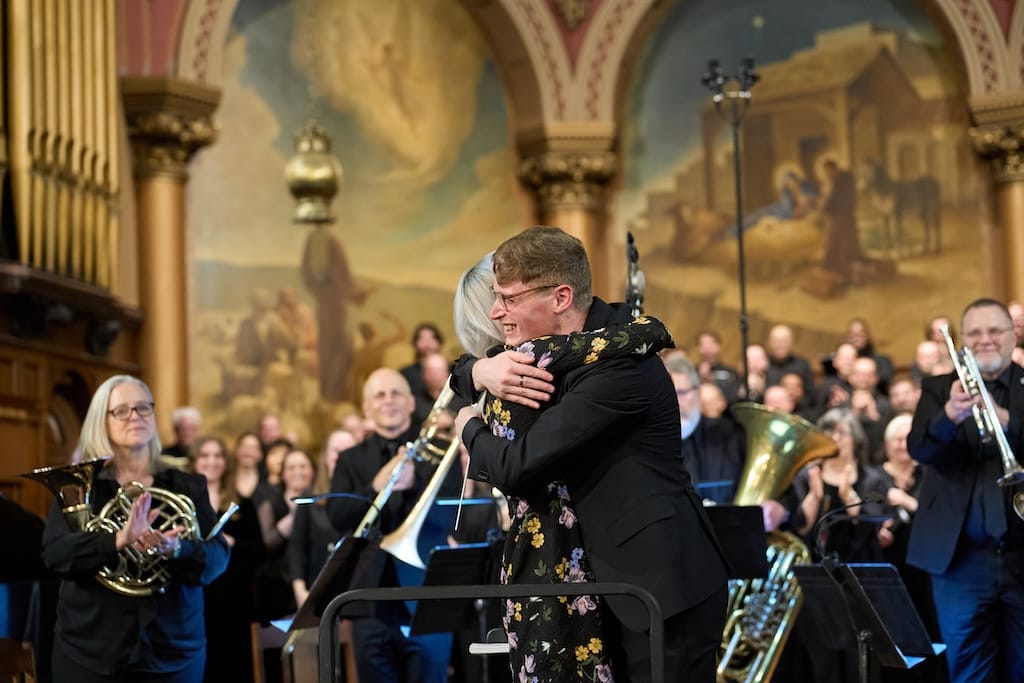
MD: Dominick is a dream collaborator, an electrifying conductor who is not only a consummate musician, but also inspiringly fun to watch. An accomplished composer himself, he understands what is necessary to shepherd a new work from concept to completed score to polished performance, and I felt utterly supported by him and Mendelssohn Chorus Executive Director Flo Gardner at every step of the process.
From my perspective, whatever I needed or proposed materialised almost magically through their hard work and generosity, and that never changed. When I presented the completed score, I didn’t have to clarify or explain a thing. He immediately understood what I intended and brought it vividly to life.
NS: Both of you have extensive experience working with ensembles across different levels, including young and emerging musicians. In this project, what surprised you most about working with the Commonwealth Youth Choir, and did their engagement influence the way the work ultimately came to life?
DD: I am always impressed by the adult-level commitment and focus of young people. It’s been true with every youth ensemble I’ve ever worked with: when you set the bar high, they rise to meet it.
The wonderful thing about working with young musicians is that they often haven’t yet been artificially limited by the expectations others place upon them. They dream boldly and expansively, and that is exactly what happened here. Working with them was a joy.
MD: I co-sign all of that! The biggest surprise for me was how profound the climate conversations were, even with the youngest members of the choir. I came away with an even stronger conviction that we need to listen to young people and allow them more agency. After all, they have the greatest stake in the future.
NS: On the Horizon is ultimately a work about the future, voiced by the next generation but heard by audiences today. What do you hope listeners carry with them after experiencing the piece, both musically and in terms of its broader message?
DD: The central message here is simple and hopeful: it’s not too late. We can still work together for a better world. This is our call to action. Let’s work together today for a better tomorrow.
MD: In the words of one singer, which I set verbatim: “It’s a very small island, but it’s beautiful, and we take care of it on our own.” He was referring to Puerto Rico in the wake of Hurricane Maria, but the sentiment applies equally to our entire planet.
Our survival depends upon our sense of community, and I can’t think of a more apposite vehicle for carrying this message than choral music.