How Bach Changed the History of Music Forever
An exploration of how Johann Sebastian Bach reshaped Western music through counterpoint, tonal architecture and sacred composition, influencing generations of composers and establishing foundations that continue to shape performance, pedagogy and musical thought today.

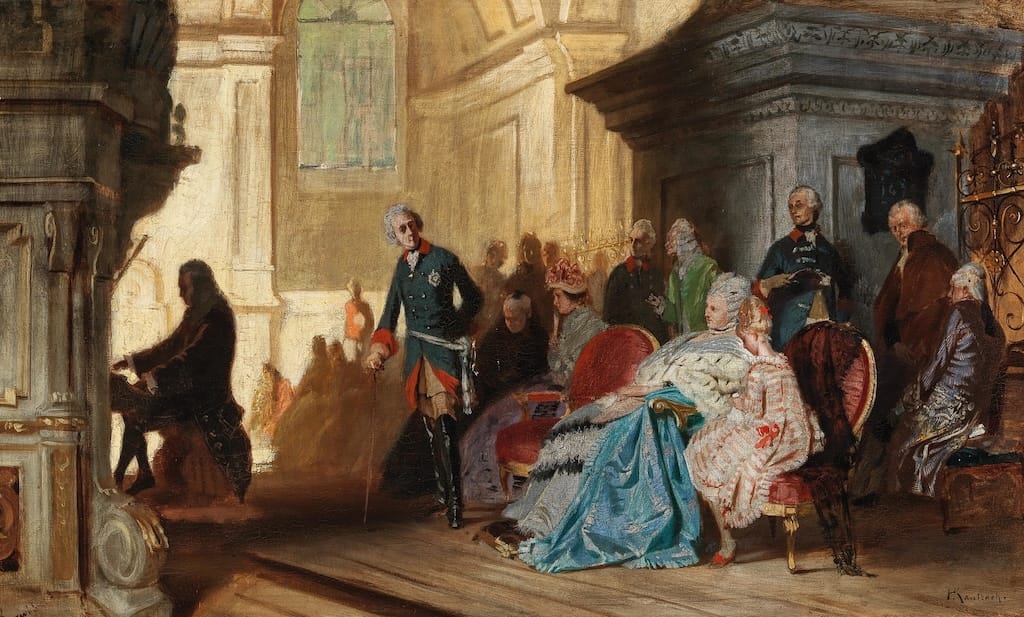
Few composers can plausibly be described as having altered the course of music itself. Johann Sebastian Bach stands among that rare company. Though he spent most of his life employed as a church musician and court composer in German cities, and though he was not widely celebrated beyond professional circles during his lifetime, his influence has proved inexhaustible. The structures he refined, the contrapuntal language he perfected and the spiritual intensity he embodied reshaped not only the music of his own era but the entire trajectory of Western art music.
To understand how Bach changed history, one must consider both what came before him and what followed.
The Baroque Context
Bach was born in 1685 into a long line of musicians. The late seventeenth and early eighteenth centuries were the height of the Baroque era, a period marked by elaborate ornamentation, intricate counterpoint and a growing sense of tonal organisation. Composers such as Antonio Vivaldi and George Frideric Handel were developing the concerto and the oratorio, while organists across Germany cultivated complex contrapuntal traditions rooted in Lutheran church music.
Bach absorbed these traditions with extraordinary thoroughness. Yet he did not merely imitate them. He synthesised Italian lyricism, French dance rhythms and German contrapuntal rigour into a language of unprecedented coherence. In doing so, he consolidated the tonal system that would dominate Western music for centuries.
The Perfection of Counterpoint
Counterpoint, the art of combining independent melodic lines, existed long before Bach. Renaissance composers had practised it with subtlety and balance. However, Bach brought contrapuntal writing to a new level of structural clarity and expressive depth.
His collection known as The Well-Tempered Clavier presents preludes and fugues in all major and minor keys. The fugue, a form built upon imitation and thematic development, became in his hands not merely an academic exercise but a vehicle for drama and architecture. Each voice retains independence while contributing to an integrated whole.
In works such as The Art of Fugue, Bach explored contrapuntal possibilities with almost scientific intensity. The themes are inverted, augmented, diminished and combined in ever more intricate permutations. Yet the music rarely sounds mechanical. It breathes with tension and release.
By perfecting counterpoint, Bach provided later composers with a model of structural thinking. Even those who moved away from strict polyphony continued to study his methods as the foundation of compositional craft.
Establishing Tonal Architecture
Although the tonal system was already evolving in Bach’s time, his works helped stabilise and codify it. The idea that music could move purposefully between related keys, creating journeys of tension and resolution, became central to later forms such as the symphony and sonata.
In Brandenburg Concertos, for instance, Bach demonstrates not only contrapuntal skill but also a sophisticated sense of harmonic direction. Each concerto explores contrasts of texture and tonality with remarkable assurance. The dialogue between soloists and ensemble anticipates later developments in orchestral writing.
By clarifying harmonic relationships and exploiting modulation with expressive intent, Bach laid groundwork upon which Classical composers would build larger formal structures.
Sacred Music and Spiritual Depth
Bach’s principal professional duty was the composition of church music. During his tenure in Leipzig, he produced a vast number of cantatas, passions and other liturgical works. Far from being routine assignments, these compositions represent some of the most profound spiritual statements in Western music.
The St Matthew Passion stands as a monumental fusion of theology, drama and musical architecture. Chorales, recitatives and arias intertwine to narrate the Passion story with extraordinary emotional range. The interplay between intimate reflection and grand choral proclamation demonstrates how music can illuminate text with both clarity and depth.
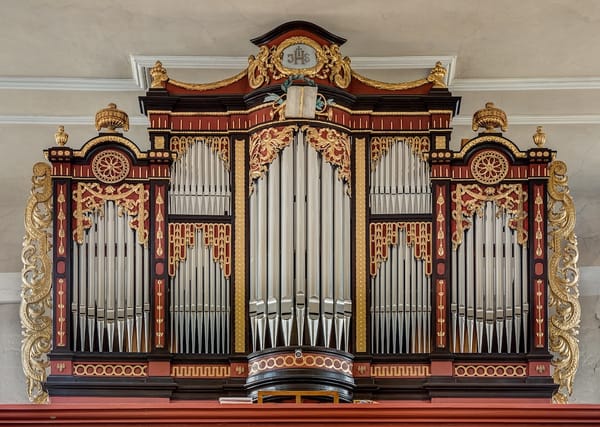
In the Mass in B minor, Bach assembled movements composed across different periods of his life into a unified whole. The result transcends liturgical function, presenting a synthesis of styles and techniques that suggests universality rather than local practice.
Through these sacred works, Bach elevated church music to a level of artistic ambition comparable to the grandest secular forms. Later composers would draw upon this example when conceiving large scale choral works.
Influence on the Classical Era
When Bach died in 1750, musical taste was shifting. The lighter textures and clearer phrases of the emerging Classical style appeared to contrast with his dense polyphony. For several decades, his music was admired primarily by connoisseurs and students.
However, his influence did not disappear. Wolfgang Amadeus Mozart encountered Bach’s fugues and reportedly studied them with fascination, incorporating contrapuntal elements into his own works. Ludwig van Beethoven regarded Bach as a foundational figure, once remarking that he should be called not a brook but an ocean, in reference to the literal meaning of his name.
Beethoven’s late string quartets and piano sonatas reveal an engagement with contrapuntal thinking that would have been unthinkable without Bach’s example. Even as musical language evolved, Bach remained a touchstone of structural integrity.
The Nineteenth Century Revival
By the early nineteenth century, much of Bach’s large scale vocal music had fallen into obscurity. This changed dramatically in 1829, when Felix Mendelssohn conducted a revival performance of the St Matthew Passion. The event sparked renewed interest in Bach’s oeuvre and helped secure his place in the canon.
Romantic composers found in Bach both discipline and emotional depth. Johannes Brahms studied his works intensely, seeing in them a model of motivic development. Frédéric Chopin reportedly practised preludes and fugues regularly, valuing their clarity and balance.
This revival was not mere nostalgia. It represented recognition that Bach’s techniques were not bound to a particular style but formed the bedrock of musical thought.
Foundations of Music Education
Perhaps one of Bach’s most enduring contributions lies in pedagogy. Students of composition and keyboard continue to study his inventions, preludes and fugues as core training.
Two part inventions introduce young musicians to contrapuntal interplay in manageable form. Chorales teach harmonic progression and voice leading. Organ works challenge technical control and architectural planning.
In conservatoires across the world, including institutions that Nikhil often engages with in his work on music education, Bach remains central to curriculum. His music develops discipline, listening skills and structural awareness. Few composers serve both artistry and pedagogy with equal authority.
Beyond Style and Era
Bach’s impact extends even into modern and contemporary music. Twentieth century composers found inspiration in his clarity and abstraction. Neoclassical movements drew directly upon Baroque forms. Jazz musicians have explored his harmonic progressions and contrapuntal textures, recognising their adaptability.
The reason his influence persists lies in the balance between intellect and expression. His music embodies rigorous construction, yet it never feels detached from human experience. Each fugue, chorale or concerto speaks with emotional sincerity.
Why Bach Changed History
So how did Bach change the history of music forever?
First, he synthesised diverse national styles into a coherent and highly developed tonal language. Second, he perfected contrapuntal technique, establishing models of structural thinking that underpin Western composition. Third, he demonstrated that sacred and instrumental music could achieve profound expressive depth within disciplined form. Finally, his works became the cornerstone of musical education, shaping generations of composers and performers.
History often celebrates those who innovate visibly. Bach’s transformation was subtler but deeper. Rather than inventing an entirely new style, he refined existing practices to such a degree that they became foundational. Later revolutions in music did not discard his achievements. They built upon them.
In this sense, Bach did not merely contribute to music. He redefined its possibilities. His legacy continues to resonate not because it belongs to the past, but because it articulates principles that remain central to musical thought. Structure and freedom, faith and intellect, complexity and clarity. In Bach, these opposites find equilibrium.