Haydn’s Clock Symphony: The Story Behind Symphony No. 101
Haydn’s “Clock” Symphony blends wit and architectural mastery, turning a simple ticking rhythm into a meditation on time, Enlightenment order, and public listening in late eighteenth-century London.

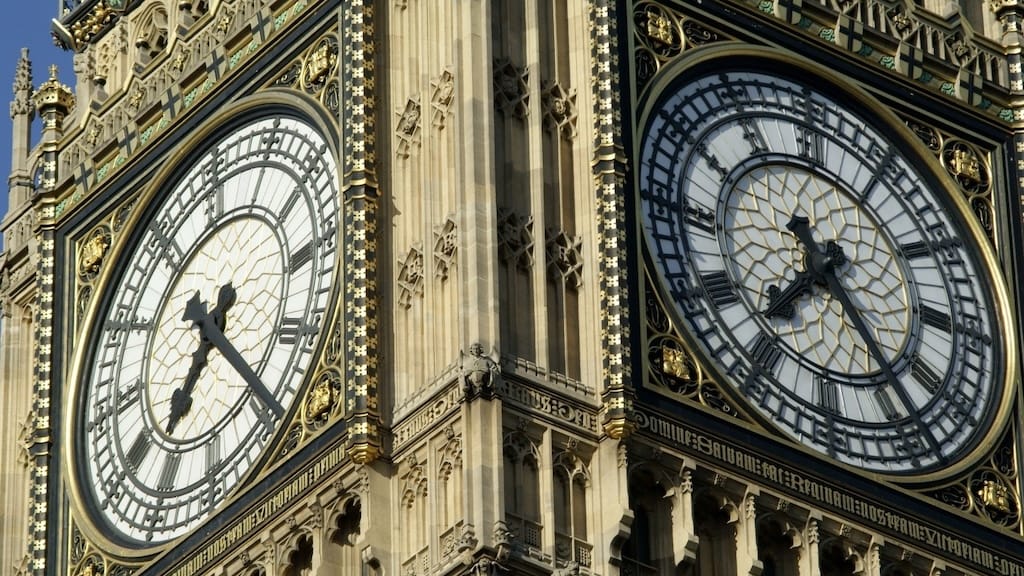
Few works in the symphonic repertoire wear their nickname as lightly and as memorably as Haydn’s “Clock” Symphony. Officially titled Symphony No. 101 in D major, it owes its popular name to the unmistakable ticking rhythm that animates its second movement. Yet to hear this work merely as a charming musical joke is to miss its deeper ingenuity. The “Clock” Symphony stands at the intersection of wit and architecture, public entertainment and private craftsmanship, revealing much about Joseph Haydn at the height of his powers.

London and the Late Style
By the time Haydn composed Symphony No. 101 in 1793–94, he was in his early sixties and enjoying a level of international celebrity unprecedented for a composer of instrumental music. His long service at the Esterházy court had honed his mastery of form and orchestration, but it was his journeys to London that transformed him into a truly public figure. Invited by the impresario Johann Peter Salomon, Haydn encountered large, attentive audiences eager for new symphonies that were both sophisticated and immediately appealing.
The twelve so-called “London” symphonies, composed during Haydn’s two extended visits to England, reflect this new context. They are broader in scale, richer in orchestral colour, and more theatrically alert than many of his earlier works. Symphony No. 101 belongs to this final group, written with the expectation that its gestures would be clearly felt across a large hall. The famous ticking motif is not a subtle conceit hidden in the texture, but a rhythmic idea that announces itself with quiet confidence.
The Birth of the “Clock”
The nickname “The Clock” was not Haydn’s own invention, but it stuck quickly and enduringly. It refers to the steady quaver accompaniment in the Andante second movement, typically played by muted violins and bassoons, which evokes the measured pulse of a mechanical clock. In late eighteenth-century Europe, clocks and watches were objects of fascination, symbols of Enlightenment order, rationality, and technological progress. Haydn’s audience would have instantly recognised the reference.
What makes the effect so striking is its restraint. The ticking does not dominate the movement; rather, it underpins a graceful, almost pastoral melody. Haydn resists the temptation to exaggerate the joke. Instead, the clock becomes a quiet presence, suggesting time passing evenly beneath human activity. There is humour here, but also poise and balance.
Structure and Surprise
Symphony No. 101 follows the four-movement structure typical of the mature Classical symphony, yet within that familiar framework Haydn finds endless opportunities for surprise.
The opening Adagio introduction immediately sets a tone of expectancy. Darker harmonies and dramatic pauses create a sense of seriousness before the Vivace bursts forth in D major. This contrast between weight and lightness is characteristic of Haydn’s late style. The main Allegro movement brims with rhythmic vitality and motivic economy. Small musical cells are constantly recombined, passed between sections of the orchestra, and developed with almost conversational ease.
The celebrated Andante that follows is the emotional and conceptual heart of the symphony. While the ticking accompaniment provides its identity, Haydn enriches the texture with unexpected harmonic turns and playful interruptions. At moments, the clock seems to falter, as if time itself were momentarily suspended. These disruptions are subtle, but they give the movement its expressive depth.
Wit as Intelligence
Haydn’s humour has often been described as genial or good-natured, but in Symphony No. 101 it is also intellectually alert. The clock rhythm is not merely descriptive; it becomes a structural device. By maintaining a steady pulse beneath a melody that continually varies, Haydn creates tension between constancy and change. The listener becomes aware of time passing, even as musical ideas unfold freely above it.
This balance mirrors the broader Enlightenment ideal of order enriched by imagination. Haydn does not mock the clock; he collaborates with it. The movement feels less like a caricature than a meditation on regularity itself.
Minuet and Muscle
If the Andante is elegant and ironic, the Minuet is robust and almost rustic. Marked Menuetto: Allegretto, it has a weight and physicality that anticipate the symphonic scherzos of Beethoven. The rhythmic emphasis is firm, even slightly heavy-footed, reminding us that Haydn’s minuets are no longer courtly dances but orchestral statements.
The Trio section offers contrast through lighter textures and more relaxed phrasing, before the Minuet returns with renewed force. Once again, Haydn demonstrates his mastery of proportion. Nothing overstays its welcome; each idea is given exactly the space it needs.
The Finale: Controlled Exuberance
The final movement, Vivace, is a study in controlled exuberance. Rapid string figures propel the music forward, while wind instruments add colour and punctuation. Haydn delights in sudden dynamic shifts and brief moments of suspense, but the overall impression is one of confidence and joy.
What is particularly striking is how the symphony’s energy accumulates across its four movements. By the time the finale arrives, the listener has already travelled through drama, wit, and muscular dance. The conclusion feels earned, not merely exciting for its own sake.
Public Art, Private Craft
One reason Symphony No. 101 continues to captivate audiences is that it operates successfully on multiple levels. To a casual listener, it offers memorable ideas, clear contrasts, and a delightful central conceit. To a more attentive ear, it reveals extraordinary craftsmanship. Haydn’s handling of sonata form, variation technique, and orchestral balance is never ostentatious, but always assured.
The “Clock” Symphony also reflects Haydn’s understanding of his audience. Writing for London, he knew he was addressing listeners who might attend only a handful of concerts each season. The music needed to communicate immediately, yet reward repeated hearings. The ticking rhythm achieves precisely that: instantly recognisable, endlessly adaptable.
Legacy and Influence
Symphony No. 101 occupies a crucial place in the history of the symphony. It stands at the threshold between the Classical and the early Romantic, between the courtly traditions of the eighteenth century and the public concert culture of the nineteenth. Composers who followed, not least Beethoven, absorbed Haydn’s lessons in thematic unity, rhythmic drive, and the dramatic use of expectation.
The idea that a symphony could be both serious and playful, architecturally rigorous and lightly humorous, owes much to works like the “Clock”. Haydn showed that wit need not undermine depth; it could enhance it.
Time Well Kept
More than two centuries after its first performance, Haydn’s “Clock” Symphony continues to tick away in concert halls around the world. Its famous Andante remains instantly appealing, but its true achievement lies in the way it integrates that memorable idea into a larger, coherent whole. In Symphony No. 101, Haydn reminds us that time in music is not merely measured, but shaped. The steady pulse of the clock becomes a canvas on which imagination, discipline, and delight coexist. It is music that knows exactly what it is doing, and does it with a smile.