Did Paganini Sell His Soul to the Devil?
Rumours once claimed that violin virtuoso Niccolò Paganini had sold his soul to the Devil. In reality, his astonishing technique, dramatic stage presence and carefully cultivated mystique created one of music history’s most enduring legends.

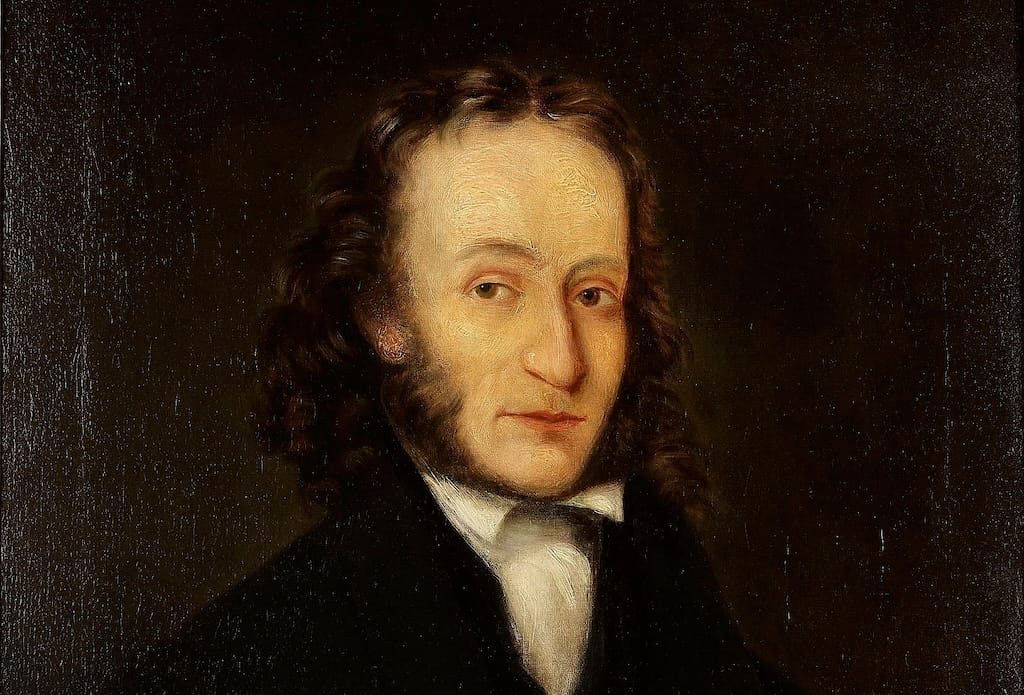
In the early nineteenth century, audiences across Europe believed they had witnessed something supernatural. When the Italian violinist Niccolò Paganini walked onto the stage, thin, pale and dressed almost entirely in black, the atmosphere in the hall seemed to shift. Then he raised his violin and produced sounds no one had ever heard before.
His playing was so astonishing that rumours quickly spread that Paganini had made a pact with the Devil.
The story became one of the most famous legends in the history of classical music. But did people really believe it? And how did such a myth arise around a musician?
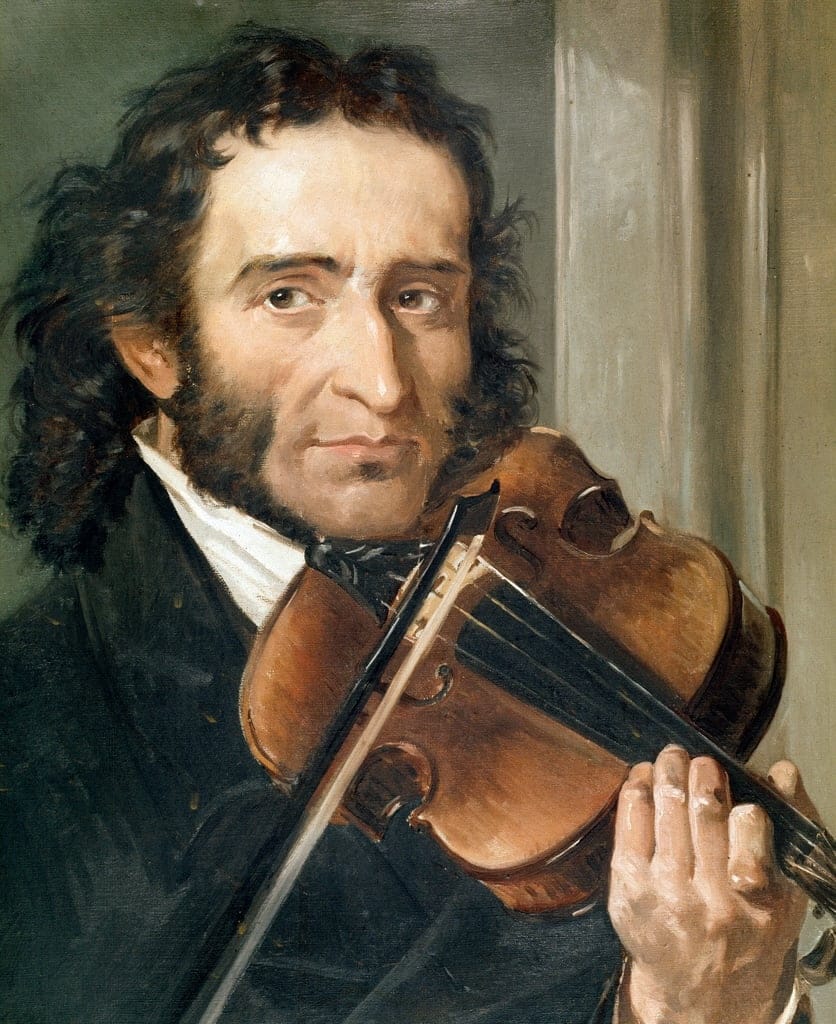
The Most Extraordinary Violinist of His Time
Born in Genoa in 1782, Paganini showed remarkable musical ability as a child. His father, a dockworker and amateur musician, pushed him relentlessly to practise the violin for hours each day. By his teenage years he was already performing in public and developing a technique far beyond that of most violinists.
What made Paganini unique was not simply speed or virtuosity, but a combination of techniques that seemed almost impossible:
- Playing extremely rapid passages across the strings
- Performing left-hand pizzicato while still bowing with the right hand
- Using double harmonics, producing two high, flute-like tones simultaneously
- Playing entire pieces on a single string
These effects astonished audiences. Many musicians could barely understand how they were produced.
His most famous works, the 24 Caprices for Solo Violin, remain some of the most technically demanding pieces ever written for the instrument.
A Performer Who Looked Like a Ghost
Part of Paganini’s mystique had nothing to do with music.
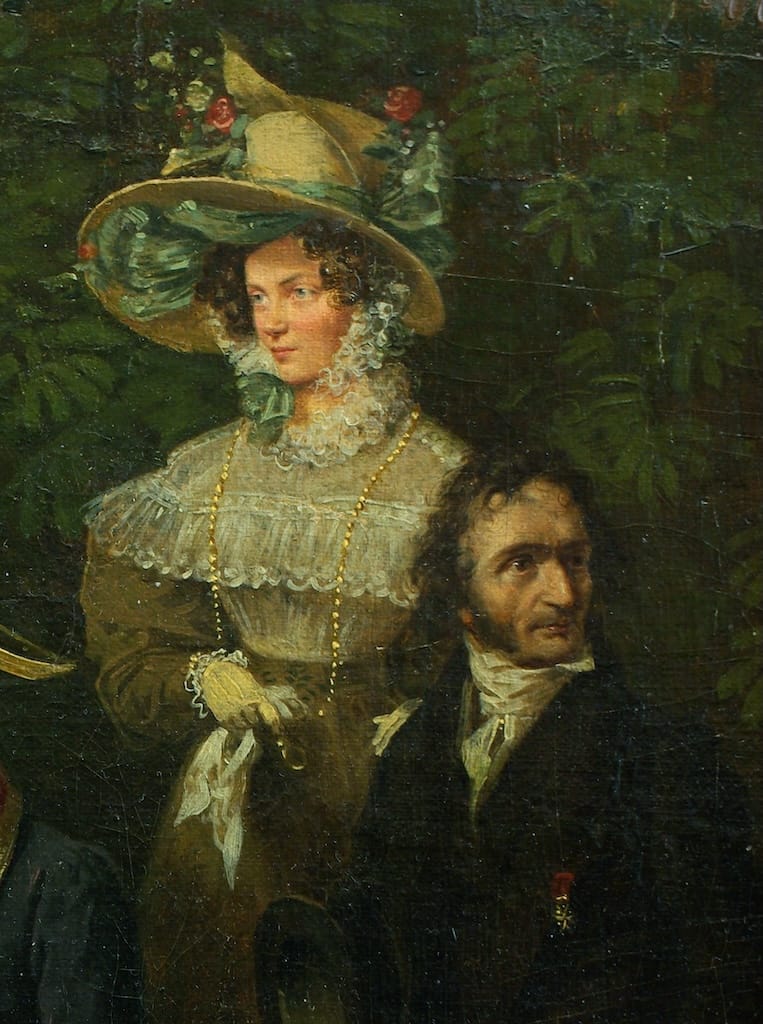
Contemporary accounts describe him as exceptionally tall, thin and pale, with long black hair and intense eyes. His physical appearance was partly the result of chronic illness. Modern scholars believe he may have suffered from Marfan syndrome or Ehlers-Danlos syndrome, conditions that can create unusually flexible joints.
Ironically, this flexibility may have helped him play the violin with extraordinary reach and agility.
On stage, Paganini often performed under dim candlelight. The flickering shadows, combined with his gaunt appearance and dramatic gestures, created an almost theatrical spectacle. To audiences unused to such performances, it could feel unsettling, almost otherworldly.
The Devil Appears in the Stories
Stories soon circulated that Paganini’s ability could not possibly be human.
Some claimed they had seen the Devil guiding his bow during performances. Others insisted a dark figure appeared beside him on stage. One rumour even suggested Paganini had learned the violin while imprisoned for murder, playing endlessly on a single string after the others broke.
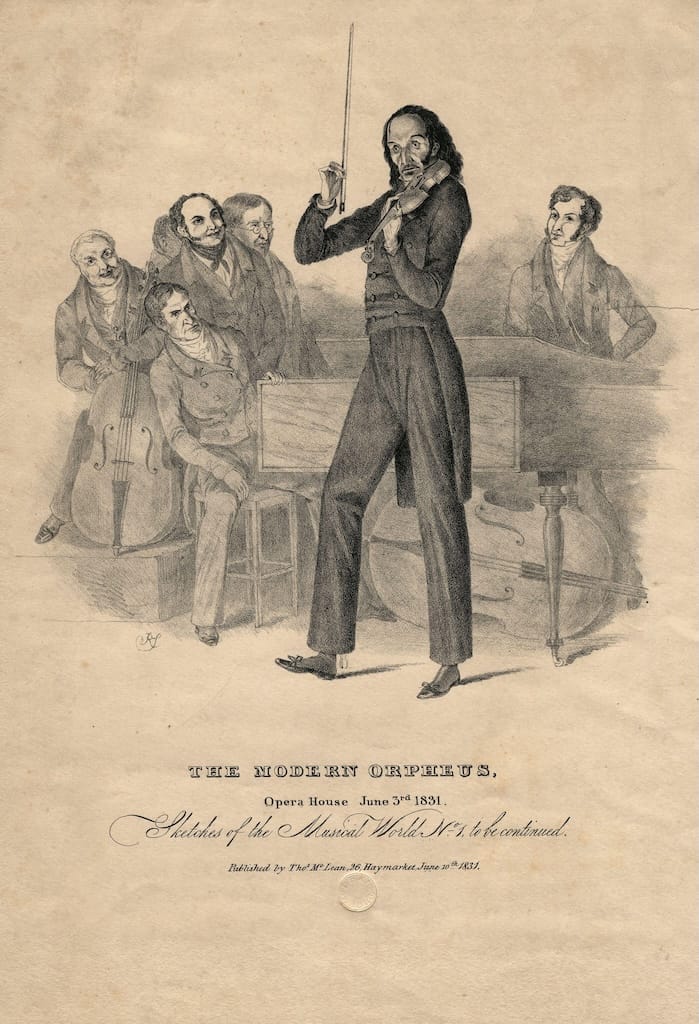
These stories were not entirely unusual in the Romantic era. The early nineteenth century was fascinated by the idea of the supernatural artist, a figure whose genius seemed to come from mysterious or dangerous forces.
The violinist himself rarely denied the rumours directly. In fact, Paganini understood that the stories increased his fame. The more mysterious he appeared, the more audiences wanted to see him.
A Myth Strengthened by Death
The legend of Paganini’s pact with the Devil grew even stronger after his death.
When he died in 1840 in Nice, the local bishop refused to allow his body to be buried in consecrated ground. Paganini had lived a controversial life and had not received the last rites before his death. Combined with the persistent rumours about his supposed dealings with dark forces, this decision only intensified the myth.
For several years, his body remained unburied as his family tried to obtain permission for a proper funeral. Eventually, he was finally laid to rest in Parma.
By then, the legend was firmly established.
The Real Secret Behind Paganini’s Genius
Today historians and musicians agree that Paganini’s extraordinary abilities had nothing to do with the supernatural.
His success came from a combination of factors:
- Relentless practice, Paganini reportedly practised for many hours each day from childhood
- Technical experimentation, he constantly explored new violin techniques and pushed the instrument beyond its traditional limits
- Compositional skill, he wrote music specifically designed to highlight his unique abilities
- Stagecraft, Paganini understood the power of theatrical presentation and cultivated a mysterious public persona
In other words, what seemed like magic was actually a blend of discipline, imagination and showmanship.
The Birth of the Virtuoso Legend
The myth surrounding Paganini reveals something important about nineteenth-century culture. His performances helped create the modern idea of the virtuoso performer, a musician whose technical mastery inspires awe and even disbelief.
Later composers and performers were often compared to him. The pianist Franz Liszt, for example, was sometimes described as the “Paganini of the piano.”
Even today, violinists continue to test themselves against Paganini’s formidable music. The Devil, it turns out, had nothing to do with it. But the legend endures because Paganini’s playing must have felt almost supernatural to those who heard it. And in a way, perhaps that is the highest compliment a musician can receive.