Cindy Hwang on Cultural Leadership, Programming, and Building Global Musical Connections
Drawing on over two decades across the US, Asia Pacific, and the Middle East, Cindy Hwang reflects on cultural leadership, audience connection, and how thoughtful programming can shape the future of classical music worldwide.

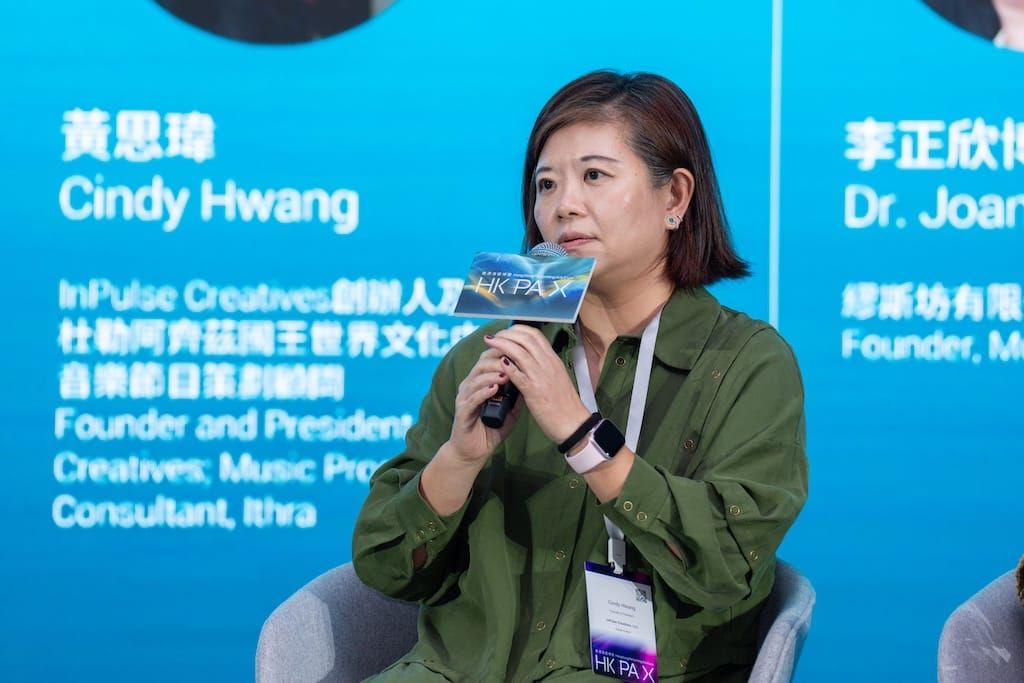
In an increasingly interconnected yet culturally complex world, few arts leaders navigate global terrain with the clarity, sensitivity, and long-view perspective of Cindy Hwang. With over two decades of experience spanning the United States, Asia Pacific, and the Middle East, Hwang has quietly shaped some of the most meaningful cultural exchanges of our time, often working behind the scenes to connect artists, institutions, and audiences across borders.
As Founder and President of InPulse Creatives, and as Music Programmer at Ithra, the King Abdulaziz Center for World Culture in Saudi Arabia, Hwang operates at the intersection of artistic excellence, cultural diplomacy, and community engagement. Her work ranges from launching landmark music education initiatives and artist development residencies to curating ambitious international programmes in regions where live performance culture is still taking shape.
What distinguishes Hwang is not only the breadth of her experience, but the philosophy that underpins it. She approaches programming as an act of listening and translation, attentive to cultural readiness, audience curiosity, and the human need for connection. Whether working with world-renowned artists or mentoring emerging musicians, her focus remains consistent: building trust, telling stories, and creating encounters that resonate beyond the stage.
In this conversation, Cindy Hwang reflects on her global journey, the challenges and responsibilities of cultural leadership, and the evolving future of classical music and international touring in a post-pandemic world.
Nikhil Sardana: You have worked across the US, Asia Pacific, and the Middle East. What cultural insights have you gained from working in these regions, and how have they shaped your programming philosophy?
Cindy Hwang: I think one of the most important realisations I have had over the years is that, regardless of geography, people fundamentally want the same thing. They want human connection. After more than twenty years in this business, I have come to believe that no matter what kind of performance you are presenting, it is always about how the connection is made between the stage and the audience.
Audiences everywhere want to feel connected to the artist. The most successful artists, in my experience, are those who are able to share their stories and truly reach people. That is what I look for when shaping programming. It does not matter whether an artist comes from Asia Pacific, Europe, the Middle East, or South Asia. What matters is the story they are telling.
A strong story and an honest performance will always connect, even in markets that are still developing culturally. Take the Middle East, for example. Exposure may be relatively new, but a good show with a compelling narrative transcends that. If the work is authentic and well-presented, it will resonate.
NS: InPulse Creatives has played a key role in building cultural bridges. How did you come to start your own organisation, and how do you define successful cultural collaboration today?
CH: InPulse Creatives officially launched in 2018, but the idea had been with me for at least five years before that. Even though I had already been in the industry for over a decade, I was not confident enough to take the leap. Like many people, I found countless reasons to talk myself out of starting my own company.
By 2018, I had been living in Saudi Arabia for about three years and had begun to understand the cultural landscape of the Middle East. Perhaps it was the sheer scale of change happening around me, but at some point I decided to stop overthinking and just do it.
The name InPulse Creatives was very intentional. In our industry, many people put their own names on their companies, but I wanted the focus to be on the projects and the people I work with. “Impulse” comes from the idea of keeping my finger on the pulse of what is happening culturally around the world. My work is fundamentally about connecting the right dots, bringing the right people together at the right moment.
I prefer the idea of dots rather than bridges. Bridges feel fixed, whereas dots are flexible. They can be connected in different ways and at different points. That flexibility reflects how I work. I come from a business model that was traditionally very rigid, where you either buy or sell. But my career has allowed me to exist in many different spaces, and InPulse Creatives gives me the freedom to think more creatively and develop solutions that do not fit into a single box.
For me, successful cultural collaboration today is about responsiveness, trust, and adaptability. It is about understanding context and creating meaningful exchanges rather than simply moving artists from one place to another.
NS: As Music Programmer at Ithra, how do you balance international prestige with local cultural relevance?
CH: Balance is absolutely key. Ithra is the first and still the only year-round cultural centre in Saudi Arabia, and it opened to the public in 2018. Before that, the country had no performance venues, no cinemas, and no ticketed live performances. That context alone presented a huge challenge.
At the same time, Saudi Arabia has a very young population. About 75 percent of the population is under 35, and many are highly educated and well-travelled. Even if they could not access live performances domestically, they were seeing work abroad or online. So the question became: how do we introduce live performance in a way that feels both exciting and accessible?
We often think in terms of the familiar and the unfamiliar. Music is a particularly powerful entry point because it transcends language and borders. It is often the most successful genre in new cultural contexts. Alongside music, we also programme illusion, magic, physical theatre, and circus.
Over time, we have built trust with our audiences, and that trust allows us to slowly expand boundaries. That process is incredibly important.
NS: Community engagement is central to your work. How can classical music institutions build deeper and more reciprocal relationships with audiences?
CH: I often talk about the need to deconstruct classical music practices. We work in a creative industry, yet classical music institutions are often the least creative because they are so bound by tradition. There is a belief that things must be done in a certain way, and that rigidity can be alienating.
Recently, I presented a string quartet from the Berlin Philharmonic. I told them from the outset that they could not simply perform their standard touring programme. Our audiences have an appetite for classical music, but the familiarity and maturity level is different. We worked together to shape a programme that respected their artistic integrity while being accessible.
One of the most important changes was encouraging the musicians to speak on stage. I explained that most audience members had no idea who Mozart or Beethoven were. Listing repertoire titles alone would immediately lose them. The musicians spoke about the composers and the music, and that made a tremendous difference. Afterwards, the first violinist told me it was the most he had ever spoken on stage.
We also had to adjust expectations around audience behaviour. Clapping between movements, for example, is considered taboo in classical circles, but our audiences did not know this. The quartet embraced it. Similarly, when the musicians walked off stage expecting to return for an encore, the audience assumed the concert had ended and left. For the following performances, the musicians stayed on stage and invited the audience to hear another piece. The response was overwhelming.
These small adjustments transformed the experience. Classical institutions cannot expect audiences to automatically understand them. We need to meet people where they are and invite them in.
NS: What qualities do young artists need to thrive internationally today?
CH: The skill sets artists need today are very different from even ten or fifteen years ago. Beyond artistic excellence, they must understand storytelling, technology, and self-presentation. Social media, digital platforms, and personal branding are now unavoidable parts of an artist’s career.
Artists also need curiosity beyond their own discipline. When I worked with young classical musicians, I always asked what else they were listening to. If you are only consuming classical music, you limit your sources of inspiration. The repertoire is largely fixed. What distinguishes one artist from another is interpretation, and that is shaped by broader cultural exposure.
Artists must actively seek out new sounds, ideas, and disciplines rather than relying on algorithms to feed them content. Discovery requires effort. It is difficult, but it is essential.
NS: What major shifts do you foresee in international touring and programming over the next decade?
CH: Since the pandemic, I have noticed a significant shift. When international travel stopped, many regions were forced to turn inward and invest in their own artists. As a result, we are now seeing strong contemporary dance scenes in Korea, innovative dance theatre in China, and vibrant circus companies emerging from Taiwan.
I believe the next decade will see a rebalancing of global touring. The dominance of Western Eurocentric artists is beginning to shift, and artists from Asia Pacific, South Asia, and the Middle East will gain greater recognition and touring opportunities. This change is long overdue and will enrich the global arts ecosystem.
NS: What have been the most challenging moments in your career, and what have they taught you about resilience?
CH: COVID was undoubtedly one of the most challenging periods, but in some ways it was also necessary. I had only been running InPulse Creatives for about a year and a half when everything stopped. Fortunately, I did not have heavy overheads, and the pause allowed me to think strategically about what the company should truly represent.
In this industry, challenges are constant. When everything feels too quiet, I actually worry more. Drama is part of live performance, and experience teaches you to anticipate it. Perhaps it is a kind of sixth or seventh sense that cultural workers develop over time.
NS: How have your board roles shaped your understanding of the global arts ecosystem, and what are your aspirations moving forward?
CH: I believe deeply in sharing knowledge. I have been fortunate to have mentors who were generous with their time, and I have also seen the opposite, where insecurity and ego prevent collaboration. This is a business driven by emotion and personal validation, and that can make people protective.
Serving on boards allows me to learn directly from others, to understand different communities, and to see how cultural values shape artistic practice around the world. It is about building a healthier, more sustainable ecosystem.
Ultimately, my goal remains the same: to connect the dots. To question why things must be done a certain way, and to imagine how they might be done differently. That curiosity and openness is what keeps this field alive.