Analysing Debussy’s Impressionist Music
Claude Debussy transformed the sound of Western music through colour, atmosphere and harmonic freedom. This analysis explores how his impressionist style reshaped composition, blending poetry, nature and innovative harmony into a luminous new musical language.

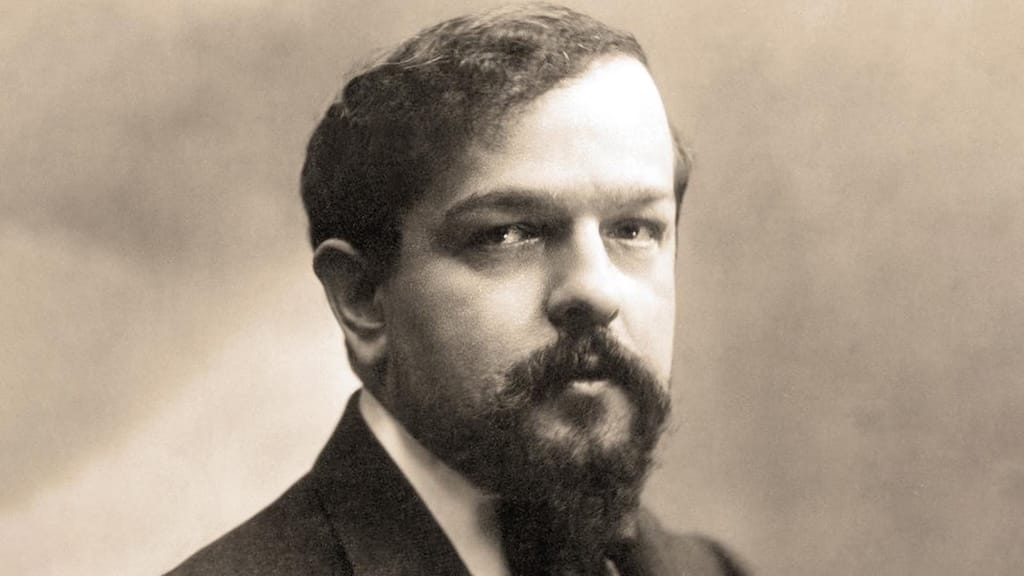
Few composers changed the sound of Western music as profoundly as Claude Debussy. At the end of the nineteenth century, when the traditions of German Romanticism still dominated European concert life, Debussy introduced a radically different musical language. Instead of dramatic development, dense counterpoint, and monumental symphonic structures, his music often evokes atmosphere, colour and fleeting impressions.
For this reason, Debussy’s music has long been associated with Impressionism, a term borrowed from the visual arts. Although Debussy himself disliked the label, it remains a useful way to describe certain qualities in his music: fluid harmony, ambiguous tonality, shimmering orchestration, and a deep sensitivity to colour and suggestion rather than direct statement.
To understand Debussy’s impressionist style, it is helpful to examine several key elements that define his musical language.
The Influence of Impressionist Art
The term “Impressionism” originally emerged in painting, particularly through the work of artists such as Claude Monet and Pierre-Auguste Renoir. These painters sought to capture the impression of a moment, especially the effects of light, colour and atmosphere, rather than producing precise or realistic representations.
Debussy’s music operates in a strikingly similar way. Instead of constructing long, tightly organised musical arguments, he often creates soundscapes that suggest moods or images. Titles such as Reflets dans l’eau, La cathédrale engloutie, or Nuages hint at landscapes, light, and atmosphere rather than narrative drama.
Like impressionist painters, Debussy was fascinated by transience. His music often feels as though it captures a fleeting sensation: the movement of water, distant bells, shifting clouds, or light reflected on a surface.
Harmonic Innovation
Perhaps the most revolutionary element of Debussy’s music lies in his treatment of harmony.
Traditional Western harmony, particularly in the nineteenth century, depended on a clear system of tonal tension and resolution. Chords created expectations that were eventually resolved through established patterns. Debussy frequently disrupted this process.
Instead of driving towards resolution, his harmonies often exist simply for their colouristic quality. Chords may move in parallel motion, remain unresolved, or appear as isolated sonorities.
Several techniques became characteristic of his style:
Whole-Tone Scales
Debussy frequently used the whole-tone scale, which consists entirely of whole steps. Because this scale lacks the half-step leading tones that define traditional tonality, it creates a sense of floating ambiguity.
The famous prelude Voiles from the first book of Préludes is built almost entirely from whole-tone material. The result is a sound world that seems suspended, without a clear tonal centre.
Modal Harmony
Debussy also drew inspiration from ancient church modes and non-Western musical traditions. Modal writing allowed him to escape the strict rules of major and minor tonality.
In works such as La cathédrale engloutie, modal harmonies contribute to the sense of ancient mystery and timelessness suggested by the piece.
Parallel Chords
One of Debussy’s most recognisable techniques is the use of parallel chord movement, sometimes called planing. In traditional harmony, chords move in ways that maintain functional relationships. Debussy, however, often moves entire chord shapes up and down together.
The effect is not harmonic progression in the classical sense but rather a shift in colour, similar to changing shades in a painting.
Musical Colour and Orchestration
Debussy approached orchestration with extraordinary sensitivity. Instead of treating the orchestra as a massive dramatic force, he often used it like a painter uses a palette.
His orchestral masterpiece La Mer demonstrates this approach brilliantly. Rather than depicting the sea through overt musical drama, Debussy creates layers of sound that evoke the movement and texture of water.
He frequently employed unusual instrumental combinations and delicate timbral contrasts. Harps, muted strings, woodwinds, and soft brass colours blend together to create luminous sonic textures.
In many passages, the orchestra functions almost like a shifting landscape of colour rather than a vehicle for thematic development.
Rhythm and Musical Flow
Another distinctive aspect of Debussy’s style is his treatment of rhythm.
Where Romantic composers often relied on clear rhythmic structures and strong accents, Debussy preferred fluid and flexible rhythmic movement. His music often avoids rigid pulse and instead flows in waves or fragments.
Several techniques contribute to this effect:
- Frequent changes of metre
- Overlapping rhythmic layers
- Subtle rubato and flexible phrasing
- Avoidance of strong cadential accents
This rhythmic freedom reinforces the impressionist aesthetic. Just as light and water constantly shift in nature, Debussy’s musical lines rarely feel fixed or rigid.
Nature and Symbolist Poetry
Debussy’s music was deeply influenced by literature, particularly the Symbolist poets of late nineteenth-century France. Writers such as Stéphane Mallarmé sought to evoke ideas indirectly through suggestion rather than explicit description.
Debussy shared this aesthetic outlook. His orchestral work Prélude à l’après-midi d’un faune, inspired by a poem by Mallarmé, is often considered one of the first truly modern works in music. The opening flute melody seems to emerge almost spontaneously, drifting without clear rhythmic or harmonic boundaries.
Nature also played a significant role in Debussy’s imagination. Many of his piano preludes depict landscapes or natural phenomena: wind across plains, distant bells, submerged cathedrals, and reflections on water.
These pieces do not attempt literal depiction. Instead, they evoke the impression or emotional resonance of such images.
The Piano as a Sound Palette
Debussy revolutionised piano writing by treating the instrument less as a vehicle for virtuosity and more as a source of colour and texture.
In collections such as Images, Estampes, and the two books of Préludes, the piano becomes almost orchestral in its range of sonorities.
Techniques that contribute to this effect include:
- Delicate pedalling to blend harmonies
- Layered textures that create shimmering resonance
- Wide spacing of chords across the keyboard
- Rapid figurations that evoke water, wind or light
For pianists, Debussy’s music requires not only technical skill but also extraordinary sensitivity to touch and tone.
Why Debussy Changed the Course of Music
Debussy’s innovations had a profound influence on twentieth-century music. By loosening the constraints of traditional tonality and emphasising colour and atmosphere, he opened new possibilities for composers across Europe and beyond.
Later composers such as Maurice Ravel, Olivier Messiaen and even jazz musicians drew inspiration from his harmonic language and orchestral imagination. More importantly, Debussy demonstrated that music could function not only as dramatic narrative but also as sensory experience. His works invite listeners into landscapes of sound where mood, colour and atmosphere become the primary expressive elements.